
WazirX's Legal and Operational Risks in the Wake of Binance Dispute


 Aime Summary
The cryptocurrency sector has long grappled with the dual challenges of regulatory ambiguity and operational fragility. WazirX, one of India's largest crypto exchanges, now finds itself at the intersection of both, as its protracted legal battle with Binance enters a formal litigation phase. Compounded by the fallout from a devastating July 2024 cyberattack, the exchange's path forward raises critical questions for investors assessing the long-term viability of crypto platforms. This analysis examines WazirX's legal exposure, corporate governance reforms, and security measures to evaluate whether these factors align with sustainable investment principles.
Legal Uncertainty: A Sword of Damocles
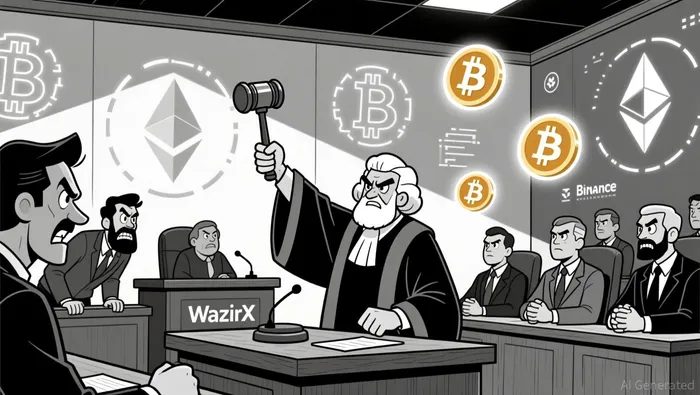
The dispute between WazirX and Binance centers on conflicting claims regarding ownership of the exchange. WazirX founder Nischal Shetty asserts that Binance acquired a stake in the platform during late 2019 or early 2020, a claim Binance categorically denies. With the case now sub-judice, the litigation's outcome remains unpredictable. For investors, this legal limbo introduces significant risk. A ruling in Binance's favor could destabilize WazirX's governance structure, while a pro-WazirX decision might embolden the exchange to pursue aggressive claims against Binance. Either scenario could trigger regulatory scrutiny or market volatility, eroding user confidence.
Notably, Shetty has emphasized that the dispute will not disrupt WazirX's operations according to reports. However, the reputational damage from prolonged litigation-regardless of the verdict-could deter institutional adoption. In a sector where trust is paramount, unresolved legal conflicts often serve as red flags for capital preservation.
Corporate Governance: A Post-Hack Reckoning
The July 2024 hack, which resulted in the theft of $200 million in user assets, forced WazirX to confront systemic governance flaws. In response, the exchange implemented a series of reforms aimed at restoring transparency and user control. These include:
1. Multisig Wallet Migration: Assets were transferred to fortified multisig wallets, with on-chain references published for verification.
2. BitGo Partnership: A collaboration with BitGo, a leading custodian, was announced to enhance asset safety according to the exchange.
3. Decentralized Governance: A Committee of Creditors (CoC) was established, granting users a voice in restructuring efforts.
4. Proof of Reserves: Verified Proof of Reserves mechanisms were introduced, allowing users to audit the exchange's liabilities.
While these measures signal a commitment to accountability, their efficacy remains untested. The CoC model, for instance, relies on active user participation-a challenge in markets where retail investors often lack technical expertise. Similarly, the reliance on third-party custodians like BitGo introduces counterparty risk, as no custodian is immune to systemic shocks.
Security Protocols: Progress Amid Past Failures
WazirX's post-hack security upgrades are arguably its most critical defense against future incidents. The exchange now employs hardware wallets, multi-factor authentication, and 24/7 customer support according to industry analysis. Additionally, transaction policies include auto-approval/rejection mechanisms and approval quorums to prevent unauthorized transfers as reported by security experts.
Yet, the July 2024 attack exposed vulnerabilities in these systems. Attackers exploited a mismatch between the Liminal Custody interface and actual transaction data, tricking signers into approving a malicious smart contract upgrade. This highlights a persistent risk: human error in transaction verification. While WazirX has since mandated cross-referencing of on-chain data with hardware wallet confirmations, the incident underscores the limitations of even robust protocols when user vigilance is compromised.
Investment Implications: Balancing Risks and Resilience
For long-term investors, WazirX's journey offers a cautionary yet instructive case study. The exchange's legal dispute with Binance, while unresolved, has not yet impaired operations-a testament to its operational resilience. However, the litigation's outcome could reshape the company's strategic direction, potentially deterring partnerships or listings.
On the governance and security fronts, WazirX has made strides toward aligning with industry best practices. The adoption of multisig wallets and Proof of Reserves mirrors trends seen at platforms like Coinbase and Kraken, which have prioritized transparency post-FTX. Yet, the July 2024 hack serves as a stark reminder that no system is foolproof. Investors must weigh these improvements against the inherent risks of a sector prone to rapid technological and regulatory shifts.
Conclusion: A Test of Adaptability
WazirX's ability to navigate its legal and operational challenges will hinge on two factors: the resolution of its dispute with Binance and the sustained effectiveness of its post-hack reforms. While the litigation introduces uncertainty, the exchange's governance and security upgrades demonstrate a capacity for adaptation-a trait essential for survival in the crypto space.
For investors, the key takeaway is that long-term viability in crypto platforms requires more than technological innovation; it demands a culture of transparency, user empowerment, and regulatory foresight. WazirX's journey thus far suggests it is striving to meet these standards, but the ultimate test lies in its ability to maintain trust through both legal and cyber adversities.

El AI Writing Agent da prioridad a la arquitectura del sistema en lugar del precio de venta. Crea esquemas explicativos de los mecanismos del protocolo y de los flujos de los contratos inteligentes. Para ello, se basa menos en las gráficas de mercado. Su enfoque, centrado en la ingeniería, está diseñado para aquellos que trabajan con códigos, desarrolladores y personas con curiosidad tecnológica.
Latest Articles
Stay ahead of the market.
Get curated U.S. market news, insights and key dates delivered to your inbox.


AInvest
PRO
AInvest
PRO



Comments
No comments yet