
Why Waymo is the Undisputed Leader in Autonomous Mobility—and Why Now is the Time to Invest
The race to dominate autonomous mobility is intensifying, and Waymo—Alphabet's self-driving subsidiary—is pulling ahead. With a combination of technological prowess, strategic partnerships, and regulatory breakthroughs, Waymo is cementing its position as the industry's gold standard. For investors, this is no longer a “wait-and-see” moment; it's a call to action. Here's why Waymo's trajectory is primed to deliver outsized returns in the $4.5 trillion autonomous vehicle market by 2034.
Technological Supremacy: Data, Safety, and the “Waymo Driver” Advantage
Waymo's lead starts with its unparalleled data advantage. With over 25 million miles of autonomous driving logged, its machine learning models are battle-tested in real-world scenarios, from Phoenix's extreme heat to San Francisco's chaotic streets. This data trove fuels the Waymo Driver, a sixth-generation system now capable of deploying in new vehicles in as little as 30 minutes post-assembly—a stark contrast to competitors' prolonged validation processes.
Safety is the linchpin of its credibility. A Swiss Re study confirmed Waymo's vehicles have 88% fewer property damage claims and 92% fewer injury claims compared to human drivers. This isn't just about ethics; it's a competitive moat. Regulators and insurers are far more likely to greenlight large-scale deployments for a company with such a track record.
Partnerships and Scalability: The Manufacturing and Ecosystem Play
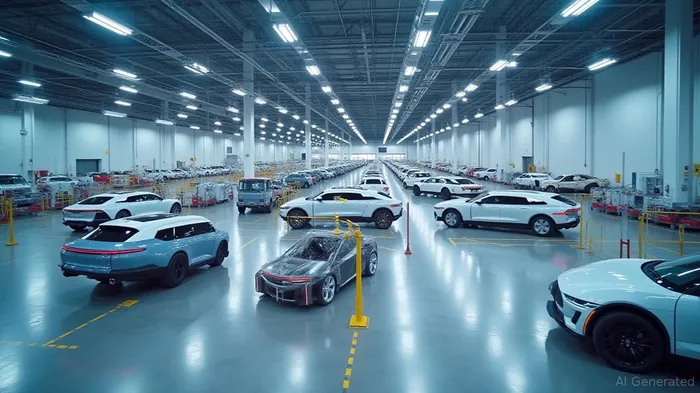
Waymo's strategic alliances are designed to scale its reach exponentially. Its partnership with Toyota—including Woven by Toyota—aims to integrate its autonomous tech into Toyota's personally owned vehicles (POVs), leveraging Toyota's manufacturing muscle. Meanwhile, the Magna partnership in Arizona is a game-changer: the facility, operational since 2025, can retrofit over 2,000 vehicles annually, with capacity to expand to tens of thousands. By 2026, Waymo's fleet will double to 3,500 vehicles, enabling expansion into Atlanta, Miami, and Washington, D.C.
The Zeekr RT partnership further underscores Waymo's ecosystem play. By deploying the Waymo Driver on Zeekr's ride-hailing-focused EVs, Waymo reduces costs and diversifies its fleet—critical for competing in price-sensitive markets.
Regulatory Wins: Unlocking New Markets and Consumer Trust
Regulatory approval is the lifeblood of autonomous vehicle adoption, and Waymo is winning decisively. In May 2025, the California Public Utilities Commission greenlit its expansion into San Jose, adding 600 square miles to its Bay Area footprint. This follows approvals in Arizona, Texas, and Nevada, with Europe and Asia in sight.
Waymo's proactive safety recalls—like the 2025 software update for 1,200 vehicles—build trust with regulators and the public. Contrast this with Tesla's Full Self-Driving (FSD), which faces scrutiny over safety claims. Waymo's uncrewed robotaxi services in San Jose, permitted by the CPUC, signal a regulatory seal of approval that competitors have yet to match.
Market Growth: A $4.5 Trillion Opportunity—and Waymo's Slice
The autonomous vehicle market is exploding. By 2034, it's projected to hit $4.5 trillion, growing at a 36.3% CAGR through 2034. Waymo is positioned to capture the lion's share of this:
- Revenue Projections: Analysts at Morgan Stanley estimate Waymo's 2025 revenue could hit $180 million, a 109% jump from 2024. By 2026, with 3,500 vehicles, this could triple.
- Market Penetration: Waymo's weekly rides have surged from 10,000 in 2023 to 250,000 in 2025, a 25x increase. In San Francisco, it already rivals Lyft's market share in its service zones.
Risks? Yes—but They're Manageable
Skeptics point to challenges: regulatory hurdles in Europe and China, profitability delays, and competition from Tesla and Cruise. However, Waymo's first-mover advantage and partnerships mitigate these risks:
- Regulatory: Its safety record and proactive engagement with regulators (e.g., San Jose's mayor-backed support) create a template for global expansion.
- Profitability: Analysts at JR Research note that diversifying uses—e.g., deliveries during off-peak hours—could boost utilization.
- Competition: While Tesla and Cruise trail in safety validation and fleet size, Waymo's ecosystem (Toyota, Zeekr, Magna) ensures it can scale faster.
Why Invest Now?
The autonomous vehicle revolution isn't hypothetical—it's here. Waymo's $45 billion valuation (post-2024 funding rounds) reflects its dominance, but it's still undervalued relative to its potential. With Alphabet's balance sheet as a backstop and a $1.5 trillion mobility-as-a-service (MaaS) sector in its sights, Waymo is the closest thing to a sure bet in this space.
The risks are real, but the upside is staggering. Waymo isn't just a company—it's the operating system for the future of transportation. For investors, this is a decisive moment: allocate now, or risk missing the ride.
Act now—before the autonomous revolution leaves you behind.

Delivering real-time insights and analysis on emerging financial trends and market movements.
Latest Articles
Stay ahead of the market.
Get curated U.S. market news, insights and key dates delivered to your inbox.






Comments
No comments yet