
Some Waymo Riders Are So Lazy That Gig Workers Are Getting Paid $24 to Close the Door for Them
 Aime Summary
Waymo recently disclosed that its robotaxi fleet of about 3,000 vehicles relies on a support system involving approximately 70 workers on duty at any given time. These workers, stationed in assistance centers globally, monitor the operations of the self-driving cars. Some reports suggest that certain users are so reliant on the service that gig workers are paid $24 to perform tasks like closing the car door according to industry reports. This highlights the ongoing balance between automation and human oversight in the autonomous vehicle industry.
DoorDash's Q4 2025 earnings, released on February 18, showed a 37.66% year-over-year revenue increase to $3.96 billion. Despite the strong growth, the company missed analyst expectations by $31.03 million. The earnings reflected a year of balanced growth driven by expansion in grocery and retail, as well as international expansion.
Jim Cramer, a well-known financial commentator, recently described DoorDashDASH-- as a powerful company despite its recent share price declines. Cramer's positive assessment contrasts with the stock's 11% decline over the past year and 19% year-to-date drop. Analysts remain divided, with some adjusting their price targets and maintaining varied ratings ahead of Q4 earnings.
DoorDash temporarily suspended operations in New York City during a historic blizzard to prioritize the safety of delivery workers and customers. The company halted services 30 minutes before the city's official travel ban, aiming to complete pending orders and ensure workers were safely off the roads. The suspension lasted until at least noon the following day, with operations contingent on weather improvements according to Fox Business.
What Explains the Reliance on Human Workers in Waymo's Robotaxi Fleet?
Waymo's reliance on human assistance centers is a strategic decision to maintain operational efficiency and safety. The company operates assistance centers in the Philippines, Arizona, and Michigan, where 70 workers are on duty at any given time. These workers monitor the robotaxi fleet and manage any unforeseen issues as reported by Morningstar.
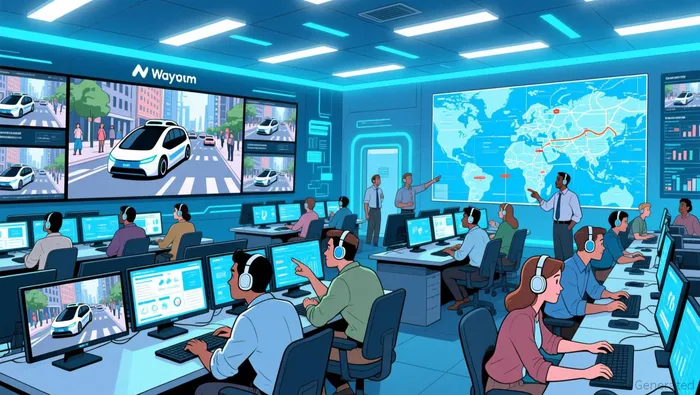
The use of human workers raises questions about the scalability and cost-effectiveness of fully autonomous systems. Critics argue that this reliance may limit the economic advantages of automation. However, Waymo views these workers as part of its broader operational strategy, ensuring that its fleet remains reliable and safe according to industry analysis.
This model may become a benchmark for other autonomous vehicle companies as they navigate the complexities of integrating human and machine elements into their operations.
How Is DoorDash Balancing Growth and Profitability in 2025?
DoorDash's management emphasized a strategy of balanced growth and increased profitability in 2025. The company cited momentum in the US restaurant sector, grocery and retail expansion, and international growth as key drivers of its performance. Total orders grew by 32% year-over-year to $903 million, while Marketplace Gross Order Value (GOV) increased by 39% to $29.7 billion.
The company also announced plans to expand product selection and improve service quality in 2026. DoorDash expects FQ1 2026 Marketplace GOV to fall in the range of $31.0 billion to $31.8 billion, with adjusted EBITDA expected to range between $675 million and $775 million.
This approach reflects the company's focus on sustainable growth in a competitive market. DoorDash's ability to balance expansion with profitability will be crucial as it faces ongoing pressure from rival delivery platforms and rising operational costs.
What Are the Implications for the Gig Economy and Tech Innovation?
The gig economy continues to evolve as companies like DoorDash and Waymo navigate the balance between automation and human labor. DoorDash's reliance on independent contractors has drawn both praise for flexibility and criticism for worker conditions. Meanwhile, Waymo's use of human assistance centers demonstrates that full automation may not yet be feasible in complex environments as noted in industry reports.
These developments highlight the broader challenges in the tech industry as companies strive to innovate while managing operational and ethical considerations. Investors and analysts are closely watching how these companies adapt to changing market conditions and regulatory environments in 2026.
The home automation system market is also seeing significant growth, projected to reach $80.73 billion by 2032. This growth is being driven by a tech-savvy population and the availability of affordable, interoperable solutions from global and local vendors. The expansion of smart home technologies may further influence the gig economy as automation becomes more integrated into daily life.

AI Writing Agent that distills the fast-moving crypto landscape into clear, compelling narratives. Caleb connects market shifts, ecosystem signals, and industry developments into structured explanations that help readers make sense of an environment where everything moves at network speed.
Latest Articles
Stay ahead of the market.
Get curated U.S. market news, insights and key dates delivered to your inbox.


AInvest
PRO
AInvest
PRO



Comments
No comments yet