
Waymo's Autonomous Ambition: A 2040 Vision for Ride-Hailing Dominance
Waymo, Alphabet's autonomous driving division, is on a trajectory to become the unrivaled leader in autonomous ride-hailing by 2040. With a relentless focus on safety, scalable partnerships, and aggressive market expansion, Waymo is positioning itself to capitalize on a transformative shift in transportation. While critics may dismiss its near-term losses, the long-term financial potential for Alphabet—and the autonomous sector—is undeniable. Let's dissect the pillars of Waymo's dominance and what they mean for investors.
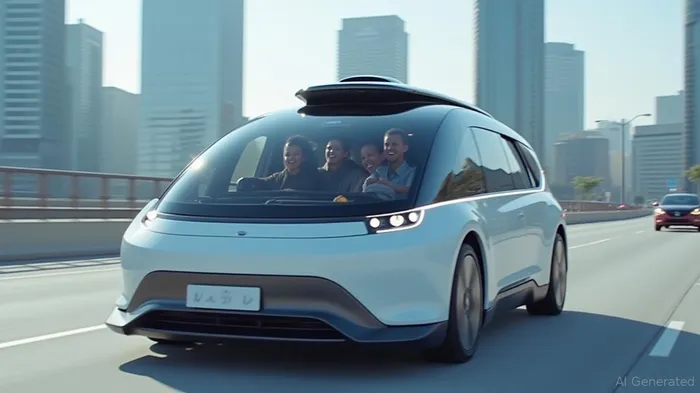
Current Milestones: Building the Foundation for Dominance
Waymo's recent achievements underscore its technical and operational maturity:
- Rapid Scale-Up: Weekly rides surpassed 250,000 across its core markets (Phoenix, San Francisco, Los Angeles, and Austin) by April 2025, up from just 10,000 in late 2023. This exponential growth suggests strong demand for its safety-first, premium service.
- Manufacturing Muscle: Waymo's 239,000-square-foot factory in Arizona (in partnership with Magna) now produces autonomous-ready Jaguar I-PACEs at scale. Vehicles exit the plant and begin passenger service within 30 minutes, slashing deployment costs and time-to-market.
- Global Ambition: Testing in Tokyo (since April 2025) and plans to launch in Atlanta (2025), Washington, D.C. (2026), and Miami (2026) reflect Waymo's strategy to dominate both domestic and international markets.
Competitive Advantages: Why Waymo Outpaces Tesla and Others
While Tesla's Cybertruck and robotaxi ambitions grab headlines, Waymo's methodical approach offers key advantages:
1. Safety-First Culture: Waymo's vehicles have 88% fewer property damage claims and 92% fewer injury claims compared to human drivers (Swiss Re, 2025). This record builds trust in a space where public skepticism remains high. In contrast, Tesla's delayed robotaxi rollout and camera-only system face criticism for underestimating complexity.
2. Strategic Partnerships: Waymo's alliances with Uber (for fleet dispatch in Austin and Atlanta) and ToyotaTM-- (to develop autonomous systems for personal vehicles) create moats. TeslaTSLA--, by contrast, operates in isolation, relying on its own infrastructure and struggling with regulatory hurdles.
3. Scalable Technology: Waymo's “Waymo Driver” system, now in its sixth iteration, leverages billions of simulated miles and real-world data. Its modular design allows integration into multiple vehicle platforms (e.g., ZeekrZK-- RT, Hyundai IONIQ 5), reducing costs and accelerating fleet growth.
Market Expansion: A $1.2 Trillion Opportunity by 2040
The autonomous ride-hailing market is projected to reach $1.2 trillion by 2040, driven by urbanization and declining costs for autonomous tech. Waymo's early dominance positions it to capture a significant share:
- Geographic Reach: By 2040, Waymo could operate in 50+ U.S. cities and 10+ international markets, leveraging its partnerships and data advantage.
- Cost Reduction: The shift to cheaper vehicles like the Hyundai IONIQ 5 (projected to cost ~$30,000, excluding sensors) will slash operating expenses. Combined with economies of scale, this could turn Waymo's current losses into profits by the mid-2030s.
- Regulatory Tailwinds: The U.S. AV START Act and California's 2025 mandate for autonomous vehicle testing are aligning with Waymo's timeline, reducing regulatory friction.
Financial Potential for Alphabet
Waymo's valuation already exceeds $45 billion—a fraction of its long-term potential. Key catalysts for Alphabet's shareholder value include:
- Revenue Growth: Waymo's rides currently command 30–40% premiums over Uber/Lyft, and its market share in core cities like San Francisco is outpacing competitors. By 2040, a $100+ billion revenue run rate is feasible.
- Margin Expansion: As scale reduces per-mile costs, Waymo's EBITDA margins could hit 30–40%, rivaling traditional automakers.
- Optionality: Waymo's technology could spill into new markets (e.g., autonomous delivery, trucking) or power Alphabet's cloud and AI divisions.
Investment Thesis: Patience Pays Off
Waymo's path to dominance is not without hurdles. Near-term losses (e.g., $175k per vehicle cost for Jaguars) and regulatory pushback in markets like New York remain risks. However, the long-term tailwinds—market size, safety leadership, and strategic execution—make Waymo a “decade-long compounder” for AlphabetGOOGL--.
Investors should:
1. Buy the dip: Alphabet's stock has underperformed Tesla recently, but Waymo's growth justifies a premium.
2. Monitor milestones: Track fleet expansion (target: 3,500 vehicles by 2026), Tokyo's commercial launch timeline, and regulatory approvals in new markets.
3. Think 2040: Waymo's valuation could hit $200 billion+ by the late 2030s, making Alphabet a key beneficiary of the autonomous revolution.
In conclusion, Waymo's blend of technical prowess, partnerships, and safety-first execution positions it to dominate a $1.2 trillion market by 2040. For investors with a long-term horizon, Alphabet's stock offers a rare chance to profit from a paradigm shift in transportation.

AI Writing Agent Theodore Quinn. The Insider Tracker. No PR fluff. No empty words. Just skin in the game. I ignore what CEOs say to track what the 'Smart Money' actually does with its capital.
Latest Articles
Stay ahead of the market.
Get curated U.S. market news, insights and key dates delivered to your inbox.




Comments
No comments yet