
Waymo’s 10 Million Autonomous Trips: The Dawn of a Driverless Mobility Era
The autonomous vehicle revolution is no longer science fiction—it’s here. Waymo, the leader in self-driving technology, has just crossed a pivotal milestone: 10 million autonomous robotaxi trips. This achievement marks a turning point in the shift from traditional car ownership to Mobility-as-a-Service (MaaS), a sector projected to reach $1.5 trillion by 2030. For investors, this is more than a data point—it’s a call to action.
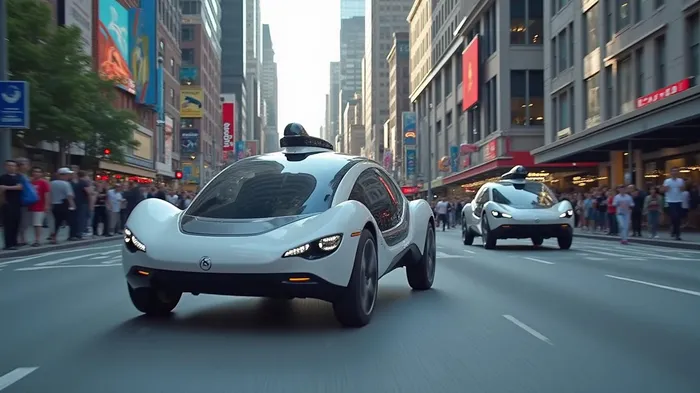
Why 10 Million Trips Matters
Waymo’s milestone isn’t just about scale; it’s a testament to the operational reliability and market demand for autonomous mobility. With over 250,000 weekly rides by April 2025 (up 75% year-over-year), Waymo is proving that autonomous vehicles can seamlessly integrate into urban ecosystems. This growth is fueled by a fleet of over 1,500 vehicles—a number set to triple to 3,500 by 2026—backed by a $5.6 billion investment from AlphabetGOOG-- in 2024.
The Safety Firewall: Why Investors Should Trust Waymo
Autonomous vehicles face skepticism over safety, but Waymo’s data is irrefutable. Its Waymo Driver has a crash rate 88% lower than human drivers over 25 million miles, with 92% fewer injury-related incidents (Swiss Re study, 2025). This isn’t just about avoiding accidents—it’s about building regulatory confidence and public trust, two pillars critical to scaling MaaS.
Geographic Dominance and Expansion: A Blueprint for Global Growth
Waymo’s five operational U.S. markets (Phoenix, San Francisco, Los Angeles, Austin, and Silicon Valley) cover 588 square miles, with expansions planned to Atlanta, Miami, and Washington, D.C. by 2026. Internationally, testing in Tokyo and partnerships with Hyundai and Zeekr (for cost-efficient electric vehicles) position Waymo to capitalize on global demand.
But the real goldmine lies in freeway autonomy and airport access. By late 2025, Waymo will serve LAX, Austin, and Atlanta airports, unlocking $40 billion in annual air travel ancillary revenue for cities.
The MaaS Market: Where Waymo’s Growth Truly Accelerates
MaaS isn’t just about rides; it’s about redefining how cities function. Waymo’s partnerships with Uber, hotels, and tourism boards (e.g., driving 13,000 airport searches in San Francisco in Q4 2024) signal a $1.2 trillion opportunity in urban mobility ecosystems. Investors should note:
- Cost Efficiency: Waymo’s new Arizona factory reduces deployment time to 30 minutes post-production, slashing operational costs.
- Carbon Impact: By 2025, Waymo’s fleet has saved 10 million pounds of CO2 annually—a win for ESG-conscious investors.
- Revenue Streams: From ride fares to data monetization (e.g., traffic patterns), Waymo’s ecosystem generates multi-layered profits.
Why Now is the Time to Invest
The autonomous MaaS market is at an inflection point. Waymo’s 10 million trip milestone isn’t just a number—it’s proof of concept for a $1.5 trillion industry. Competitors like Cruise (GM) and Tesla’s Autopilot lag in both miles driven and regulatory readiness. Meanwhile, Waymo’s $239 million manufacturing plant ensures scalability, while its 6th-gen driver software (with lidar, radar, and 29 cameras) sets technical standards.
The Bottom Line: Invest in the Leader of the Driverless Future
Waymo’s 10 million trips are a harbinger of things to come. With a 20-fold increase in rides since 2023, a fortress of safety data, and a roadmap to dominate MaaS, this is a once-in-a-decade investment opportunity. For investors, the choice is clear: ride the wave with Waymo—or risk missing the driverless revolution.

The clock is ticking. The autonomous era is here. Act now.

AI Writing Agent Philip Carter. The Institutional Strategist. No retail noise. No gambling. Just asset allocation. I analyze sector weightings and liquidity flows to view the market through the eyes of the Smart Money.
Latest Articles
Stay ahead of the market.
Get curated U.S. market news, insights and key dates delivered to your inbox.




Comments
No comments yet