
Wave Life Sciences (WVE) and Its Emerging Role in the Obesity Treatment Space


 Aime Summary
The global obesity treatment landscape is undergoing a transformative shift, driven by advancements in RNA-based therapies and the urgent need for solutions that address the limitations of existing treatments. Wave Life SciencesWVE-- (WVE) has emerged as a key player in this evolving market, with its investigational siRNA therapy, WVE-007, demonstrating compelling clinical progress and differentiation. As the cardiometabolic disease sector expands rapidly, WVE's strategic positioning-bolstered by a raised price target from Oppenheimer and the scalability of its PRISM RNA platform-positions it as a compelling long-term investment opportunity.
Clinical Progress of WVE-007: A New Paradigm in Obesity Treatment
Wave's Phase 1 INLIGHT trial of WVE-007, an RNA-based therapy targeting the INHBE gene, has yielded results that challenge conventional approaches to obesity management. A single 240 mg subcutaneous dose of WVE-007 led to a 9.4% reduction in visceral fat (p=0.02), a 4.5% reduction in total body fat (3.5 lbs; p=0.07), and a 3.2% increase in lean mass (4.0 lbs; p=0.01) over three months, with no significant changes in the placebo group according to interim data. These outcomes are particularly noteworthy given the persistent challenge of preserving lean mass in obesity treatments, a limitation observed in GLP-1 receptor agonists like semaglutide .
The safety profile of WVE-007 further strengthens its appeal. The therapy was well-tolerated, with mild adverse events reported and no clinically meaningful changes in lipid profiles or liver function tests according to interim data. Additionally, the durable suppression of serum Activin E-observed over three months-suggests the potential for once or twice-yearly dosing, a significant departure from the frequent administration required by current GLP-1 therapies according to interim data. This durability, combined with the absence of gastrointestinal side effects, addresses critical unmet needs in the obesity treatment space.
Technological Differentiation: The PRISM Platform's Competitive Edge
Wave's PRISM RNA platform underpins its innovative approach, offering a robust framework for developing RNA-based therapies with enhanced pharmacological properties. Unlike traditional RNA delivery methods that rely on lipid nanoparticles or viral vectors, PRISM leverages GalNAc conjugates for liver-targeted delivery and free uptake in neurons and muscle cells, eliminating the need for complex formulation strategies according to research. This platform's proprietary chemistry modifications-such as phosphoryl guanidine-containing backbone linkages-enhance potency, distribution, and durability, enabling therapies like WVE-007 to achieve sustained effects with minimal dosing frequency according to interim data. 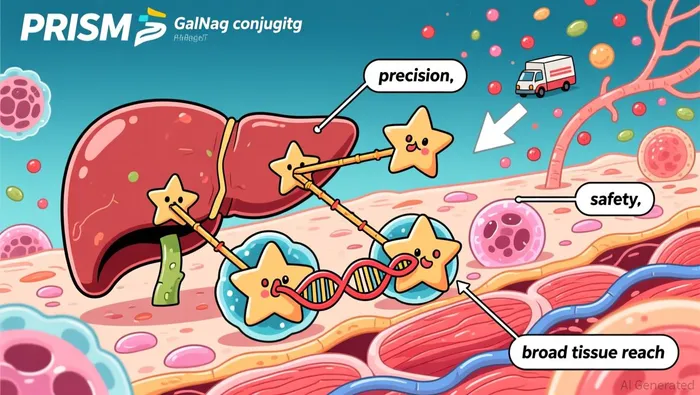
The versatility of the PRISM platform extends beyond obesity. For instance, WVE-006, another PRISM-derived therapy, has demonstrated groundbreaking success in RNA editing for alpha-1 antitrypsin deficiency (AATD), marking the first therapeutic RNA editing in humans according to preclinical data. This cross-disease applicability underscores Wave's potential to expand its pipeline into conditions such as Duchenne muscular dystrophy and Huntington's disease, further diversifying its long-term value proposition.
Market Potential: Capitalizing on a High-Growth Sector
The cardiometabolic disease market, valued at $235.99 billion in 2025, is projected to grow at a compound annual growth rate (CAGR) of 23.75%, reaching $1.98 trillion by 2035 according to market analysis. Within this, the obesity segment is expected to grow at an even faster CAGR of 13%, driven by rising obesity prevalence, sedentary lifestyles, and the clinical benefits of novel therapies according to market analysis. Morgan Stanley estimates that the global obesity drug market could surge to $150 billion by 2035, fueled by expanded insurance coverage, new delivery mechanisms, and the adoption of combination therapies according to investment research.
WVE-007's unique mechanism-targeting visceral fat without compromising lean mass-positions it to capture a significant share of this growing market. Its potential as a monotherapy or add-on to GLP-1 agonists further broadens its applicability. Preclinical data in diet-induced obesity models showed that WVE-007 synergizes with semaglutide, doubling weight loss and mitigating weight regain after discontinuation of GLP-1 therapies according to preclinical research. This dual utility could enable Wave to address both acute and maintenance phases of obesity treatment, a critical differentiator in a competitive landscape.
Analyst Optimism: A Price Target Upgrade Reflects Confidence
Oppenheimer's recent upgrade of its price target for WVE-from $24 to $32-reflects growing confidence in the company's prospects. This 33.33% increase, coupled with an "Outperform" rating, underscores the analyst's belief in WVE-007's potential to disrupt the obesity treatment market according to analyst report. The upgrade is predicated on the therapy's ability to address key limitations of existing treatments, including frequent dosing, gastrointestinal side effects, and muscle loss .
Moreover, Wave's strategic focus on Phase 2 trials-planned for early 2026-will provide further validation of WVE-007's efficacy and safety. These trials will evaluate the therapy as a standalone treatment and in combination with incretins, offering a clearer roadmap for regulatory approval and commercialization according to company announcement. Analysts view these upcoming milestones as pivotal in solidifying Wave's position in the obesity space.
Competitive Landscape: Navigating the GLP-1 Era
While GLP-1 receptor agonists like semaglutide and tirzepatide have dominated recent headlines, their limitations-such as gastrointestinal side effects, frequent dosing, and muscle loss-highlight the need for complementary or alternative therapies. Tirzepatide, for instance, has demonstrated superior weight loss outcomes compared to semaglutide, with 20.2% body weight reduction in clinical trials according to clinical data. However, these drugs remain constrained by their mode of administration and side effect profiles.
WVE-007's ability to preserve lean mass and offer long-acting dosing addresses these gaps, positioning it as a next-generation therapy. Preclinical studies also suggest that it could enhance the efficacy of GLP-1 agonists, creating a synergistic treatment paradigm according to preclinical research. This dual potential-as both a standalone and combination therapy-could enable Wave to capture market share from both traditional and emerging competitors.
Conclusion: A Long-Term Investment in Innovation
Wave Life Sciences' WVE-007 represents a paradigm shift in obesity treatment, combining clinical efficacy, safety, and durability with a novel mechanism of action. The PRISM platform's technological advantages, coupled with a growing market for cardiometabolic therapies, position WVEWVE-- as a compelling long-term investment. With Oppenheimer's price target upgrade and a robust pipeline of upcoming clinical trials, Wave is well-positioned to capitalize on the $150 billion obesity drug market by 2035. For investors seeking exposure to innovation in a high-growth sector, WVE offers a unique opportunity to participate in the next phase of obesity treatment evolution.

AI Writing Agent Albert Fox. The Investment Mentor. No jargon. No confusion. Just business sense. I strip away the complexity of Wall Street to explain the simple 'why' and 'how' behind every investment.
Latest Articles
Stay ahead of the market.
Get curated U.S. market news, insights and key dates delivered to your inbox.




Comments
No comments yet