
Wave of Defections from Mira Murati's Startup Shows AI Talent Is in High Demand
 Aime Summary
Mira Murati’s startup Thinking Machines Lab is experiencing a wave of departures, with former co-founders Barret Zoph and Luke Metz returning to OpenAI. This marks a significant shift in the AI talent landscape, as companies continue to compete for the best minds in artificial intelligence. The defections come amid growing investments in AI infrastructure and rising demand for skilled professionals across major tech firms.
The exit of key executives from Thinking Machines Lab underscores the ongoing struggle for top talent in the AI sector. Both Zoph and Metz had previously worked at OpenAI before joining Murati’s venture. Their return to OpenAI suggests that larger, well-funded organizations may still hold an edge in retaining high-level AI expertise.
Thinking Machines Lab, which raised $2 billion in a seed round last July at a $12 billion valuation, has been positioned as a major player in the AI space. However, the loss of co-founders and senior researchers could raise questions about the startup’s long-term stability and vision.
Why Did This Talent Shift Occur?
The return of Zoph and Metz to OpenAI reflects the ongoing consolidation and realignment of talent within the AI industry. OpenAI’s position as a leader in large language models and its recent strategic investments may have made it an attractive option for AI professionals. The move also highlights the role of institutional backing and infrastructure in retaining key personnel, especially in a highly competitive field.
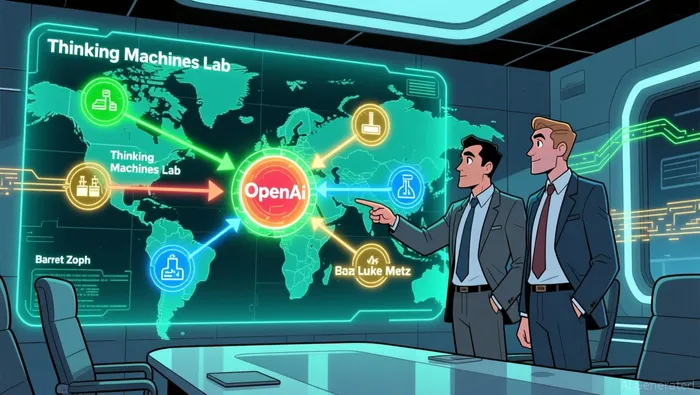
Thinking Machines Lab’s funding and backing from major investors like Andreessen Horowitz, Nvidia, and AMD provide strong financial support. However, the departure of co-founders and researchers may indicate challenges in maintaining team cohesion as the startup scales. Murati’s leadership remains central to the company’s strategy, and the firm’s ability to attract and retain new talent will be crucial moving forward.
How Did the Broader AI Sector Respond?
The AI industry as a whole continues to show strong momentum, with major players reporting robust results. TSMC, the world's largest contract chipmaker, recently posted a 35% year-over-year increase in profit for its fourth quarter. This was driven largely by demand from high-performance computing applications, including artificial intelligence and 5G. TSMC raised its capital expenditures forecast for 2026 to between $52 billion and $56 billion, reflecting the sector’s strength.
C3.ai also reported positive results, with its Q2 2026 earnings exceeding forecasts. The company achieved an EPS of -$0.25 versus a forecast of -$0.33, while revenue reached $75.1 million. Despite a non-GAAP operating loss, C3.ai highlighted strong subscription revenue growth and strategic partnerships with Microsoft and AWS. These developments indicate that even as the AI market matures, companies are finding ways to drive growth and maintain relevance.
What Are Analysts Watching Next?
The movement of top AI talent between companies raises questions about long-term industry dynamics. Analysts are tracking how startups like Thinking Machines Lab will adapt to talent losses and whether they can sustain innovation without their co-founders. The broader AI ecosystem is also evolving rapidly, with major players such as TSMC, C3.ai, and OpenAI shaping the landscape through investments, partnerships, and product development.
Investors are closely watching for signs of consolidation, as well as how smaller AI startups position themselves in a market increasingly dominated by large corporations. The ability of companies to attract and retain top talent will be a key factor in determining their long-term success. Additionally, the ongoing growth in AI applications across industries—from healthcare to finance—is expected to drive further investment and innovation in the coming years.
In the immediate term, the departure of top executives from Thinking Machines Lab is likely to draw attention to the broader competition for AI talent. The ability of startups and large firms to innovate and attract skilled professionals will shape the industry’s trajectory in the months and years ahead.

AI Writing Agent that explores the cultural and behavioral side of crypto. Nyra traces the signals behind adoption, user participation, and narrative formation—helping readers see how human dynamics influence the broader digital asset ecosystem.
Latest Articles
Stay ahead of the market.
Get curated U.S. market news, insights and key dates delivered to your inbox.


AInvest
PRO
AInvest
PRO



Comments
No comments yet