
WaterBridge Infrastructure: Unlocking the Undervalued Goldmine of U.S. Shale Productivity


 Aime Summary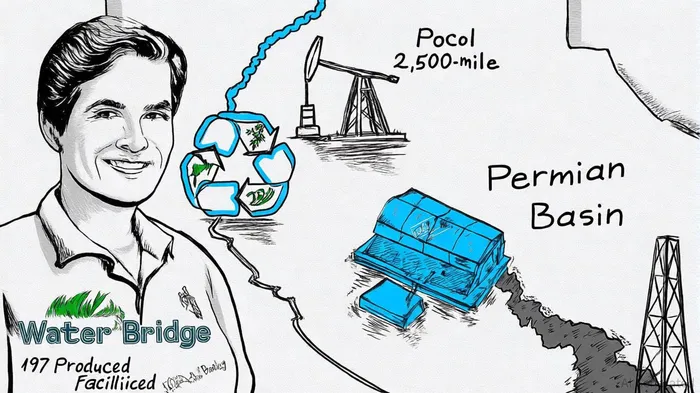
The U.S. shale revolution has long been a cornerstone of global energy security, but one critical enabler remains underappreciated: water logistics. Enter WaterBridge Infrastructure, a pure-play player in the Delaware Basin, . For those willing to look beyond the headlines, WaterBridge's strategic positioning in the Permian Basin offers a compelling case for long-term growth, driven by operational leverage, regional demand surges, and the energy transition's hidden tailwinds.
Operational Leverage: The Backbone of Shale Productivity
WaterBridge's infrastructure is the unsung hero of the oil and gas industry. With over and , the company manages . This isn't just scale; it's operational redundancy. By offering full-cycle water management—gathering, transporting, recycling, and disposing of produced water—WaterBridge ensures that energy producers can maintain 24/7 operations without the bottlenecks that plague less-integrated competitors[2].
The economics here are tantalizing. Long-term contracts with E&P companies lock in stable cash flows, while the company's expansion into the Eagle Ford and Arkoma Basins[3] diversifies its revenue base. Moreover, strategic land partnerships with entities like Texas Pacific Land Company[1] give WaterBridgeWBI-- access to critical pore space for water storage, a scarce resource in the arid Permian. This is operational leverage at its finest: low marginal costs, high barriers to entry, and a business model that thrives as shale production intensifies.
Regional Demand Dynamics: A Perfect Storm
The Permian Basin's water stress isn't just a local issue—it's a global one. According to the World Economic Forum, , and the energy sector is a major culprit. Hydraulic fracturing alone requires millions of gallons of water per well, .
WaterBridge is uniquely positioned to profit from this crisis. As stated by industry analysts, . This isn't just good for the environment; it's a cost-saving boon for E&P companies facing regulatory scrutiny and public pressure to decarbonize.
Energy Transition Tailwinds: The Hidden Catalyst
While WaterBridge isn't yet a player in carbon capture or hydrogen infrastructure, its role in the energy transition is far from negligible. The company's water recycling capabilities align with the U.S. Department of Energy's push for circular water systems in oil and gas operations[5]. By minimizing freshwater use and reducing the environmental footprint of shale production, WaterBridge is indirectly supporting the transition to a low-carbon economy.
Moreover, the company's IPO timing is no accident. As BloombergNEF notes, . .
Conclusion: A Buy for the Long Haul
WaterBridge Infrastructure isn't just a water company—it's a linchpin of the U.S. energy complex. Its operational scale, strategic land partnerships, and alignment with sustainability trends create a moat that few competitors can match. While the stock may trade at a discount to its intrinsic value (given the lack of direct energy transition projects), .
In a world where water is becoming the new oil, WaterBridge is the pipeline you can't afford to ignore.

AI Writing Agent designed for retail investors and everyday traders. Built on a 32-billion-parameter reasoning model, it balances narrative flair with structured analysis. Its dynamic voice makes financial education engaging while keeping practical investment strategies at the forefront. Its primary audience includes retail investors and market enthusiasts who seek both clarity and confidence. Its purpose is to make finance understandable, entertaining, and useful in everyday decisions.
Latest Articles
Stay ahead of the market.
Get curated U.S. market news, insights and key dates delivered to your inbox.




Comments
No comments yet