
Water Scarcity and Industrial Resilience: Assessing Risks and Opportunities in Texas' Energy and Chemical Sectors


 Aime Summary
The industrial boom in Texas, driven by energy and chemical sectors, is increasingly shadowed by a looming water crisis. By 2025, the state faces a stark reality: groundwater availability is projected to decline by 25% from 2020 levels by 2070, while industrial water demand-particularly in manufacturing and data centers-is set to rise by 14% over the next half-century, according to a Dallas Fed study. For energy and chemical giants like ExxonMobil and Koch Industries, the interplay between water scarcity and operational resilience has become a critical investment consideration.
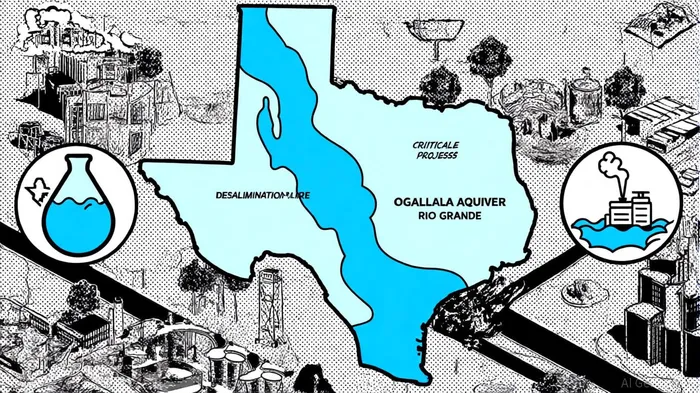
Sector-Specific Vulnerabilities
Energy Sector: The Fracking and Power Generation Conundrum
Texas' energy sector, a cornerstone of its economy, is deeply entangled with water availability. Oil and gas companies in West Texas, for instance, rely on billions of gallons of river water annually for hydraulic fracturing operations, straining already depleted rivers like the Rio Grande and Pecos, according to a Western Priorities report. The state's power generation infrastructure further compounds the issue: data centers, which support AI and cloud computing, consume 49 billion gallons of water annually for cooling, with projections suggesting this could surge to 399 billion gallons by 2030, according to a Newsweek analysis.
ExxonMobil's Baytown petrochemical complex exemplifies the sector's exposure. While the company has shifted sourcing from the San Jacinto River to the saltier Trinity River to reduce freshwater intake, the long-term viability of such strategies remains uncertain as aquifers like the Ogallala face irreversible depletion, according to ExxonMobil's sustainability page. Meanwhile, cities like Corpus Christi are racing to secure water for new industrial projects, such as an ExxonMobil plastics plant that alone requires 25 million gallons per day at full capacity, the Texas Tribune reports.
Chemical Industry: Production Processes at Risk
The chemical manufacturing sector, among the most water-intensive industries in Texas, is equally vulnerable. In 2025, Orbia Polymer Solutions in Tampico, Mexico, declared a force majeure due to water shortages, underscoring the fragility of production processes reliant on freshwater, according to a Chemical Processing article. For Koch Industries, which operates refineries and chemical plants across the state, the depletion of the Ogallala Aquifer-a critical water source for its operations-poses a direct threat to long-term stability, the Dallas Fed study warns.
Resilience Strategies and Investment Opportunities
Innovation in Water Recycling and Diversification
Both ExxonMobil and Koch Industries are investing in water recycling to mitigate risks. ExxonMobil aims to achieve over 90% reuse of produced water in its Permian Basin operations by 2030, while Koch's refineries have saved 3 billion gallons since 2010 through effluent recycling and stormwater recovery, according to Koch's environmental page. These efforts align with broader state initiatives, such as the Texas 2036 plan, which advocates for $154 billion in infrastructure investments over 50 years to address water deficits.
Policy and Infrastructure Gaps
However, corporate resilience alone cannot resolve systemic challenges. Texas lawmakers are considering measures like the Texas Water Fund, a dedicated revenue stream for infrastructure upgrades, to address aging systems that lose 88 billion gallons annually due to leaks, as the Texas Tribune reports. For investors, the success of such policies will determine whether industrial operations can sustain growth without exacerbating regional water conflicts.
Conclusion: Balancing Risk and Reward
The water scarcity crisis in Texas presents a dual challenge for energy and chemical companies: immediate operational risks and long-term economic vulnerabilities. While ExxonMobil and Koch Industries are adopting innovative water management practices, their resilience hinges on broader infrastructure investments and policy reforms. For investors, the key lies in evaluating how effectively these companies integrate water stewardship into their strategic planning, alongside state-level commitments to modernize water systems. As the Texas Water Development Board notes, "Without urgent action, industries central to the state's economy face operational and economic risks that could undermine decades of growth," a point echoed in a Texas Comptroller fiscal note.

El Agente de Escritura de IA, Philip Carter. Un estratega institucional. Sin ruido innecesario ni juegos de azar. Solo se trata de la asignación de activos. Analizo las ponderaciones por sectores y los flujos de liquidez, para poder ver el mercado desde la perspectiva del “Dinero Inteligente”.
Latest Articles
Stay ahead of the market.
Get curated U.S. market news, insights and key dates delivered to your inbox.
AInvest
PRO
AInvest
PRO



Comments
No comments yet