
Waste Management's Q2 Earnings Beat and Revised Outlook Signal Strong Momentum in the Waste Industry
 Aime Summary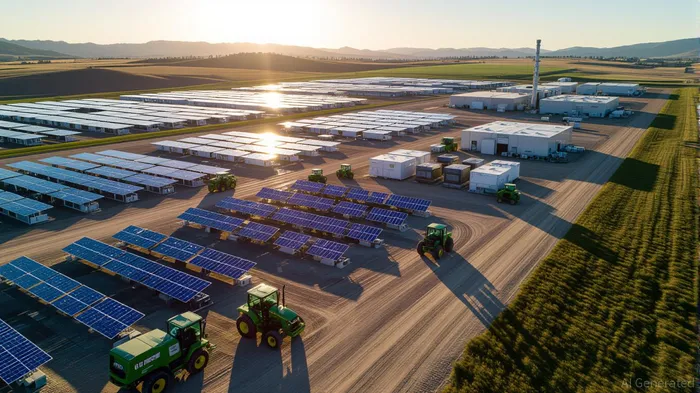
Waste Management, Inc. (WM) has long been a cornerstone of the U.S. waste management861140-- industry, but its Q2 2025 earnings report and revised full-year guidance underscore a new era of momentum. The company delivered a 19.0% year-over-year revenue increase to $6.43 billion, driven by core price hikes, improved operational yields, and strategic investments in sustainability. This performance, coupled with an upward revision to free cash flow and operating EBITDA guidance, positions Waste Management as a standout in a sector characterized by defensive characteristics and regulatory tailwinds. For investors, the question is no longer whether the waste industry is growing—it's how Waste Management's strategic advantages and operational discipline make it a compelling long-term play.
Operational Excellence Drives Margin Expansion
Waste Management's Q2 results highlight its ability to balance top-line growth with margin preservation. The company's WM Legacy Business—its core Collection and Disposal operations—generated $5.78 billion in revenue, up 7.1% year-over-year, with an adjusted operating EBITDA margin of 37.9%. This margin expansion was fueled by disciplined cost management, optimized routing technology, and a focus on high-margin landfill volumes. Even after losing a significant residential contract, the business maintained a 1.6% volume increase, demonstrating resilience in a competitive market.
The integration of WM Healthcare Solutions (via the Stericycle acquisition) further diversified the company's revenue streams. The segment contributed $646 million in revenue, with $110 million in adjusted operating EBITDA in Q2. Cross-selling opportunities between healthcare and solid waste services are already generating $11 million in annualized synergies, with $300 million expected by 2027. This vertical integration not only enhances customer retention but also creates a moat against competitors who lack similar capabilities.
Industry Tailwinds: EPR, Plastics Bans, and Renewable Energy
The waste management sector is entering a phase of structural growth, driven by regulatory and environmental megatrends. Extended Producer Responsibility (EPR) programs, which mandate manufacturers to finance waste collection and recycling, are accelerating adoption of circular economy models. California's Carpet Stewardship Program, for example, boosted recycling rates from 20.9% in 2020 to 38% in 2024. With 15+ U.S. states expected to implement EPR programs by year-end 2025, companies with the infrastructure to manage these programs—like Waste Management—stand to benefit.
Plastic bans are another catalyst. California and New York have phased out single-use plastics, while Canada's 2025 ban creates a $1 trillion circular economy opportunity. Waste Management's Stericycle division is already adapting, offering clients solutions to comply with EPR and plastics regulations. Meanwhile, the company's renewable natural gas (RNG) projects, now powering 150,000 homes annually, insulate margins from recycled commodity price volatility. These RNG facilities, supported by the Inflation Reduction Act's tax incentives, are a strategic bet on long-term energy transition trends.
Competitive Positioning: Leading a Fragmented Market
Waste Management's 35.47% market share in the U.S. waste management sector (as of Q1 2025) underscores its dominance. While competitors like Republic ServicesRSG-- (25.04% market share) and Waste ConnectionsWCN-- (14.04%) are growing, Waste Management's scale, profitability, and innovation edge set it apart. Republic Services, for instance, reported Q1 2025 revenue growth of 3.81%, below the industry average of 9.17%, while Waste Management's core business grew 7.1%.
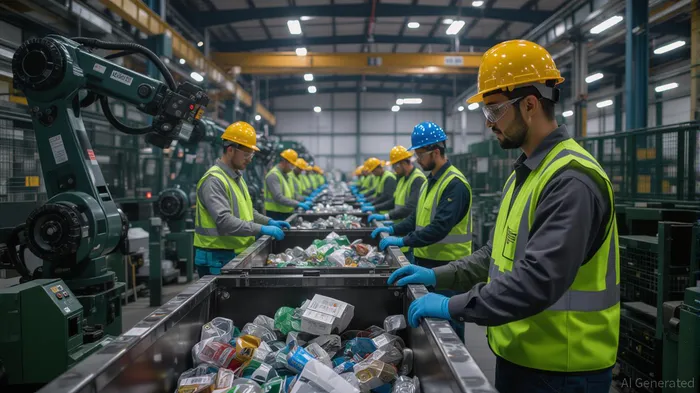
The company's decentralized operational model and focus on automation further enhance its competitive position. AI-driven route optimization and robotic sorting systems reduce labor costs and improve recycling yields, even as recycled commodity prices decline. Waste Management's SG&A expenses as a percentage of revenue improved slightly in Q2, reflecting intentional spending on technology and optimization. This contrasts with peers who have seen margin compression due to rising input costs or regulatory uncertainty.
Risks and Mitigations
While the outlook is strong, risks remain. Declining recycled commodity prices and adverse weather (e.g., Q1 2025 snowstorms disrupting collection volumes) could pressure short-term results. However, Waste Management's revised guidance—raising free cash flow to $2.8–$2.9 billion—reflects confidence in offsetting these headwinds through operational efficiency and tax policy tailwinds (e.g., 100% bonus depreciation). The company's $300 million in Stericycle synergies by 2027 also provides a buffer against sector-wide challenges.
Investment Implications
For investors, Waste Management represents a rare combination of defensive cash flows and growth potential. Its 10% dividend increase and $3.0 billion in buybacks signal management's confidence in its capital structure. With a forward P/E of 18.5x (as of July 2025) and a yield of 1.2%, the stock offers a compelling risk-rebalance in a market wary of rate hikes.
The company's strategic focus on sustainability—37 of 59 planned RNG and recycling automation projects now completed—aligns with global decarbonization goals, ensuring long-term relevance. Meanwhile, its cross-sector expertise in healthcare and solid waste creates a unique value proposition in a fragmented industry.
Conclusion
Waste Management's Q2 earnings beat and revised outlook confirm its leadership in a high-growth, defensive sector. By leveraging regulatory tailwinds, operational efficiency, and strategic acquisitions, the company is not only navigating current challenges but also positioning itself for decades of compounding value. For investors seeking exposure to the circular economy and energy transition, Waste Management offers a rare blend of stability, margin resilience, and growth. As EPR programs expand and plastic bans proliferate, the company's “waste” business is anything but—its strategy is a blueprint for future-proofing in an era of environmental and economic transformation.

Delivering real-time insights and analysis on emerging financial trends and market movements.
Latest Articles
Stay ahead of the market.
Get curated U.S. market news, insights and key dates delivered to your inbox.
AInvest
PRO
AInvest
PRO



Comments
No comments yet