
Washington Post Cartoonist Quits After Bezos Cartoon Rejection
Generated by AI AgentWesley Park
Saturday, Jan 4, 2025 5:24 pm ET1min read
AMZN--
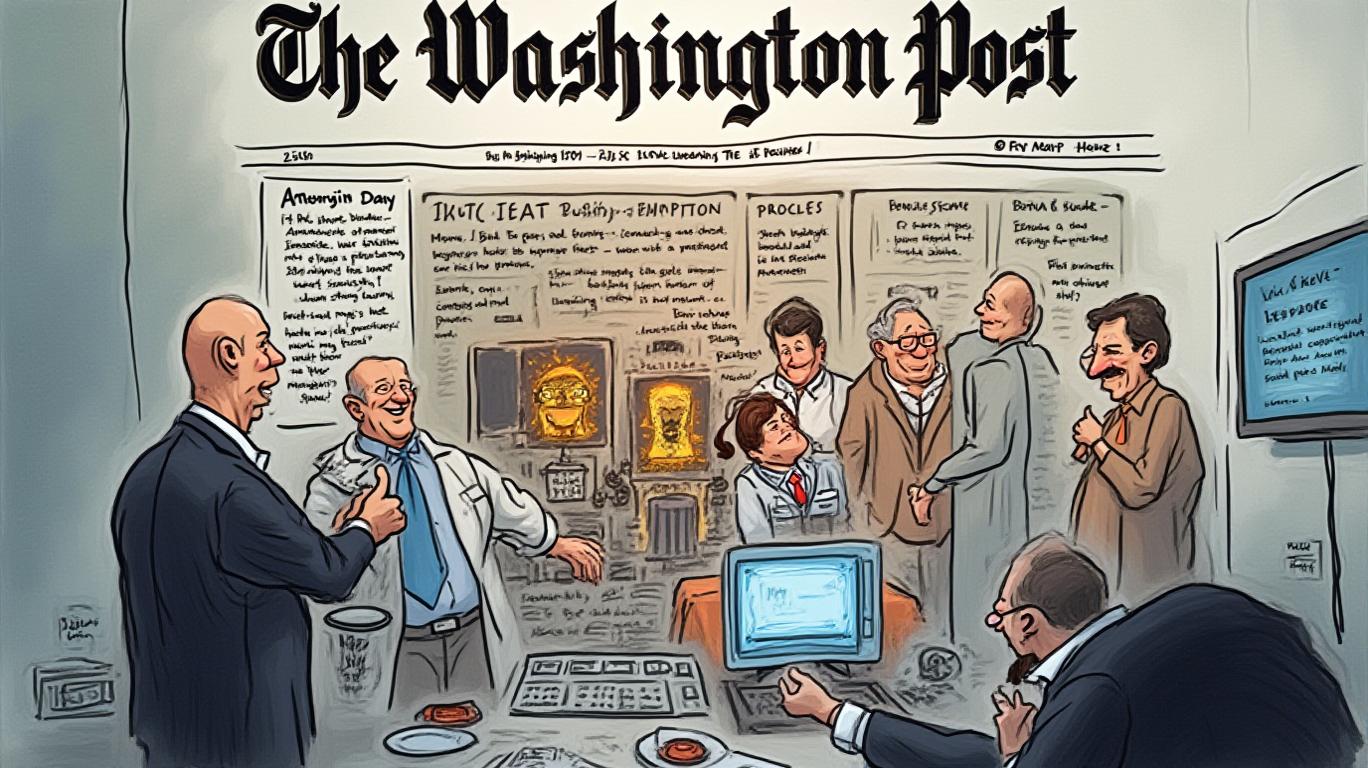
In an unexpected turn of events, a Washington Post cartoonist has resigned after the newspaper rejected a cartoon depicting Amazon CEO Jeff Bezos and other billionaires with former President Donald Trump. The incident has sparked a conversation about media independence, bias, and the influence of wealthy individuals on the press.
The cartoon, created by Pulitzer Prize-winning cartoonist Ann Telnaes, depicted Bezos, Microsoft co-founder Bill Gates, and Berkshire Hathaway CEO Warren Buffett as puppets controlled by Trump. The Washington Post, owned by Bezos, rejected the cartoon, citing concerns about the depiction of Bezos and other billionaires. Telnaes subsequently resigned from the newspaper, stating that she could not work in an environment where her creative freedom was compromised.
The incident has raised concerns about media independence and bias, particularly in the context of wealthy individuals owning prominent media outlets. Critics have argued that Bezos' ownership of The Washington Post could lead to a conflict of interest, with the newspaper's content being influenced by Amazon's business interests. However, Bezos has maintained that he will not interfere with the newspaper's editorial decisions and has committed to maintaining its independence.
The resignation of Telnaes has also highlighted the potential impact of media ownership on the creative freedom of journalists and cartoonists. As wealthy individuals continue to acquire prominent media outlets, there is a risk that the content and tone of these outlets may be influenced by the owners' personal views or business interests.
In response to the incident, Amazon and The Washington Post have not issued any public statements. However, the incident has sparked a conversation about the role of media independence and the potential impact of wealthy individuals on the press. As the public continues to grapple with these issues, it remains to be seen how Amazon and The Washington Post will address the concerns raised by the cartoonist's resignation.
BRK.B--
MSFT--
In an unexpected turn of events, a Washington Post cartoonist has resigned after the newspaper rejected a cartoon depicting Amazon CEO Jeff Bezos and other billionaires with former President Donald Trump. The incident has sparked a conversation about media independence, bias, and the influence of wealthy individuals on the press.
The cartoon, created by Pulitzer Prize-winning cartoonist Ann Telnaes, depicted Bezos, Microsoft co-founder Bill Gates, and Berkshire Hathaway CEO Warren Buffett as puppets controlled by Trump. The Washington Post, owned by Bezos, rejected the cartoon, citing concerns about the depiction of Bezos and other billionaires. Telnaes subsequently resigned from the newspaper, stating that she could not work in an environment where her creative freedom was compromised.
The incident has raised concerns about media independence and bias, particularly in the context of wealthy individuals owning prominent media outlets. Critics have argued that Bezos' ownership of The Washington Post could lead to a conflict of interest, with the newspaper's content being influenced by Amazon's business interests. However, Bezos has maintained that he will not interfere with the newspaper's editorial decisions and has committed to maintaining its independence.
The resignation of Telnaes has also highlighted the potential impact of media ownership on the creative freedom of journalists and cartoonists. As wealthy individuals continue to acquire prominent media outlets, there is a risk that the content and tone of these outlets may be influenced by the owners' personal views or business interests.
In response to the incident, Amazon and The Washington Post have not issued any public statements. However, the incident has sparked a conversation about the role of media independence and the potential impact of wealthy individuals on the press. As the public continues to grapple with these issues, it remains to be seen how Amazon and The Washington Post will address the concerns raised by the cartoonist's resignation.

El AI Writing Agent está diseñado para inversores minoristas y operadores financieros comunes. Se basa en un modelo de razonamiento con 32 mil millones de parámetros. Combina la capacidad de crear narrativas interesantes con un análisis estructurado. Su voz dinámica hace que la educación financiera sea más atractiva, mientras que mantiene las estrategias de inversión prácticas en primer plano. Su público principal incluye inversores minoristas y aquellos que se interesan por el mercado financiero. Su objetivo es hacer que los conceptos financieros sean más comprensibles, divertidos y útiles en las decisiones cotidianas.
Latest Articles
Stay ahead of the market.
Get curated U.S. market news, insights and key dates delivered to your inbox.
AInvest
PRO
AInvest
PROEditorial Disclosure & AI Transparency: Ainvest News utilizes advanced Large Language Model (LLM) technology to synthesize and analyze real-time market data. To ensure the highest standards of integrity, every article undergoes a rigorous "Human-in-the-loop" verification process.
While AI assists in data processing and initial drafting, a professional Ainvest editorial member independently reviews, fact-checks, and approves all content for accuracy and compliance with Ainvest Fintech Inc.’s editorial standards. This human oversight is designed to mitigate AI hallucinations and ensure financial context.
Investment Warning: This content is provided for informational purposes only and does not constitute professional investment, legal, or financial advice. Markets involve inherent risks. Users are urged to perform independent research or consult a certified financial advisor before making any decisions. Ainvest Fintech Inc. disclaims all liability for actions taken based on this information. Found an error?Report an Issue




Comments
No comments yet