
The Warsh Test: A High-Stakes Gamble on US Economic Stability
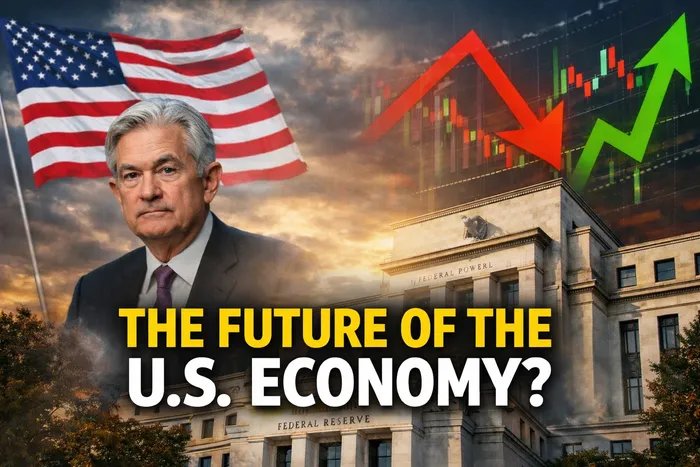
The future of the U.S. economy will take center stage when President Donald Trump’s nominee to become the next Federal Reserve Chairman, Kevin Warsh, begins to testify before the Senate Banking Committee.
President Trump wants to replace Jerome Powell, the current Chair of the Federal Reserve. On January 30, Trump finally ended the suspense and nominated Kevin Warsh, a Wall Street executive and former Fed Governor. Warsh’s formal nomination was sent to the Senate on March 4.
Warsh was the youngest-ever Fed Governor. His term on the Board of Governors spanned from 2006 to 2011, during which he served as a liaison between the Fed and Wall Street throughout the Financial Crisis. Warsh was reluctant to lower rates and was labeled an "inflation hawk" by some during his governorship.
His beliefs on Fed policy appear to have solidified during the 2008 economic crisis and its severe economic consequences. But Warsh could be tested and have to prove his ability to adapt policy to current economic conditions. While he favors a smaller Fed balance sheet, his peers believe Warsh wants to lower interest rates.
The formal confirmation process will begin when the Senate Banking Committee schedules hearings. The full Senate will vote to confirm Warsh as the next Fed Chairman if the committee recommends his confirmation. But it may not happen quickly.
Vocal members of the Senate, like Senator Thom Tillis (R–North Carolina), have made it clear that they will oppose Warsh’s confirmation until the DOJ drops its inquiry into the Fed’s cost overruns associated with renovations of the Marriner S. Eccles Building and the East Building on the Fed’s D.C. campus.
What’s at Stake
Powell’s term ends May 15, but he could remain in office until a new Chairman is approved. The Fed’s June meeting is expected to be the earliest date an interest rate reduction could be passed. If Powell is still Chairman in June, interest rates could remain the same until a new Chairman takes the helm. Should consumers as well as investors even care who takes Powell’s place? Yes, it makes a difference.
Let’s look at the Fed’s responsibilities and where they’ve gotten it wrong in the past.
More from Michelle Connell
- The Inheritance Trap: 3 Reasons You Shouldn't Count on Your Boomer Parents' Money.
- Chutes and Ladders: Why the American Dream is Slipping Out of Reach
- If You Owned Stocks Over the Past Three Years, Congratulations! Now What?
First, Congress imposed a “dual mandate” on the Fed in 1977: keep prices stable (with a low inflation target) and promote maximum employment. It uses two tools to achieve this mandate: interest rates and the money supply.
Through the Federal Open Market Committee (FOMC), the Fed manages interest rates by setting the interest rate that financial organizations charge each other for overnight loans. Known as the Fed Funds rate, this rate acts as a foundation for setting consumer and commercial interest rates, such as those for home and auto loans and commercial lines of credit.
The Fed can also use the money supply to influence inflation and grow the economy. By increasing the amount of money in the economy and/or decreasing rates, the Fed will attempt to increase business and consumer spending. However, as this spending rises, it impacts prices and increases inflation.
When the economy is overheating, the Fed can react with the opposite actions—raising rates and/or decreasing the money supply. It’s a tough balancing act that impacts all of us. If the Fed overuses these tools, they run the risk of pushing the economy into recession or creating hyperinflation.
Some past Fed Chairmen have been great at fulfilling the dual mandate and keeping the U.S. economy healthy. Others have not only failed at stabilizing the economy but have managed to make things worse. Let’s look at two of the bad actors.
Arthur Burns, the Fed Chair between 1970 and 1978, is viewed as being one of the worst at his job and one of the most influenced by his President, Richard Nixon. During Burns’ tenure, the average inflation rate was approximately 6.5% to 9%. Rates rose from 6% to over 12% between 1972 and 1974. The economy slowed down significantly, and the result was stagflation—very low growth combined with high inflation. You can read more about Burns here.
Eugene Meyer was the Chairman at the beginning of the Great Depression, from 1930–1933. With the stock market down 66% and unemployment as high as 25%, Meyer walked into an apocalyptic situation fueled by a highly inflated and speculative stock market.
The stock market crash led to individuals and corporations making runs on banks for their money. The banks that were not able to meet redemption requests went out of business. As this was occurring, Meyer and his fellow Fed members could have added more money and liquidity into the economy.
The result would have been less panic, with more banks able to stay open and lend to businesses and individuals. This would have helped them keep their jobs, homes, and farms. But it was not to be.
The Meyer Fed failed to add liquidity to the system, helping to magnify the Great Depression’s negative consequences. Fed Chair Ben Bernanke later learned the lesson and flooded the U.S. economy with liquidity by expanding the Fed’s balance sheet during the Great Financial Crisis (GFC) that began in 2008. Here is a ranking of Fed Chairs by performance.
The responsibility to keep the U.S. financial system and economy on the rails could soon fall on Warsh’s shoulders. But on his watch, several economic landmines similar to those Burns and Meyer faced appear to be emerging.
On the positive side, Warsh can review the past and avoid repeating his predecessors’ mistakes.
Unfortunately, Warsh is facing new landmines that could be very damaging to our economy, such as artificial intelligence, geopolitical tensions, tariffs, and a lack of affordability for many Americans.
Understanding the long-term implications of these developments—especially artificial intelligence—and responding appropriately is more theory than reality. They present a fog of economic uncertainty, with no sense of when it will lift.
More than ever, the selection of the Federal Reserve Chairman, as well as fellow Fed Governors, promises to have a huge impact on our prosperity and quality of life. The question for the rest of us is whether they will be able to cut through the fog and see the light.
Link: Michelle Connell and Portia Capital Management
_404f753d1772734109742.jpg?format=webp&width=700)
_37112a431772734122487.jpg?format=webp&width=700)
_376e90a51765890232851.png?format=webp&width=48&height=48)
Michelle Connell, CFA is the owner of Portia Capital Management. Michelle has over twenty-five years of institutional experience of investing for charities, foundations and high net-worth individuals. As a former semiconductor analyst and tech sector lead, Michelle also invests in public and privately-held technology investments. She is a frequent media contributor to numerous organizations, including: Schwab Network, Bloomberg, Financial Advisors Magazine and StockInvestor.co
Latest Articles
Stay ahead of the market.
Get curated U.S. market news, insights and key dates delivered to your inbox.


AInvest
PRO
AInvest
PRO



