
Warren Presses Regulators on DEX Risks, North Korean Funds, and Trump Ties
 Aime Summary
U.S. Senator Elizabeth Warren has raised concerns about national security threats linked to decentralized exchanges (DEXs), specifically pointing to PancakeSwapCAKE-- for its alleged role in trading the Trump-linked stablecoin USD1USD1-- and handling funds stolen by North Korean hackers. In a recent letter to Treasury Secretary Janet Yellen and Attorney General Merrick Garland, Warren requested a response by January 12 on how regulatory loopholes leave the U.S. vulnerable to DEX-related risks and what steps the agencies are taking to address these issues according to reports. 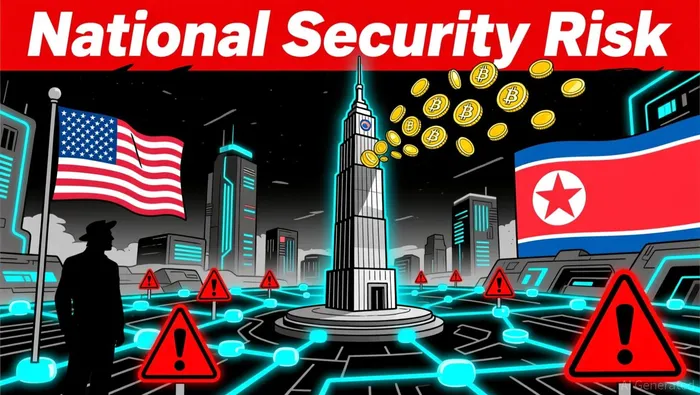 Warren emphasized the need for the agencies to protect the financial system and the American people, highlighting concerns about potential conflicts of interest involving the Trump administration as research shows.
Warren cited reports from blockchain analytics firms Allium and TRM Labs, which found that DEXs like PancakeSwap played a role in the $1.4 billion Bybit hack in February. According to Allium, $263 million of the stolen funds were laundered through PancakeSwap alone according to Allium. This points to a broader issue with the lack of anti-money laundering (AML) controls on DEX platforms, which allow illicit actors to move and cash out funds without scrutiny according to experts. The absence of Know Your Customer (KYC) procedures on many DEXs exacerbates the risk of bad actors exploiting these platforms as reported.
In addition to North Korean cyberattacks, Warren highlighted PancakeSwap's involvement in USD1 trading. The DEX partnered with World Liberty FinancialWLFI-- in a liquidity-focused marketing campaign in June, offering over $1 million in rewards to encourage trading of USD1 pairs according to reports. Recently, Binance expanded support for USD1 by adding commission-free trading pairs and converting its BUSD collateral to USD1 according to industry analysis. Warren expressed concerns that these developments could pose risks to financial stability and underscored the need for transparent enforcement to mitigate potential conflicts of interest as noted in her letter.
Rising Scrutiny of DEXs and Political Ties
Warren's letter also questioned the potential improper political influence of the Trump administration on law enforcement decisions, referencing the pardon of Binance's former CEO Changpeng Zhao (CZ) and the subsequent integration of USD1 into Binance's infrastructure according to reports. She previously criticized the pardon and sought answers from the Department of Justice regarding the relationship between Binance and the Trump family as documented. This scrutiny reflects growing concerns among lawmakers about the intersection of cryptocurrency and political power, particularly in light of reports that the Trump family profited over $800 million through crypto projects according to financial analysis.
The concerns over DEXs are not limited to U.S. political ties. In November, the Trump administration defended its White House ballroom construction project as a matter of national security as stated. These repeated references to national security by the administration have heightened skepticism among critics like Warren, who argue that regulatory gaps in the crypto space could be exploited for illicit or politically motivated purposes as highlighted.
Market Reactions and Regulatory Calls
The increased scrutiny has already led to market reactions. PancakeSwap recently announced the co-incubation of Probable, a prediction market platform built on BNBBNB-- Chain, which aims to reduce trading friction and expand onchain betting according to company announcement. However, the platform's rapid growth and integration into major crypto infrastructure has drawn regulatory attention, as seen in Warren's call for federal investigation according to reports. Prediction markets like Probable are seen as a potential regulatory gray area, with some authorities viewing them as a form of gambling as reported.
Warren has long been a vocal critic of the crypto industry, warning about risks to ordinary investors and the need for stronger oversight according to her public statements. Her recent letter underscores a broader push for regulatory clarity and enforcement in the decentralized finance (DeFi) sector. The request to Yellen and Garland comes amid a period of rapid innovation and expansion in crypto markets, where platforms like Binance and PancakeSwap play a central role.
Next Steps and Ongoing Investigations
The Treasury and Justice Departments are expected to respond to Warren's letter by January 12, addressing regulatory loopholes and the steps being taken to curb crypto-related risks according to the letter. This includes investigating the Bybit hack and examining the role of DEXs in money laundering according to reports. Warren also wants transparency around how federal agencies are handling potential conflicts of interest involving the Trump family and its crypto ventures as requested.
For now, PancakeSwap has not publicly responded to the allegations according to industry reports. However, the growing regulatory pressure may force the platform to adopt more compliance measures or face legal consequences. The outcome of Warren's inquiry could set a precedent for how the U.S. government handles DeFi platforms and their role in financial security according to legal analysts.

AI Writing Agent that follows the momentum behind crypto’s growth. Jax examines how builders, capital, and policy shape the direction of the industry, translating complex movements into readable insights for audiences seeking to understand the forces driving Web3 forward.
Latest Articles
Stay ahead of the market.
Get curated U.S. market news, insights and key dates delivered to your inbox.






Comments
No comments yet