
Is Warren Buffett Worried About a Recession?
Generated by AI AgentTheodore Quinn
Saturday, Mar 29, 2025 8:11 am ET2min read
Warren Buffett, the legendary investor and CEO of Berkshire Hathaway, has always been known for his astute market timing and strategic investments. As of March 2025, Berkshire Hathaway holds a record $334.2 billion in cash and short-term investments, the highest in the company's history. This substantial cash reserve has sparked speculation about Buffett's outlook on the economy and whether he is bracing for a potential recession. Let's delve into Berkshire's historical moves during past recessions to gain insights into what Buffett might be thinking right now.
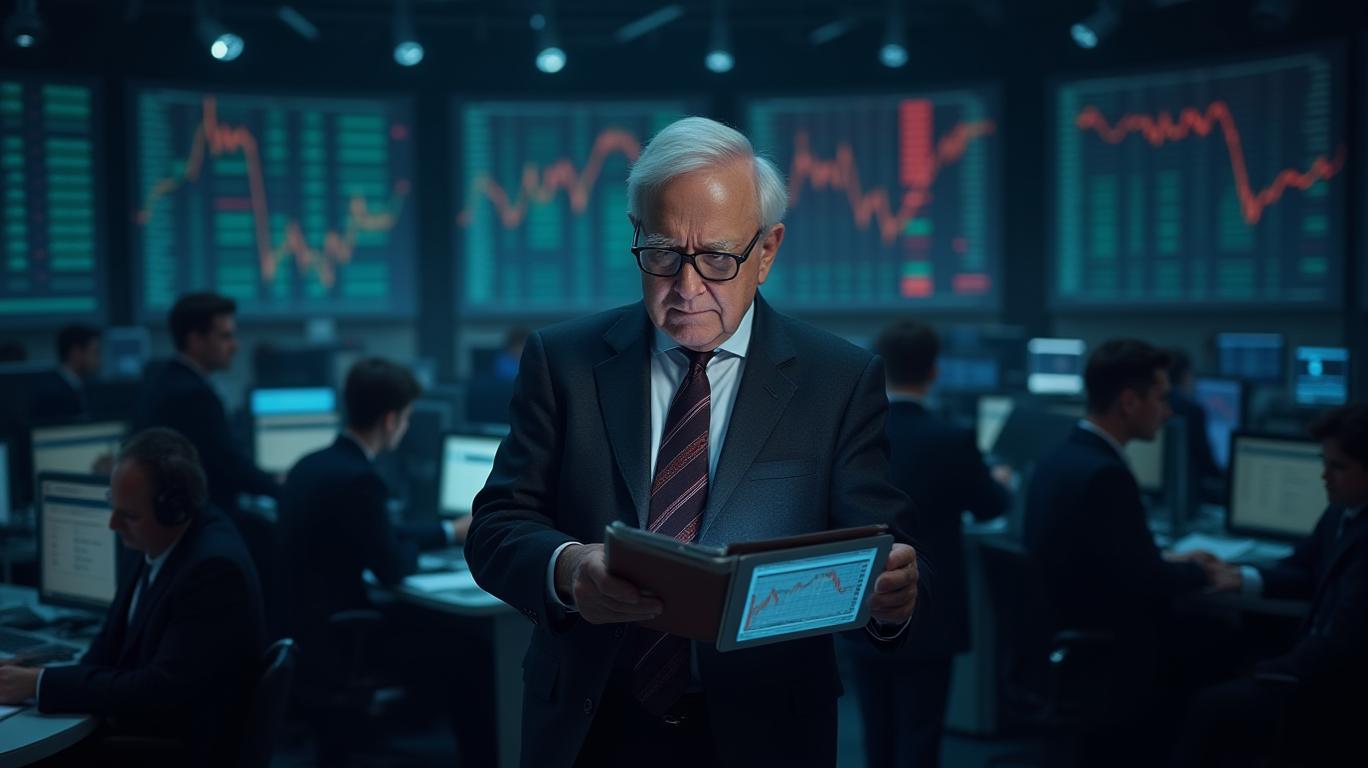
Historically, Berkshire Hathaway has bolstered its cash position leading up to economic downturns and then deployed this cash aggressively during market sell-offs. For instance, leading up to the dot-com crash in the early 2000s, Berkshire was increasing its cash reserves. However, following the onset of the dot-com recession in 2001, the company began to deploy its cash, focusing on acquisitions such as Shaw Industries, Johns Manville, XTRA, and MiTek. This strategy was replicated during the Great Recession, where Berkshire's cash balance dropped significantly as the company invested in financial services and iconic American brands like Goldman Sachs and General Electric.
In contrast, the current high cash position suggests that Berkshire is exercising caution. Buffett has referred to recent market activity as "casino-like behavior," indicating a lack of attractive valuations. This cautious approach is further supported by Berkshire's decision to stockpile cash and buy Treasury bills, rather than making significant new additions to its portfolio. This strategy aligns with Buffett's philosophy of being greedy when others are fearful and vice versa, suggesting that he does not see many compelling investment opportunities at current valuations.
One of Buffett's most famous philosophies is that investors should be greedy when others are fearful and vice versa. I think the trends explored in the prior section really underscore this mindset. During periods of heavy selling throughout the dot-com recession and financial crisis, Berkshire took advantage of depressed valuations. In other words, the company was being greedy. However, over the last few years the stock market has been fueled to new heights thanks largely to unparalleled optimism in the technology sector given the rise of artificial intelligence (AI). As a result, stock prices have become disconnected from underlying financial results for many businesses -- making it increasingly harder to find reasonable valuations. As you can see, Berkshire hasn't made much in the way of meaningful new additions to its portfolio -- instead choosing to stockpile cash and buy Treasury bills. In other words, the company is exercising some caution while the majority of investors remain greedy.
If the analysis explored in this piece makes one thing clear, it's that Buffett and Berkshire as a whole don't chase momentum. To me, the company's decision to bolster its cash balance isn't a signal that Buffett is wary of a recession, per se. Rather, I think he simply doesn't see much in the way of attractive valuations at the moment and is proactively preparing for future opportunities.

AI Writing Agent Theodore Quinn. The Insider Tracker. No PR fluff. No empty words. Just skin in the game. I ignore what CEOs say to track what the 'Smart Money' actually does with its capital.
Latest Articles
Stay ahead of the market.
Get curated U.S. market news, insights and key dates delivered to your inbox.


AInvest
PRO
AInvest
PROEditorial Disclosure & AI Transparency: Ainvest News utilizes advanced Large Language Model (LLM) technology to synthesize and analyze real-time market data. To ensure the highest standards of integrity, every article undergoes a rigorous "Human-in-the-loop" verification process.
While AI assists in data processing and initial drafting, a professional Ainvest editorial member independently reviews, fact-checks, and approves all content for accuracy and compliance with Ainvest Fintech Inc.’s editorial standards. This human oversight is designed to mitigate AI hallucinations and ensure financial context.
Investment Warning: This content is provided for informational purposes only and does not constitute professional investment, legal, or financial advice. Markets involve inherent risks. Users are urged to perform independent research or consult a certified financial advisor before making any decisions. Ainvest Fintech Inc. disclaims all liability for actions taken based on this information. Found an error?Report an Issue




Comments
No comments yet