
Warren Buffett's UnitedHealth Bet: A Strategic Play or a Contrarian Signal?
 Aime Summary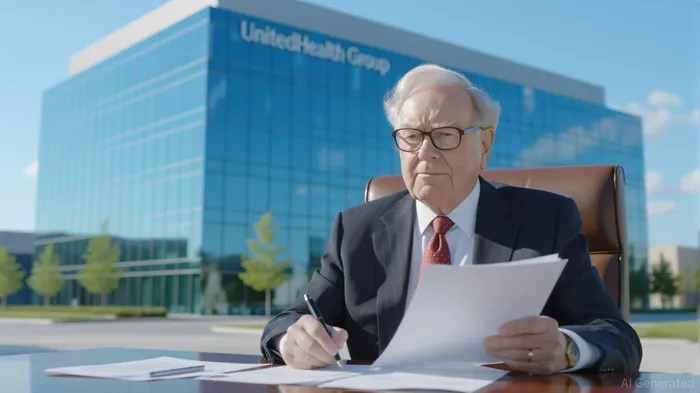
Warren Buffett's recent $1.6 billion investment in UnitedHealth GroupUNH-- (UNH) has ignited a firestorm of debate among investors and analysts. The move, disclosed in a June 2025 SEC filing, saw Berkshire Hathaway acquire over 5 million shares of the beleaguered healthcare insurer during a period of significant turmoil. UnitedHealth's stock had plummeted nearly 50% for the year, battered by a DOJ investigation into Medicare billing practices, a leadership shakeup, and a suspended earnings outlook. Yet Buffett's bet—alongside similar moves by investors like Michael Burry and David Tepper—suggests a belief that the company's challenges are temporary. But is this a calculated strategic play, or a contrarian signal in a sector facing systemic headwinds?
The Rationale Behind the Bet
Buffett's investment aligns with his long-standing philosophy of value investing: buying undervalued companies with durable competitive advantages. UnitedHealthUNH--, despite its troubles, remains the largest health insurer in the U.S., with a diversified business model spanning UnitedHealthcare (its insurance arm) and Optum (its healthcare technology and pharmacy services division). The latter has become a critical growth engine, leveraging data analytics and digital innovation to drive margins.
The DOJ investigation, while severe, has not derailed UnitedHealth's core operations. Analysts argue that the company's dominance in Medicare Advantage (MA) and its role in the U.S. healthcare system make it unlikely to face catastrophic penalties. Furthermore, the Centers for Medicare & Medicaid Services (CMS) announced a 5.1% increase in MA reimbursement rates for 2026, a tailwind that could offset rising costs. Buffett's team, likely Todd Combs or Ted Weschler, appears to have capitalized on a market overreaction to short-term risks, betting on the company's long-term resilience.
Sector-Wide Implications
The healthcare sector in 2025 is navigating a perfect storm of regulatory shifts, economic pressures, and technological disruption. The Inflation Reduction Act (IRA) has reshaped Medicare and Medicaid reimbursement models, squeezing margins for insurers and providers. Meanwhile, the sector's EBITDA is projected to grow at a 7% CAGR through 2028, driven by healthcare services861198-- and technology (HST) and specialty pharmacy segments. These areas, which accounted for 19% of industry EBITDA in 2024, are expected to outperform as generative AI and data analytics redefine care delivery.
UnitedHealth's Optum division is uniquely positioned to benefit from this shift. Its expertise in data-driven solutions and pharmacy benefits management (PBM) gives it a competitive edge in an industry increasingly reliant on cost containment and operational efficiency. However, the company's exposure to MA plans—now under intense regulatory scrutiny—remains a double-edged sword. While the 2026 reimbursement increase offers relief, rising drug costs and risk adjustment challenges could persist.
Contrarian Logic or Strategic Overreach?
Buffett's move is emblematic of his contrarian approach. By investing in UnitedHealth at a price-to-earnings ratio of 12—well below its historical average—he's betting on a market correction. The stock's 13% surge post-announcement underscores the “Buffett Bounce” effect, but the company's fundamentals must justify the rally. UnitedHealth's 2024 revenue of $400 billion and $15 billion in net profit highlight its scale, yet its 2025 earnings guidance remains cautious.
Critics argue that the DOJ investigation and CEO transition could linger as overhangs, particularly if regulatory penalties materialize. However, Buffett's track record in healthcare investments—such as his 2019 acquisition of AmazonAMZN-- shares—suggests a willingness to endure short-term volatility for long-term gains. The broader sector's shift toward non-acute care and digital innovation also supports the case for a strategic play, not just a contrarian bet.
Investment Takeaways
For investors, Buffett's UnitedHealth stake offers a blueprint for navigating a volatile sector. Key considerations include:
1. Regulatory Risk Mitigation: UnitedHealth's role in the U.S. healthcare system may shield it from severe penalties, but ongoing investigations warrant close monitoring.
2. Margin Resilience: The 2026 MA reimbursement increase and Optum's growth potential could drive earnings recovery.
3. Sector Rotation: As HSTHST-- and specialty pharmacy segments outperform, investors should evaluate companies with strong digital and data capabilities.
In conclusion, Buffett's UnitedHealth bet is both a strategic play and a contrarian signal. It reflects confidence in the company's long-term value and the healthcare sector's ability to adapt to regulatory and economic shifts. While risks remain, the investment underscores the importance of patience and a focus on durable competitive advantages in an increasingly complex market. For investors, the question is not whether UnitedHealth will recover, but whether the sector's structural trends justify a similar approach.

Delivering real-time insights and analysis on emerging financial trends and market movements.
Latest Articles
Stay ahead of the market.
Get curated U.S. market news, insights and key dates delivered to your inbox.
AInvest
PRO
AInvest
PRO



Comments
No comments yet