
Warren Buffett to Step Down as Berkshire Hathaway CEO, Ending 6-Decade Tenure
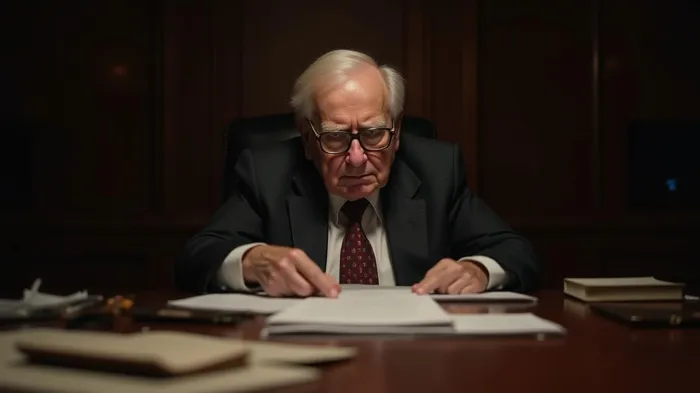
Warren Buffett, the legendary investor and CEO of Berkshire HathawayBRK.B--, announced his plan to step down from his role at the end of the year, marking the end of a six-decade tenure. This news has sent shockwaves through the investment community. Buffett will continue to serve as the chairman, with Greg Abel, his designated successor, taking over the CEO position. The transition, approved by the Berkshire board, is set to be a historic handover.
Under Buffett's leadership, Berkshire Hathaway's stock performance has far outpaced the broader market. From 1965, when Buffett took over the struggling textile mill, to the end of 2024, Berkshire's stock price has surged by an astonishing 550,228%, with an annualized return of 19.9%. In contrast, the S&P 500 index returned 39,054% over the same period, with an annualized return of 10.4%. This remarkable performance underscores Buffett's investment acumenABOS-- and his commitment to value investing.
Buffett's investment journey at Berkshire Hathaway is marked by several iconic investments that have shaped his value investing philosophy. These investments span various sectors, from textiles to insurance, and from consumer goods to technology. Each case study not only exemplifies Buffett's investment acumen but also reveals the strategies that have allowed him to navigate economic cycles and market volatility.
One of Buffett's most successful investments was See's Candies, acquired in 1972. This acquisition marked a significant shift in Buffett's investment strategy. See's Candies was a high-quality, unlisted brand with a strong financial performance. Despite initial reservations about the purchase price, Buffett ultimately bought the company for $25 million, which was 11.9 times its earnings. This investment proved to be one of Berkshire's most successful, with an internal rate of return (IRR) of 32% from 1972 to 1999. By 2014, See's Candies had contributed $19 billion in pre-tax profits to Berkshire, making it a cornerstone of the company's long-term growth.
The acquisition of See's Candies was a turning point for Buffett, moving him away from his mentor Benjamin Graham's focus on undervalued assets to a strategy of investing in high-quality companies with strong competitive advantages and sustainable growth. This shift allowed Buffett to focus on companies with stable industries, strong "moats," and the ability to grow without significant capital investment.
Another iconic investment was Coca-Cola, which Berkshire began acquiring in 1988. Buffett saw the potential in Coca-Cola's brand and its ability to generate consistent cash flows. By 1994, Berkshire had accumulated 4 billion shares of Coca-Cola, making it one of the company's largest shareholders. As of 2024, Berkshire's investment in Coca-Cola had a market value of approximately $270 billion, with a total return of nearly 29 times the initial investment. Buffett's long-term holding of Coca-Cola has been a key driver of Berkshire's success, providing consistent dividends and capital appreciation.
In 2003, Buffett made his first investment in a Chinese company, China Petroleum. Berkshire acquired 23.39 billion shares of China Petroleum H shares, becoming the company's second-largest shareholder. Buffett's decision was based on the company's strong financials and its dominant position in the global oil market. By 2007, Buffett had sold his shares at a significant profit, highlighting his ability to identify undervalued assets and capitalize on market opportunities.
Another notable investment was in BYD, a Chinese company, in 2008. Buffett, influenced by his partner Charlie Munger, acquired 2.25 billion shares of BYD at a price of 8 HKD per share. This investment proved to be highly successful, with Berkshire realizing a profit of over 33 times its initial investment by 2022. Buffett's decision to invest in BYD was driven by his confidence in the company's management and its innovative approach to technology.
In 2016, Buffett began investing in Apple, acquiring 1.1% of the company's shares at a cost of $6.747 billion. Despite initial concerns about Apple's declining sales, Buffett saw the value in the company's strong brand and innovative products. By 2024, Berkshire had accumulated 3 billion shares of Apple, making it one of the company's largest shareholders. Buffett's investment in Apple has been a significant contributor to Berkshire's success, providing consistent dividends and capital appreciation.
Buffett's investment philosophy is centered on long-term value creation. He focuses on identifying high-quality companies with strong competitive advantages and sustainable growth prospects. His ability to navigate economic cycles and market volatility has allowed him to achieve exceptional returns for Berkshire's shareholders. As he continues to lead Berkshire Hathaway, his investment strategies remain a benchmark for value investors around the world.

Stay ahead of the market.
Get curated U.S. market news, insights and key dates delivered to your inbox.
AInvest
PRO
AInvest
PRO



Comments
No comments yet