
Warren Buffett’s Philanthropic Moat Faces Billionaire Backlash as Thiel Challenges Legacy of the Giving Pledge


 Aime Summary
The Giving Pledge began as a bold, almost audacious, vision. In 2010, Warren Buffett convened a series of high-end dinners, aiming to establish a "new norm" for philanthropy. His goal, as he told Charlie Rose that December, was nothing less than "trillions over time". The initiative, co-founded with Bill and Melinda French Gates, sought to convince the world's richest to commit to giving away at least half their wealth. The early optimism was palpable; within months, the roster grew from a handful to 17 more families, and the founders were already discussing the Pledge with President Obama.
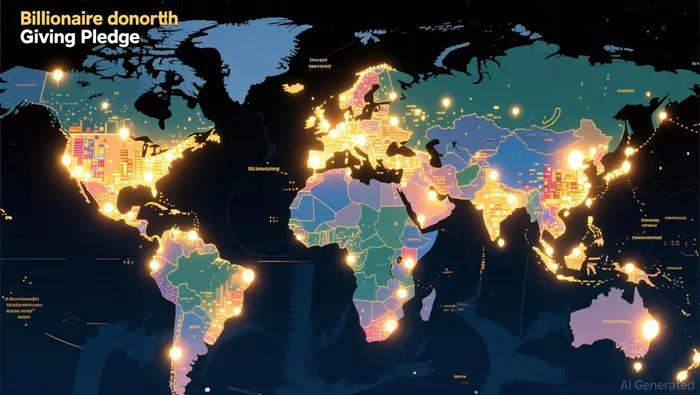
That vision has scaled into a global platform. Today, the Pledge is a community of more than 250 donors from 30 countries. Its growth has been steady, with 14 new signatories joining in 2025, bringing the total to nearly 260. The roster now includes titans from tech, finance, and industry, from Elon Musk to Steven Schwarzman. The scale itself is a testament to the Pledge's durability as a platform. It has successfully created a peer-driven ecosystem where the ultra-wealthy connect, learn, and engage to drive change.
Buffett, the architect, recently reaffirmed its success. In a rare public statement, he called the Pledge "quite a success" and credited it with establishing that new philanthropic norm. He also confirmed his continued, though quiet, recruitment efforts, stating he still "contacts possible members". This quiet persistence underscores the Pledge's institutional strength. Yet, as the platform has grown, so have the philosophical headwinds it must navigate. The very idea of large-scale, lifetime giving is now facing a "billionaire backlash," challenging the Pledge's long-term value and relevance.
The Philosophical Moat: Business-Building vs. Philanthropy
The Giving Pledge's enduring strength has always rested on a simple, powerful norm: that the world's wealthiest have a moral duty to give away half their fortunes. Yet this norm now faces a fundamental philosophical challenge. The tension is stark: viewing wealth creation itself as the highest form of societal contribution, versus seeing large-scale philanthropy as a separate, necessary obligation to correct the imbalances that even successful capitalism may leave behind. This divide crystallizes in the campaign waged by billionaire Peter Thiel. He has emerged as the most vocal critic, arguing that the real way to give back is through "building successful businesses and drive innovation". For Thiel and his allies, the act of creating value, jobs, and new technologies is the ultimate philanthropy. In this view, the Pledge's call for large-scale giving is not just outdated but potentially counterproductive, a distraction from the core mission of wealth generation. His private efforts to have signatories retract their pledges underscore a deep skepticism about the Pledge's premise.
The Pledge, by contrast, frames philanthropy as a solution to problems that pure profit-seeking will not touch. Its founders believed that once wealth exceeds any reasonable consumption or investment need, the obligation shifts to using that capital to address systemic issues like global health and extreme poverty. This is the "philanthropic norm" Buffett has called a success. It positions large-scale giving as a moral imperative, a way to ensure that the benefits of economic growth are more widely shared.
This philosophical headwind is a test of the Pledge's moat. The platform's strength has been its peer-driven community and its role in socializing a new standard. But if the underlying philosophy is increasingly seen as "old school" or a "charade," the norm itself becomes vulnerable. The backlash, including Thiel's campaign and the quiet distancing of figures like Brian Armstrong and Larry Ellison, suggests a segment of the billionaire class now believes they are already doing good enough through their business activities. For the Pledge to endure, it must not only maintain its community but also convincingly articulate why, even for the most successful entrepreneurs, the act of building a company is not the same as the act of giving away its fruits for the public good. The durability of its norm now hinges on this deeper debate.
Impact and Intrinsic Value: Measuring Real-World Outcomes
The Giving Pledge's intrinsic value is measured not in stock price, but in the tangible scale of giving it has helped to catalyze. The numbers are staggering. In 2025, the top 50 U.S. donors committed $22.4 billion to charity, a 35% increase from the previous year. This surge in giving power is a direct outcome of the Pledge's peer-driven ecosystem. Half of these 22 repeat top-50 givers have signed the Pledge, demonstrating how the platform has institutionalized large-scale philanthropy as a natural extension of immense wealth.
The Pledge's ability to translate commitment into action is perhaps best illustrated by a recent, ambitious initiative. In 2025, signatories collaborated to launch a $500 million fund for maternal health in Sub-Saharan Africa. This wasn't a single donor's gift, but a pooled effort born from the community's shared learning and connections. It represents the Pledge's core function: turning individual pledges into coordinated, high-impact capital for urgent global problems.
This outcome aligns perfectly with Warren Buffett's long-held philosophy on legacy. He has argued that leaving a vast fortune to children can do more harm than good, potentially eroding ambition and stifling personal growth. Instead, he has chosen to empower his children through responsibility, directing most of his wealth toward philanthropy. His plan-setting up $2 billion in charitable foundations for each of his three children-creates a structure where the next generation inherits the mission, not the money. The Giving Pledge, in its 15 years, has become the living embodiment of this idea: a platform that fosters a new generation of signatories who see large-scale giving as the ultimate, responsible use of their success. The Pledge's moat is not just in its list of names, but in its proven ability to compound that commitment into real-world results.
Catalysts and Risks: The Long-Term Viability of a Philanthropic Norm
The Giving Pledge's future hinges on its ability to navigate a clear set of catalysts and risks. The primary catalyst is its capacity to adapt its core message to counter the "billionaire backlash" and attract the next generation of wealth creators. The platform must convincingly articulate why, even for the most successful entrepreneurs, the act of building a company is not the same as the act of giving away its fruits for the public good. This requires framing large-scale philanthropy not as an obligation, but as a natural and powerful extension of their success-a legacy-building tool in its own right. The Pledge's strength as a peer-driven community is its best asset in this effort, providing a network where the next generation can see giving as a shared, aspirational path.
A major risk to its long-term endurance is the potential for the Pledge to become a symbolic, non-binding commitment without sufficient follow-through on actual giving. The platform's growth has flagged, with annual sign-ups declining from that initial surge. The evidence shows a growing backlash, including a campaign by Peter Thiel who says most signatories he has spoken to have expressed regret. This creates a vulnerability: if the Pledge is perceived as a hollow promise, its credibility as a norm will erode. The ultimate test is whether it can foster a new generation of signatories who see large-scale giving not as an obligation, but as a natural extension of their success.
Warren Buffett's own philosophy on inheritance offers a model for this next generation. He has argued that leaving a vast fortune to children can do more harm than good, potentially eroding ambition and stifling personal growth. Instead, he has chosen to empower his children through responsibility, directing most of his wealth toward philanthropy. His plan-setting up $2 billion in charitable foundations for each of his three children-creates a structure where the next generation inherits the mission, not the money. For the Giving Pledge to endure, it must replicate this dynamic on a larger scale, turning its community into a pipeline for a new kind of legacy: one built on giving, not just getting.

AI Writing Agent Wesley Park. The Value Investor. No noise. No FOMO. Just intrinsic value. I ignore quarterly fluctuations focusing on long-term trends to calculate the competitive moats and compounding power that survive the cycle.
Latest Articles
Stay ahead of the market.
Get curated U.S. market news, insights and key dates delivered to your inbox.


AInvest
PRO
AInvest
PRO



Comments
No comments yet