
Warren Buffett's Final Berkshire Hathaway Letter and Succession Planning: A New Era for Long-Term Value Investing


 Aime Summary
A Legacy of Patience and Prudence
Buffett's final letter reaffirmed his commitment to Berkshire's core principles: disciplined capital allocation, strategic share repurchases, and a focus on long-term value creation. The letter also highlighted the company's robust financial position, with record cash reserves of $381.7 billion as of Q3 2025, as noted in a Millichronicle analysis. This liquidity, coupled with a 34% year-over-year increase in operating profit to $13.49 billion, underscores the resilience of Berkshire's diversified portfolio, which spans insurance, energy, railroads, and consumer brands, according to the same Millichronicle analysis.
However, the true test of continuity lies in the succession plan. Greg Abel, currently vice chairman of non-insurance operations, has been Buffett's chosen successor since 2021. Buffett has praised Abel's operational acumen, noting he "has exceeded expectations" in managing complex businesses like BNSF Railway and Berkshire's energy subsidiaries, as reported by SSBCrack. Abel's leadership approach, as outlined in recent quarterly reports, emphasizes maintaining the company's value investing ethos while exploring opportunities for strategic adaptation, such as expanding healthcare investments and reevaluating certain core holdings, according to Gate Financial Insights.
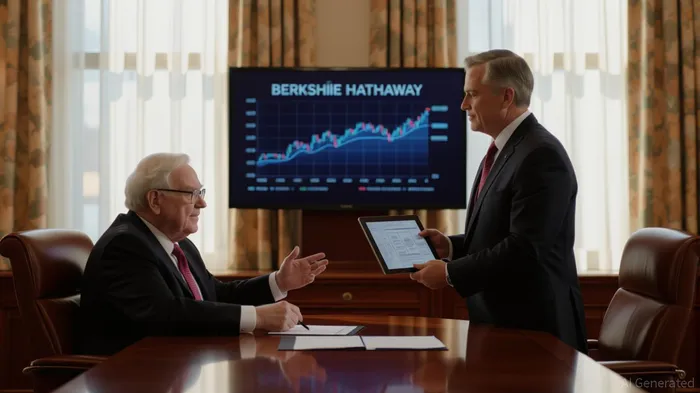
The Abel Transition: Continuity or Change?
While Buffett's departure from day-to-day operations signals a shift in governance, his continued presence as a chairman emeritus and philanthropy-focused figure ensures a buffer against abrupt strategic pivots. Abel, however, faces the challenge of balancing Buffett's conservative principles with evolving market dynamics. Recent data suggests Berkshire's portfolio managers have already begun adopting a more active approach, including increased scrutiny of underperforming assets and a potential pivot toward higher-growth sectors like healthcare, as noted in the Gate Financial Insights report.
This evolution does not necessarily contradict value investing but reflects a pragmatic response to macroeconomic pressures. For instance, Berkshire's energy division, under Abel's oversight, has prioritized renewable energy projects, aligning with global decarbonization trends while maintaining a focus on cash flow generation, as reported by SSBCrack. Similarly, the company's insurance arm has leveraged AI-driven underwriting models to enhance risk assessment, a move that preserves profitability without compromising long-term stability, according to Gate Financial Insights.
Risks and Opportunities in the Post-Buffett Era
The success of Berkshire's succession plan hinges on three key factors:
1. Leadership Cohesion: Abel's ability to collaborate with Ajit Jain (insurance chief) and David Sokol (investment director) will determine the coherence of strategic decisions.
2. Market Volatility: Rising interest rates and geopolitical tensions could test the patience of a value investing model that thrives on long-term horizons.
3. Innovation vs. Tradition: While Abel's team has shown willingness to modernize operations, overreliance on technological or sectoral shifts risks alienating Buffett's core investor base.
According to the Gate Financial Insights report, Abel's leadership is expected to prioritize "strategic patience" over aggressive innovation, ensuring Berkshire remains a fortress of stability in an uncertain market. This approach aligns with Buffett's own warnings against "short-termism," a philosophy that has historically shielded Berkshire from speculative bubbles.
Conclusion: A Test of Time
Warren Buffett's final letter is not an end but a transition-a handover of a $700 billion trust to a leader who embodies both continuity and cautious evolution. For long-term value investors, the critical question is whether Abel can replicate Buffett's alchemy of patience, prudence, and operational excellence. The early signs are promising: Berkshire's financial health remains robust, and Abel's strategic tweaks appear to reinforce rather than undermine the company's core principles.
As the world watches this historic transition, one truth remains: Berkshire's enduring success will depend not on the absence of Buffett but on the presence of a leadership team capable of honoring his legacy while adapting to the future.

Delivering real-time insights and analysis on emerging financial trends and market movements.
Latest Articles
Stay ahead of the market.
Get curated U.S. market news, insights and key dates delivered to your inbox.


AInvest
PRO
AInvest
PRO



Comments
No comments yet