
Warren Buffett's Final Act: The Retirement of an Era and Its Market Legacy
The 2025 Berkshire HathawayBRK.B-- shareholder meeting in Omaha marked a historic turning point as Warren Buffett, the 94-year-old “Oracle of Omaha,” announced his retirement as CEO by year-end. This seismic shift in corporate leadership, paired with Buffett’s sharp critiques of U.S. trade policies, has sent ripples through global markets. As the world’s most iconic investor steps back, investors are asking: What does Berkshire’s future look like without its founder, and how will geopolitical tensions shape its trajectory?
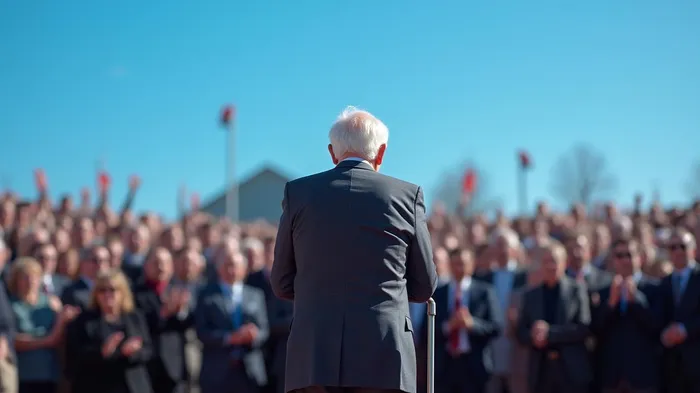
The Transition of Power: A Blueprint for Succession?
Buffett’s decision to name Greg Abel as his successor—after decades of public hesitation—signals a deliberate handover to a tested leader. Abel, CEO of Berkshire Hathaway Energy and a 25-year veteran of the company, inherits a conglomerate valued at over $1 trillion, making Berkshire the first non-tech firm to reach this milestone.
Buffett’s confidence in Abel is underscored by his own words: “Greg should become the chief executive officer of the company at year end.” Yet, skepticism lingers. Analysts note that Berkshire’s returns have underperformed the S&P 500 since 2016, raising questions about whether Abel can replicate Buffett’s contrarian genius.
The stakes are high. Berkshire’s $347.7 billion cash reserves, a cornerstone of its “wait for blood in the streets” strategy, now sit under new management. Abel’s first test? Navigating the fallout from U.S. trade wars, which Buffett warned could destabilize global markets.
Trade Wars and Tariffs: Buffett’s Unspoken Warning
At the shareholder meeting, Buffett’s critique of U.S. trade policies took center stage. He called tariffs “an act of war” and criticized the Trump administration’s approach, stating: “It’s a big mistake when you have 7.5 billion people who don’t like you very well.”
The company’s own struggles reflect broader economic tensions. Berkshire’s railroads, utilities, and consumer brands (e.g., Geico, Dairy Queen) face unpredictable costs from retaliatory tariffs. The result? A sharp drop in quarterly profits and withdrawn financial forecasts.
Buffett’s warnings resonate beyond Berkshire. The “Buffett Indicator”—a market valuation metric he popularized—hit a record 1.6 in 2025, signaling overvaluation. This, coupled with his dismissal of speculative tech stocks, frames his trade critiques as part of a broader caution: “We have no possibility of eye-popping performance.”
The Buffett Legacy: A Model for the Post-Oracle Era?
Buffett’s influence endures in Berkshire’s DNA. His mantra—“It’s far better to buy a wonderful company at a fair price than a fair company at a wonderful price”—has guided decades of acquisitions. Yet, under Abel, Berkshire may shift toward more active portfolio management.
Investors are split. Long-term holders, like Linda Smith of Omaha, see continuity: “Berkshire’s diversification gives it resilience. Greg Abel knows the system.” Others, like China-based shareholder Haibo Liu, worry about geopolitical risks: “Tariffs could disrupt the global supply chains Berkshire relies on.”
Conclusion: Navigating the Post-Buffett Landscape
Warren Buffett’s retirement marks the end of an era, but Berkshire’s future hinges on two factors: Abel’s ability to steward the conglomerate through volatile markets and the resolution of trade tensions.
Berkshire’s stock rose 29% year-to-date as of early 2025, suggesting investor confidence in its diversified model. Yet, with $334 billion in cash, the company remains poised to capitalize on market downturns—a strategy Abel must execute without Buffett’s iconic presence.
For investors, the takeaway is clear: Berkshire’s value lies in its adaptability. While tariffs and leadership transitions pose risks, its $1 trillion valuation and fortress balance sheet position it as a barometer of global economic health. As Buffett himself might say: “The first rule of investing is don’t lose money. The second rule is never forget rule number one.” In 2025, that wisdom remains the compass for Berkshire’s next chapter.

Stay ahead of the market.
Get curated U.S. market news, insights and key dates delivered to your inbox.




Comments
No comments yet