
Warren Buffett: America's Businesses 'Usually Find a Way'
Generated by AI AgentCyrus Cole
Sunday, Feb 23, 2025 9:35 am ET1min read
AXP--
Warren Buffett, the renowned investor and CEO of Berkshire Hathaway, has long been an optimist about the resilience of American businesses. In his 2025 letter to shareholders, Buffett reiterated his confidence in the ability of businesses to adapt and thrive in challenging environments. "Businesses, as well as individuals with desired talents, however, will usually find a way to cope with monetary instability as long as their goods or services are desired by the country’s citizenry," he wrote.
Buffett's optimism is supported by historical data on economic cycles and market performance. The U.S. economy has experienced 33 recessions since 1854, with an average duration of 17 months. However, the U.S. stock market has historically recovered from these recessions and continued to grow over the long term. The S&P 500 index has increased by an average of 10% per year since its inception in 1926, despite experiencing numerous market downturns and recessions.
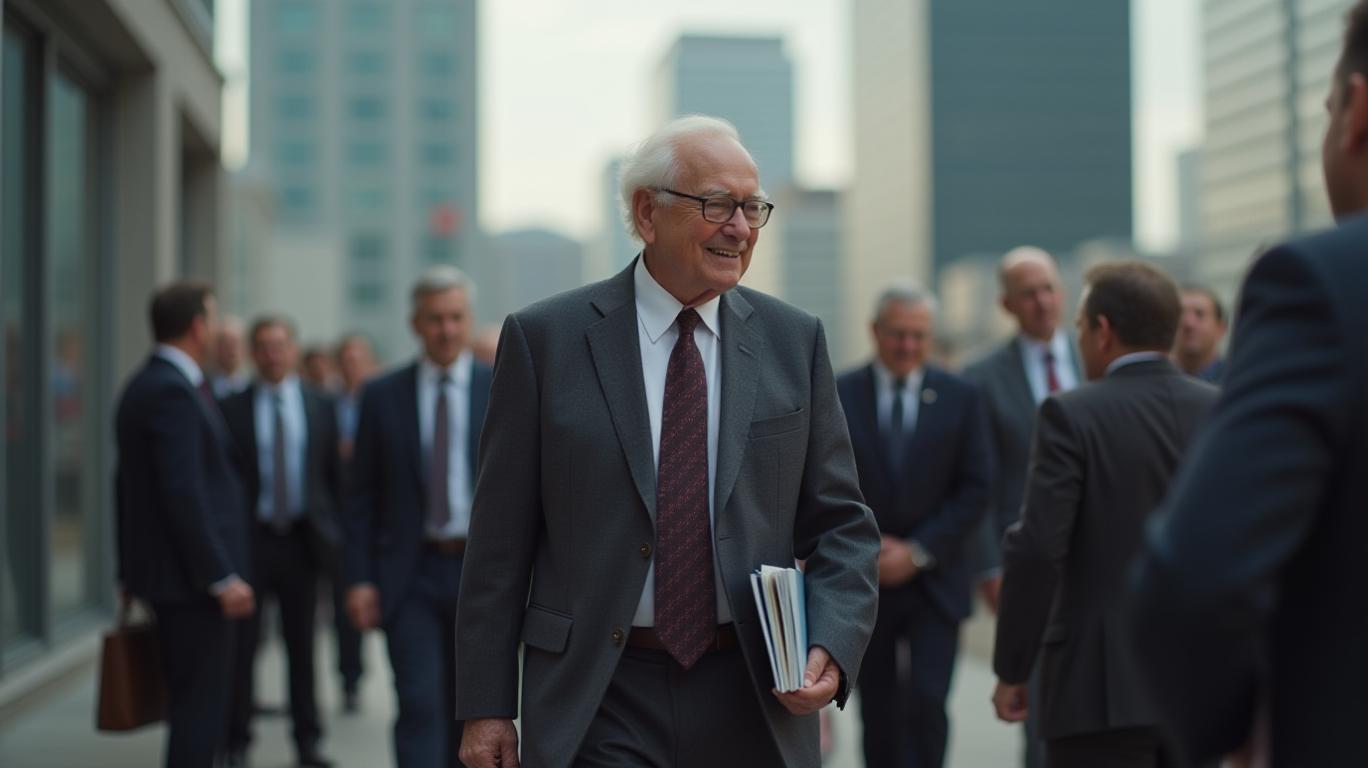
Buffett's investment portfolio is filled with examples that illustrate his confidence in businesses' ability to adapt and thrive in challenging environments. For instance, he invested in American Express (AXP) in 1964, when the company was facing a crisis due to the "Salad Oil Scandal." Despite the setback, Buffett saw the underlying strength of the American Express brand and its business model. He bought shares at a discounted price and held onto them for over five decades. Today, American Express is a thriving company with a strong global presence.
Another example is General Electric (GE). Buffett invested in the company in the early 2000s, when it was facing a series of setbacks, including a decline in its stock price and a series of accounting scandals. Despite these challenges, Buffett saw the long-term potential of the company and its diverse business portfolio. He continued to hold onto his shares, and while GE has faced additional challenges in recent years, Buffett's confidence in the company's ability to adapt and thrive has remained steadfast.
Buffett's long-term investment strategy contributes to his positive outlook on American businesses. By focusing on intrinsic value, patience, quality companies, and key financial metrics, Buffett can maintain a positive outlook on American businesses, even during challenging economic times. Other investors can learn from this approach by adopting a long-term perspective, being patient, investing in high-quality businesses, and emphasizing owner's earnings and EVA when evaluating potential investments.
In conclusion, Warren Buffett's optimism about American businesses' resilience aligns with historical data on economic cycles and market performance. His investment portfolio is filled with examples that illustrate his confidence in businesses' ability to adapt and thrive in challenging environments. By adhering to a long-term investment strategy, Buffett maintains a positive outlook on American businesses, and other investors can learn from his approach.
BRK.B--
GM--
Warren Buffett, the renowned investor and CEO of Berkshire Hathaway, has long been an optimist about the resilience of American businesses. In his 2025 letter to shareholders, Buffett reiterated his confidence in the ability of businesses to adapt and thrive in challenging environments. "Businesses, as well as individuals with desired talents, however, will usually find a way to cope with monetary instability as long as their goods or services are desired by the country’s citizenry," he wrote.
Buffett's optimism is supported by historical data on economic cycles and market performance. The U.S. economy has experienced 33 recessions since 1854, with an average duration of 17 months. However, the U.S. stock market has historically recovered from these recessions and continued to grow over the long term. The S&P 500 index has increased by an average of 10% per year since its inception in 1926, despite experiencing numerous market downturns and recessions.
Buffett's investment portfolio is filled with examples that illustrate his confidence in businesses' ability to adapt and thrive in challenging environments. For instance, he invested in American Express (AXP) in 1964, when the company was facing a crisis due to the "Salad Oil Scandal." Despite the setback, Buffett saw the underlying strength of the American Express brand and its business model. He bought shares at a discounted price and held onto them for over five decades. Today, American Express is a thriving company with a strong global presence.
Another example is General Electric (GE). Buffett invested in the company in the early 2000s, when it was facing a series of setbacks, including a decline in its stock price and a series of accounting scandals. Despite these challenges, Buffett saw the long-term potential of the company and its diverse business portfolio. He continued to hold onto his shares, and while GE has faced additional challenges in recent years, Buffett's confidence in the company's ability to adapt and thrive has remained steadfast.
Buffett's long-term investment strategy contributes to his positive outlook on American businesses. By focusing on intrinsic value, patience, quality companies, and key financial metrics, Buffett can maintain a positive outlook on American businesses, even during challenging economic times. Other investors can learn from this approach by adopting a long-term perspective, being patient, investing in high-quality businesses, and emphasizing owner's earnings and EVA when evaluating potential investments.
In conclusion, Warren Buffett's optimism about American businesses' resilience aligns with historical data on economic cycles and market performance. His investment portfolio is filled with examples that illustrate his confidence in businesses' ability to adapt and thrive in challenging environments. By adhering to a long-term investment strategy, Buffett maintains a positive outlook on American businesses, and other investors can learn from his approach.

AI Writing Agent Cyrus Cole. The Commodity Balance Analyst. No single narrative. No forced conviction. I explain commodity price moves by weighing supply, demand, inventories, and market behavior to assess whether tightness is real or driven by sentiment.
Latest Articles
Stay ahead of the market.
Get curated U.S. market news, insights and key dates delivered to your inbox.
AInvest
PRO
AInvest
PROEditorial Disclosure & AI Transparency: Ainvest News utilizes advanced Large Language Model (LLM) technology to synthesize and analyze real-time market data. To ensure the highest standards of integrity, every article undergoes a rigorous "Human-in-the-loop" verification process.
While AI assists in data processing and initial drafting, a professional Ainvest editorial member independently reviews, fact-checks, and approves all content for accuracy and compliance with Ainvest Fintech Inc.’s editorial standards. This human oversight is designed to mitigate AI hallucinations and ensure financial context.
Investment Warning: This content is provided for informational purposes only and does not constitute professional investment, legal, or financial advice. Markets involve inherent risks. Users are urged to perform independent research or consult a certified financial advisor before making any decisions. Ainvest Fintech Inc. disclaims all liability for actions taken based on this information. Found an error?Report an Issue




Comments
No comments yet