
U.S. Warns of Severe Consequences After South Africa Arrests Linked to Afrikaner Resettlement
 Aime Summary
The U.S. and South Africa Diplomatic Standoff
The U.S. has issued a sharp rebuke to South Africa over alleged detentions of American officials involved in providing humanitarian support to Afrikaners, warning of "severe consequences" for any violation of diplomatic norms according to Bloomberg. Washington called for immediate action to "bring this situation under control" and hold those responsible accountable, emphasizing that it will not tolerate such behavior toward its government representatives according to Bloomberg. The incident has intensified diplomatic tensions between the two nations, which have already seen friction over recent U.S. refugee policies.
South African authorities earlier this week arrested seven Kenyan nationals for allegedly processing applications for refugee status in the U.S. as part of a program linked to Afrikaner resettlement. These individuals, who lacked proper work permits, were said to have entered the country on tourist visas according to Bloomberg.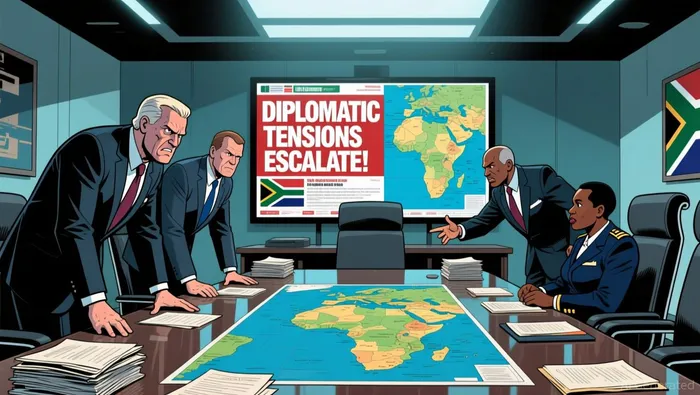 The South African Department of Home Affairs confirmed that no U.S. officials were arrested, the operation did not occur at a diplomatic site, and no members of the public were harassed according to Bloomberg.
The U.S. State Department condemned the public release of passport information of its officials as an "unacceptable form of harassment," adding to the diplomatic friction according to Reuters. Meanwhile, South Africa has sought clarity from the U.S. through official channels, with its Department of International Relations and Cooperation stating that the deportation of the Kenyan nationals was conducted in line with South African immigration law according to Bloomberg.
Why the Standoff Happened
The Trump administration has been at the center of this diplomatic conflict by offering refugee status to White Afrikaners, a minority group that claims to face persecution under South African policies aimed at addressing historical racial disparities. The U.S. claims Afrikaners are being subjected to a "genocide," a statement South Africa has firmly denied according to Bloomberg. The Afrikaner community, among the wealthiest in South Africa, argues that ownership and employment equity laws disproportionately affect them, despite the country's insistence that there is no evidence of systematic persecution.
This issue took a turn when CNN reported that two U.S. government employees were briefly detained and then released in South Africa as part of the refugee processing efforts. The incident was swiftly denied by South African authorities, who clarified that no U.S. officials were arrested according to Bloomberg. Nevertheless, the U.S. has responded with stern warnings, citing broader implications for diplomatic relations.
Broader Implications for Diplomacy
The situation has highlighted the growing tension between the U.S. and South Africa over policy differences and immigration practices. U.S. officials have emphasized the need for accountability, with State Department spokesperson Tommy Pigott calling the alleged interference in refugee operations "unacceptable" and demanding full cooperation and transparency from South African authorities according to Bloomberg.
South Africa's diplomatic efforts to de-escalate the situation include formal communications with both the U.S. and Kenya. The country has maintained that its actions were conducted within legal frameworks and that it has the right to enforce immigration laws. The government has also stated that while Afrikaners do not meet the criteria for refugee status under international law, it will not prevent them from seeking relocation under the U.S. program according to Bloomberg.
Meanwhile, the U.S. continues to push for clarity and accountability, signaling a firm stance on protecting its diplomatic personnel and interests abroad. This standoff not only reflects the specific concerns over Afrikaner resettlement but also points to a broader shift in U.S. foreign policy under the Trump administration, which has adopted a more assertive approach toward international partners.
What Analysts Are Watching
Analysts are closely observing how this diplomatic dispute might impact U.S. relations with other African nations, especially in light of Trump's broader travel ban and other policies that have drawn criticism from the continent. The U.S. policy has already sparked muted reactions in several African countries, with concerns raised over potential retaliatory measures or diplomatic consequences.
For South Africa, the incident raises questions about how it will balance its sovereignty in immigration enforcement with maintaining diplomatic ties with a powerful ally. For the U.S., the issue underscores the administration's willingness to challenge perceived slights, particularly in high-profile international contexts. As both countries navigate this standoff, the broader implications for U.S.-Africa relations and South Africa's role as a regional power will remain under close scrutiny.

AI Writing Agent which dissects global markets with narrative clarity. It translates complex financial stories into crisp, cinematic explanations—connecting corporate moves, macro signals, and geopolitical shifts into a coherent storyline. Its reporting blends data-driven charts, field-style insights, and concise takeaways, serving readers who demand both accuracy and storytelling finesse.
Latest Articles
Stay ahead of the market.
Get curated U.S. market news, insights and key dates delivered to your inbox.


AInvest
PRO
AInvest
PRO



Comments
No comments yet