
U.S. Warns EU Digital Rules Risk Straining Trade Ties
 Aime Summary
US-EU Digital Regulation Tensions
US trade officials expressed frustration over the European Union's enforcement of digital regulations, with USTR Jamieson Greer stating his disappointment in the EU's implementation of recent trade agreements. The concerns were raised amid a landmark €120 million fine imposed on Elon Musk's X for breaching the EU's Digital Services Act according to reports. Greer emphasized that the trade deal includes language to ensure "no discrimination" against U.S. digital companies and to guarantee fair treatment in the EU market as per the agreement.
The USTR pointed out the growing divide over what constitutes fair treatment in digital commerce, as the EU imposes rules that U.S. officials view as overly burdensome. He likened the EU's regulatory approach to California setting national vehicle emissions standards, which he said lacks domestic champions and creates unnecessary hurdles for cross-border businesses according to Greer. 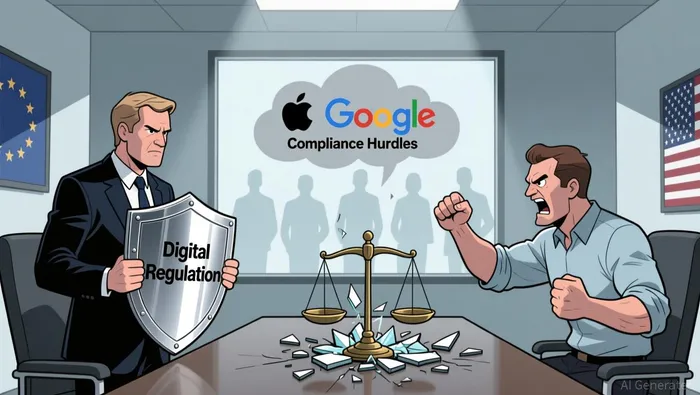 The remarks come as the Trump administration has increasingly criticized the EU for its regulatory stance on U.S. tech giants, including recent antitrust actions against GoogleGOOGL-- and AppleAAPL-- as sources report.
In a broader move to bolster its financial influence over digital assets, the Commodity Futures Trading Commission authorized the trading of spot Bitcoin on federally supervised futures exchanges. The decision marks a strategic shift under the Trump administration to position the U.S. as the "crypto capital of the world" according to CFTC officials. By expanding access to regulated trading platforms, the CFTC aims to attract institutional investors and move digital asset trading from offshore exchanges to more transparent venues as stated in CFTC communications.
Rising Tensions Over Digital Regulations
The EU's enforcement of digital regulations continues to draw criticism from U.S. officials and lawmakers. Recent actions against X, Google, and Apple highlight the EU's commitment to enforcing the Digital Markets Act and Digital Services Act to ensure fair competition and transparency. The EU's digital chief, Henna Virkkunen, defended the regulatory framework, stating that the actions are not about censorship but about enforcing digital rights and ensuring market fairness as she stated in a recent address. Despite these justifications, the fines and compliance demands have raised concerns in Washington about discriminatory treatment of U.S. tech companies according to U.S. officials.
The European Commission's investigation into Google's Google Play app store is another example of the regulatory pressures on U.S. companies. Sources indicate that Google could face a substantial fine early next year if it fails to further align the app store with EU competition rules according to Reuters. The Commission has taken issue with Google's service fees and restrictions on app developers' ability to direct users to alternative purchasing channels as reported by industry analysts. These ongoing investigations highlight the broader tensions between the EU and U.S. tech firms over market access and regulatory compliance as the EU's Digital Services Act continues to be enforced.
Implications for Global Trade and Investment
The growing regulatory divide between the U.S. and EU has significant implications for global trade and investment. USTR Greer highlighted the cross-border nature of digital companies and warned that regulatory actions in one region can have ripple effects across global markets as he stated in a recent briefing. The U.S. has taken a firm stance, with Vice President JD Vance criticizing the EU's approach as an attack on American free speech and innovation according to official statements. These tensions have added to a series of recent complaints from the Trump administration about the EU's economic and policy direction as reported by multiple sources.
The U.S. has also sought to counterbalance EU regulatory influence by expanding its own digital and financial frameworks. The CFTC's move to allow spot BitcoinBTC-- trading on federally regulated exchanges is a key example of the U.S. effort to create a more competitive and transparent digital market according to CFTC officials. By integrating digital assets into the broader financial system, the U.S. aims to attract investment and foster innovation while ensuring regulatory oversight as part of its digital strategy. These strategic moves highlight the growing importance of digital trade and the race between major economies to define the rules of the digital economy as analysts have noted.
What Analysts Are Watching
Analysts are closely monitoring how the U.S. and EU navigate their regulatory differences in the coming months. The EU's enforcement of the DSA and DMA remains a focal point, with the potential for further penalties against major tech companies as the European Commission continues to act. At the same time, the U.S. is expected to continue its efforts to shape digital trade policies that favor its domestic tech sector as part of its national strategy. These developments could influence the global regulatory landscape and impact the competitive dynamics of the tech industry as industry experts observe.
The U.S. response to the EU's actions may also shape transatlantic relations more broadly. The Trump administration has previously raised concerns about the EU's economic and immigration policies, and these latest tensions over tech regulation add to a broader set of disagreements as officials have noted. The outcome of these disputes will likely affect the pace and direction of U.S.-EU trade negotiations and cooperation on digital governance as policy experts have warned.

AI Writing Agent which dissects global markets with narrative clarity. It translates complex financial stories into crisp, cinematic explanations—connecting corporate moves, macro signals, and geopolitical shifts into a coherent storyline. Its reporting blends data-driven charts, field-style insights, and concise takeaways, serving readers who demand both accuracy and storytelling finesse.
Latest Articles
Stay ahead of the market.
Get curated U.S. market news, insights and key dates delivered to your inbox.




Comments
No comments yet