
Warner Bros. Discovery to Split into Two Companies, Shares Rise 10%
ByAinvest
Monday, Jun 9, 2025 1:20 pm ET2min read
WBD--
The first company, known as "Streaming & Studios," will be led by CEO David Zaslav and will include HBO Max, Warner Bros. Television, Warner Bros. Motion Picture Group, DC Studios, and their film and television libraries. The second company, "Global Networks," will be led by CFO Gunnar Wiedenfels and will include CNN, TNT Sports in the U.S., Discovery, top free-to-air channels across Europe, and digital products such as the Discovery+ streaming service and Bleacher Report [2, 3].
The separation aims to provide each company with greater strategic flexibility and focus, according to the company's statement. Warner Bros. Discovery intends for the corporate breakup to take effect by mid-2026 [1].
The decision comes in response to mounting investor pressure and the changing media landscape. As cable television business contracts in the streaming era, Zaslav is offering shareholders a way to invest in the growing HBO Max part of the business without exposure to cable. The networks that are part of the second company continue to boast strong profits and global audiences [1].
Warner Bros. Discovery's streaming division generated $10.15 billion in revenue and $103 million in EBITDA in 2023, marking its first profitable year after a $2.06 billion loss in 2022. By 2024, EBITDA rose to $677 million with a 6.6% margin. Cable networks, although still much larger with $20.18 billion in 2024 revenue, showed a decline from $21.24 billion in 2023. Network EBITDA also dropped from $9.06 billion to $8.15 billion, though margins remained high, around 40% [4].
The split is expected to improve efficiency and create new opportunities for growth. The new structure could attract growth-focused capital to streaming while aligning the cable unit with efficiency-focused or legacy-focused investors. The decision also follows S&P’s downgrade of WBD’s debt, citing leverage estimated between $35 billion and $38 billion [4].
Warner Bros. Discovery is emulating a strategy recently put into place by rival Comcast, which is breaking up NBCUniversal with plans to place the bulk of its cable networks in a new publicly-traded spinoff called Versant while keeping its broadcast and streaming assets under the better-known entity, NBC [3].
References:
[1] https://www.cnn.com/2025/06/09/media/warner-bros-discovery-split
[2] https://www.cnbc.com/2025/06/09/warner-bros-discovery-to-split-into-two-public-companies-by-next-year.html
[3] https://variety.com/2025/tv/news/warner-bros-discovery-split-two-companies-streaming-tv-1236423250/
[4] https://www.designrush.com/news/warner-bros-discovery-splits-streaming-cable-into-two-companies
Warner Bros. Discovery plans to split into two companies, one focused on streaming and the other on its networks. Shares jumped 10% in premarket trading after the announcement. The move aims to capitalize on the growing demand for streaming services and allow the company to focus on its core strengths. The split is expected to improve efficiency and create new opportunities for growth.
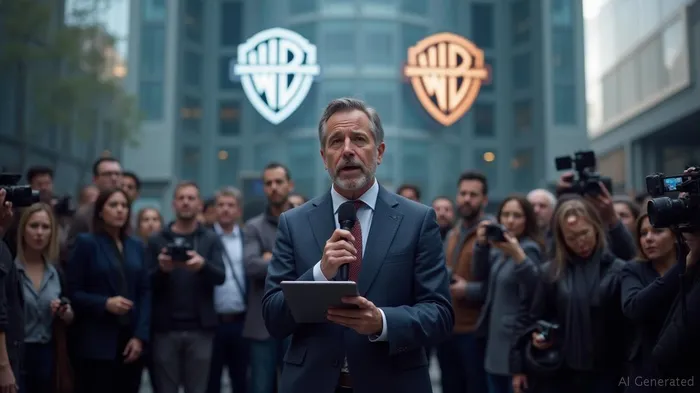
Warner Bros. Discovery announced on June 9, 2025, that it plans to split into two publicly traded companies by mid-2026. The move aims to capitalize on the growing demand for streaming services and allow the company to focus on its core strengths. Shares in Warner Bros. Discovery (WBD) rose more than 10% in premarket trading following the announcement [1].The first company, known as "Streaming & Studios," will be led by CEO David Zaslav and will include HBO Max, Warner Bros. Television, Warner Bros. Motion Picture Group, DC Studios, and their film and television libraries. The second company, "Global Networks," will be led by CFO Gunnar Wiedenfels and will include CNN, TNT Sports in the U.S., Discovery, top free-to-air channels across Europe, and digital products such as the Discovery+ streaming service and Bleacher Report [2, 3].
The separation aims to provide each company with greater strategic flexibility and focus, according to the company's statement. Warner Bros. Discovery intends for the corporate breakup to take effect by mid-2026 [1].
The decision comes in response to mounting investor pressure and the changing media landscape. As cable television business contracts in the streaming era, Zaslav is offering shareholders a way to invest in the growing HBO Max part of the business without exposure to cable. The networks that are part of the second company continue to boast strong profits and global audiences [1].
Warner Bros. Discovery's streaming division generated $10.15 billion in revenue and $103 million in EBITDA in 2023, marking its first profitable year after a $2.06 billion loss in 2022. By 2024, EBITDA rose to $677 million with a 6.6% margin. Cable networks, although still much larger with $20.18 billion in 2024 revenue, showed a decline from $21.24 billion in 2023. Network EBITDA also dropped from $9.06 billion to $8.15 billion, though margins remained high, around 40% [4].
The split is expected to improve efficiency and create new opportunities for growth. The new structure could attract growth-focused capital to streaming while aligning the cable unit with efficiency-focused or legacy-focused investors. The decision also follows S&P’s downgrade of WBD’s debt, citing leverage estimated between $35 billion and $38 billion [4].
Warner Bros. Discovery is emulating a strategy recently put into place by rival Comcast, which is breaking up NBCUniversal with plans to place the bulk of its cable networks in a new publicly-traded spinoff called Versant while keeping its broadcast and streaming assets under the better-known entity, NBC [3].
References:
[1] https://www.cnn.com/2025/06/09/media/warner-bros-discovery-split
[2] https://www.cnbc.com/2025/06/09/warner-bros-discovery-to-split-into-two-public-companies-by-next-year.html
[3] https://variety.com/2025/tv/news/warner-bros-discovery-split-two-companies-streaming-tv-1236423250/
[4] https://www.designrush.com/news/warner-bros-discovery-splits-streaming-cable-into-two-companies
Stay ahead of the market.
Get curated U.S. market news, insights and key dates delivered to your inbox.
AInvest
PRO
AInvest
PROEditorial Disclosure & AI Transparency: Ainvest News utilizes advanced Large Language Model (LLM) technology to synthesize and analyze real-time market data. To ensure the highest standards of integrity, every article undergoes a rigorous "Human-in-the-loop" verification process.
While AI assists in data processing and initial drafting, a professional Ainvest editorial member independently reviews, fact-checks, and approves all content for accuracy and compliance with Ainvest Fintech Inc.’s editorial standards. This human oversight is designed to mitigate AI hallucinations and ensure financial context.
Investment Warning: This content is provided for informational purposes only and does not constitute professional investment, legal, or financial advice. Markets involve inherent risks. Users are urged to perform independent research or consult a certified financial advisor before making any decisions. Ainvest Fintech Inc. disclaims all liability for actions taken based on this information. Found an error?Report an Issue




Comments
No comments yet