
Warner Bros. Discovery's Earnings Surge: Can This Turnaround Sustain Long-Term Value?
 Aime Summary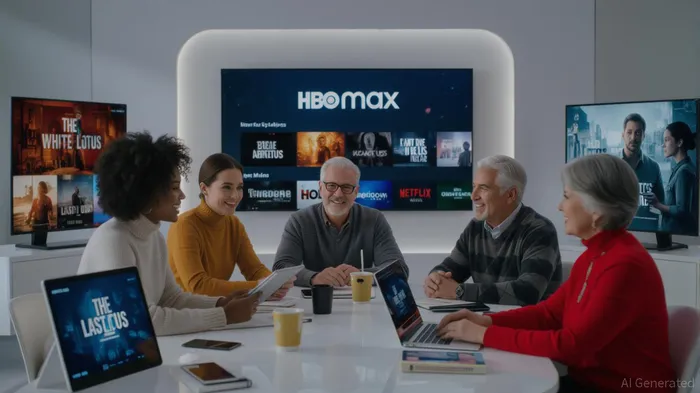
The recent earnings report from Warner BrosWBD--. Discovery (WBD) has ignited cautious optimism among investors. In Q2 2025, the company posted a profit of $1.58 billion, far exceeding expectations, driven by a 55% year-over-year revenue surge in its studios segment and robust streaming growth. Yet, beneath these numbers lies a complex interplay of structural risks and opportunities that will determine whether this turnaround can translate into enduring value.
The Earnings Surge: A Tale of Two Businesses
WBD's performance in Q2 2025 reflects a stark divergence between its streaming/studios and linear TV operations. The studios segment, bolstered by hits like A Minecraft Movie and The White Lotus, generated $3.8 billion in revenue—a 55% increase—and $863 million in adjusted EBITDA. Meanwhile, HBO Max added 3.4 million subscribers, pushing its total to 125.7 million, with streaming revenue rising 8% to $2.8 billion. These gains were offset by the linear TV segment's 9% revenue decline, driven by cord-cutting trends and the absence of major live events like the NCAA March Madness Final Four.
The planned spin-off into two publicly traded entities—Streaming & Studios and Global Linear Networks—by mid-2026 is a direct response to this divergence. By isolating the high-growth streaming business from the declining linear TV operations, WBDWBD-- aims to unlock value through focused capital allocation and operational clarity. However, the success of this strategy hinges on managing a $35.6 billion debt burden, with the Global Linear Networks entity inheriting most of the debt.
Structural Risks: Debt, Competition, and Execution
WBD's leverage remains a critical vulnerability. With a debt-to-EBITDA ratio of 18.13x, the company's financial flexibility is constrained, even as it has reduced debt by $2.7 billion in Q2 2025. The spin-off's debt allocation—placing the majority of obligations on the linear TV division—risks undermining its ability to reinvest in digital transformation or defend against declining ad revenues. Rating agencies have placed WBD's debt on review for a potential downgrade, signaling concerns about its long-term creditworthiness.
The streaming segment, while growing, faces existential threats. HBO Max's 22% subscriber increase is impressive, but it lags behind NetflixNFLX-- and Disney+ in market share. The platform's reliance on IP-driven content (e.g., DC Comics, Game of Thrones) is both a strength and a risk. While these franchises drive differentiation, they also require sustained investment in high-cost productions. Moreover, international expansion—key to scaling HBO Max—faces hurdles in localizing content and competing with established players like Netflix, which has a decade-long head start in global markets.
Opportunities: Content Monetization and Strategic Refocusing
The spin-off could catalyze a re-rating of WBD's value. By separating the streaming/studios business from the linear TV division, each entity can pursue distinct strategies. The Streaming & Studios entity, led by CEO David Zaslav, is positioned to leverage its IP library and focus on hit-driven content, with a target of $3 billion in annual adjusted EBITDA. This aligns with broader industry trends, as streaming platforms increasingly prioritize premium content over volume.
Content monetization strategies are also evolving. WBD's decision to retain its library on HBO Max—rather than licensing it to third parties—has deferred short-term revenue but strengthened long-term subscriber retention. The introduction of ad-supported tiers and tiered pricing in international markets could further boost average revenue per user (ARPU). Additionally, the company's focus on cross-platform storytelling (e.g., Superman films and DC Comics) creates synergies that competitors like Netflix lack.
The Path Forward: Balancing Risks and Rewards
For investors, the key question is whether WBD can sustain its momentum while addressing structural weaknesses. The spin-off's success depends on three factors:
1. Debt Reduction: The Global Linear Networks division must deleverage effectively, potentially through asset sales or cost discipline, to avoid a credit downgrade.
2. Streaming Execution: HBO Max must maintain its content pipeline and expand internationally without overextending margins. The platform's ability to compete with Netflix's $20 billion annual content spend will test its financial discipline.
3. Content ROI: High-cost productions must deliver returns through box office, streaming, and licensing. A misstep in this area could erode investor confidence.
Analysts project modest EBITDA growth for WBD through 2029, with the stock currently trading at a forward EV/EBITDA of 8x—below its historical average. This suggests the market is pricing in significant risks, offering a potential margin of safety for long-term investors. However, the company's ability to execute its spin-off and debt reduction plans will be critical.
Conclusion: A Calculated Bet on the Streaming Future
Warner Bros. Discovery's earnings surge is a testament to the power of strategic refocusing and content-driven growth. Yet, the road to long-term value is fraught with challenges. The spin-off represents a bold attempt to align the company with the realities of a streaming-first world, but its success will depend on navigating debt, competition, and execution risks. For investors, the current valuation offers an opportunity to bet on a turnaround, provided they remain vigilant about the structural headwinds.
Historically, WBD's stock has shown significant short-term gains following earnings beats. From 2022 to the present, the company has beaten expectations on two occasions, with the most recent instance driving a 11.45% return on July 23, 2025. While the hit rate is limited, these episodes highlight the potential for sharp price movements when the company outperforms forecasts. Investors should weigh these historical patterns against the broader structural risks outlined above.
In the end, WBD's story is not just about content—it's about whether a legacy media giant can reinvent itself in an era of relentless disruption.
"""

Delivering real-time insights and analysis on emerging financial trends and market movements.
Latest Articles
Stay ahead of the market.
Get curated U.S. market news, insights and key dates delivered to your inbox.
AInvest
PRO
AInvest
PRO



Comments
No comments yet