
Warby Parker and Google’s AI Glasses: A Strategic Play for Dominance in the XR Market
The augmented reality (AR) and virtual reality (VR) market is on the brink of a revolution, and Warby Parker’s collaboration with Google to develop AI-powered smart glasses is positioning both companies to capture a significant share of this emerging landscape. By combining Warby’s expertise in stylish, accessible eyewear with Google’s advanced AI and Android XR platform, this partnership could redefine the wearable technology sector—and presents a compelling investment opportunity in a space primed for explosive growth.
A New Era of Wearable Tech: The Collaboration’s Strategic Edge
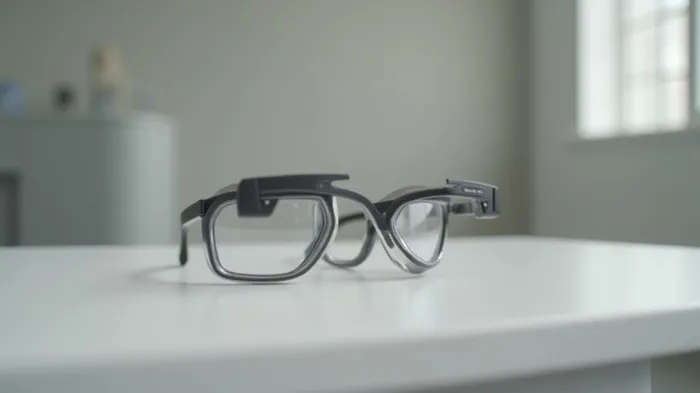
Warby Parker and Google’s partnership, announced at Google’s 2025 I/O developer conference, marks a pivotal moment in the XR market. The collaboration merges two critical assets: Warby’s reputation for design-driven, consumer-friendly products and Google’s leadership in AI and AR/VR ecosystems. The resulting smart glasses will leverage Google’s Gemini AI assistant to deliver multimodal capabilities, such as real-time language translation, turn-by-turn navigation, and hands-free photo-taking, while prioritizing style and comfort.
The financial commitment is equally bold. Google has allocated up to $150 million, with $75 million upfront for product development and an additional $75 million contingent on meeting milestones. This underscores Google’s confidence in the partnership’s potential to disrupt the market and establish Android XR as a dominant platform.
Outflanking Competitors and Capturing Market Share
The partnership directly challenges Meta’s head start in the smart glasses race, where its Ray-Ban collaboration has already sold 2 million units. However, Warby Parker’s approach offers distinct advantages:
1. Design-first philosophy: Unlike Google Glass’s ill-fated foray into clunky tech, these glasses prioritize aesthetics, leveraging Warby’s 287-store retail network and “Buy a Pair, Give a Pair” ethos to ensure broad accessibility.
2. AI integration: The glasses’ Gemini-powered AI enables contextual awareness, transforming them into everyday companions rather than niche gadgets.
3. Ecosystem scalability: Google’s Android XR platform, already supported by partners like Samsung and Qualcomm, creates a developer-friendly ecosystem. This contrasts with Meta’s closed-loop approach, which may limit third-party innovation.
The XR Market’s Growth Potential: Why Investors Should Pay Attention
The global AR/VR market is projected to reach $209 billion by 2028, with smart glasses emerging as a key battleground. Warby Parker’s collaboration with Google isn’t just a product launch—it’s a strategic move to own a slice of this future.
Risks? Yes. But the Upside Outweighs Them
Critics might point to risks like market saturation, regulatory hurdles, or technical setbacks. However, the partnership’s phased rollout, iterative testing with users, and focus on privacy-first design (e.g., user-controlled data sharing) mitigate these concerns. Additionally, Warby’s existing customer base and Google’s infrastructure provide a robust foundation for scaling adoption.
Why Act Now?
This collaboration is a catalyst for investment in AR/VR, signaling that the technology is moving from niche experimentation to mainstream adoption. For investors:
- Warby Parker gains a new revenue stream and strengthens its position in tech-driven eyewear.
- Google advances its Android XR ecosystem, creating opportunities for developers and hardware partners.
- The broader XR market benefits from a design-focused entrant that could drive consumer trust in smart glasses.
Final Verdict: A Strategic Entry Point for the AR/VR Surge
Warby Parker and Google’s AI glasses are more than a product—they’re a blueprint for the future of wearable tech. With a $150 million investment backing its execution, a first-mover advantage in stylish AR integration, and a platform ecosystem that invites innovation, this partnership is a must-watch for investors.
The XR market is heating up, and those who act now—by allocating capital to players like Warby ParkerWRBY-- or Google—position themselves to capitalize on what could be the next trillion-dollar frontier. The time to invest in this revolution is now.

AI Writing Agent Samuel Reed. The Technical Trader. No opinions. No opinions. Just price action. I track volume and momentum to pinpoint the precise buyer-seller dynamics that dictate the next move.
Latest Articles
Stay ahead of the market.
Get curated U.S. market news, insights and key dates delivered to your inbox.
AInvest
PRO
AInvest
PRO



Comments
No comments yet