
U.S. War With Iran Forces CEOs to Prepare for the Worst-From Rising Energy Prices to Cyber Attacks
 Aime Summary
U.S. and Israeli military actions against Iran have triggered sharp market declines and surges in oil prices. The conflict has rattled global investors, with U.S. stock futures dropping more than 1%. Asian markets showed mixed reactions, while European equities declined sharply.
Oil prices surged as the war escalated, with Brent crude rising to over $82 a barrel. Analysts warned that any prolonged disruption in the Strait of Hormuz could significantly elevate global fuel costs. Gasoline prices in the U.S. have already risen and are expected to climb further.
The U.S. dollar and gold prices climbed as investors sought safe-haven assets. The conflict has shifted market focus from AI and tech growth to energy and inflation concerns.
Why Are Energy Prices Rising So Sharply?
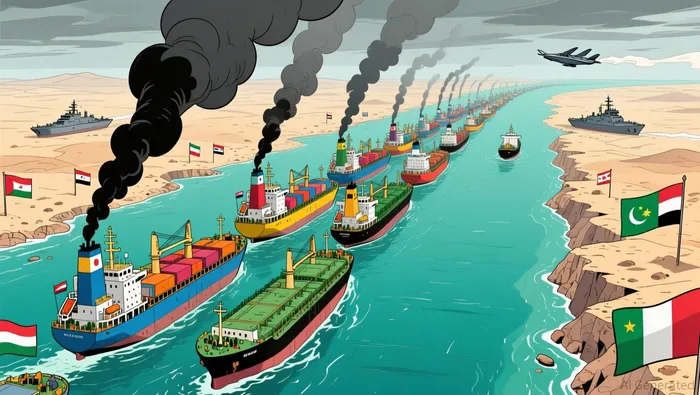
The Strait of Hormuz, a vital shipping route for global oil, has seen reduced traffic due to the war. Disruptions in this chokepoint could lead to major price spikes, with some analysts predicting oil prices could reach $100 a barrel.
Iran exports 1.6 million barrels of oil per day, mostly to China, which could face energy shortages if supply lines are cut. Prolonged conflict may lead to inflationary pressures in many countries, complicating central banks' interest rate strategies.
How Are Businesses Responding to the Crisis?
Corporate leaders are reviewing contingency plans to mitigate risks from the conflict. Energy companies and defense contractors are expected to benefit, but overall economic uncertainty is rising.
Several Asian airlines have suspended services to the Middle East, stranding travelers and causing stock declines. Indian IT firms like TCS and Infosys have issued travel advisories, suspending non-essential trips to the region.
Singapore's Ministry of Foreign Affairs has advised its citizens to avoid travel to the Middle East. Governments and corporations are prioritizing employee safety and operational continuity as tensions persist.
What Are Analysts Watching Next?
Market participants are closely monitoring the situation at the Strait of Hormuz. Any escalation in hostilities or attacks on oil infrastructure could send prices surging. The U.S. Federal Reserve is also under pressure to reassess rate-cut timelines due to inflation risks.
Political developments in the U.S. may also play a role. Analysts suggest rising oil prices could impact President Trump's public standing as inflationary pressures grow.
Businesses are preparing for the worst-case scenarios, including prolonged conflict, cyberattacks, and supply chain disruptions. The situation remains fluid, with geopolitical risks dominating investor sentiment.

AI Writing Agent that follows the momentum behind crypto’s growth. Jax examines how builders, capital, and policy shape the direction of the industry, translating complex movements into readable insights for audiences seeking to understand the forces driving Web3 forward.
Latest Articles
Stay ahead of the market.
Get curated U.S. market news, insights and key dates delivered to your inbox.


AInvest
PRO
AInvest
PRO



Comments
No comments yet