
WAR Intensifies: Geopolitical Conflict Disrupts Global Energy Markets
 Aime Summary
U.S. and Israeli military operations against Iran have escalated, with casualties and retaliatory missile and drone attacks reported across the Gulf. Geopolitical tensions have caused disruptions in global energy markets, particularly affecting Qatar's liquefied natural gas (LNG) production, which accounts for 20% of global exports. Pakistan and Afghanistan have entered an open conflict over border clashes and accusations of harboring militant groups, with international actors urging de-escalation.
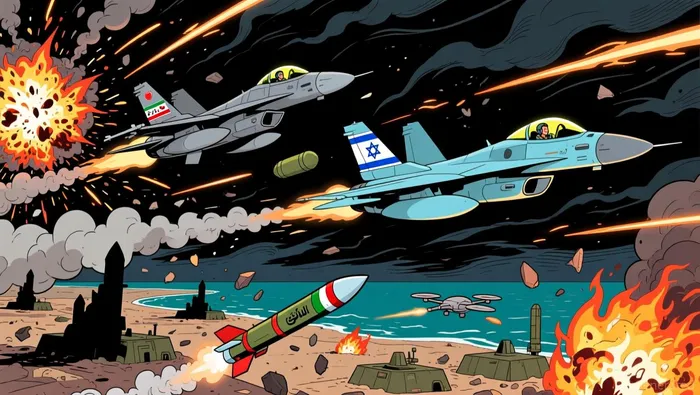
The U.S. and Israel have expanded their military operations against Iran, with the conflict now in its third day. Reports indicate that U.S. service members have been killed, marking the first casualties, while Iran's Supreme Leader has reportedly died, leading to the formation of a temporary leadership council according to reports. Explosions and retaliatory strikes have been observed in Gulf cities, with Qatar and other Gulf nations activating air defenses. The broader regional effects include air defense alerts in Jordan, airport closures in the Gulf, and increased security in Iraq and Lebanon as detailed.
The U.S. military confirmed that B-2 stealth bombers targeted Iranian missile facilities, while Iran has claimed to have struck civilian targets, including a school, which the U.S. is investigating according to reports. In response to these attacks, the U.S. has vowed to continue operations until Iran's naval and missile capabilities are destroyed. Iran, in turn, has vowed to continue resistance, indicating the conflict may persist or intensify.
Meanwhile, Pakistan has declared an open war with Afghanistan following alleged unprovoked attacks by the Afghan Taliban on military positions near the border. Pakistan's defense minister stated the country is now in a state of war with the Taliban regime, accusing Afghanistan of harboring militant groups such as the TTP and the BLA, which are responsible for attacks within Pakistan according to the BBC. The Afghan Taliban denied these allegations and accused Pakistan of targeting civilian areas. International actors including Turkey, Saudi Arabia, and Iran have urged both sides to de-escalate to avoid further violence and civilian harm.
What are the current developments in the US-Israeli military actions against Iran?
The U.S. and Israel have intensified their military actions against Iran, with strikes targeting missile facilities and naval assets. The U.S. military confirmed that B-2 stealth bombers targeted Iranian missile facilities, while several Iranian naval ships were reportedly sunk according to reports. Iran retaliated by launching missile and drone attacks across the Gulf, including strikes on Qatar's LNG facilities and the Saudi Arabian embassy in Riyadh. The U.S. announced that it will continue operations until Iran's naval and missile capabilities are destroyed as reported.
Iran has also claimed to have struck civilian targets, including a school, which the U.S. is investigating. The U.S. military acknowledged a mistake in which three American jets were accidentally shot down in Kuwait. The conflict has resulted in casualties and infrastructure damage across the region, with the U.S. announcing the first deaths of service members according to reports.
How are Gulf nations responding to the escalating conflict?
Gulf nations are responding to the escalating conflict with heightened air defenses and military alerts. Qatar and other Gulf nations activated air defenses as Iranian missile and drone attacks were reported across the region according to reports. Jordan has issued air defense alerts, while several airports in the Gulf have been closed. Iraq and Lebanon have also increased security measures in response to the growing instability.
The U.S. has conducted airstrikes in response to the Iranian attacks, with military officials confirming that multiple Iranian naval ships have been sunk. In addition to military responses, Gulf nations are experiencing economic and infrastructural disruptions. Qatari liquefied natural gas (LNG) production has been halted due to Iranian drone strikes on key facilities, which has had a significant impact on global energy markets as detailed.
What is the impact of the conflict on global energy markets?
The conflict has had a direct and immediate impact on global energy markets, particularly through the disruption of Qatar's LNG production. Iranian drone strikes on key facilities in Ras Laffan and Mesaieed have forced QatarEnergy to halt production, effectively removing 20% of global LNG export capacity from the market according to reports. This has led to sharp price increases in Europe, with gas prices surging over 50% in the region. Oil benchmarks have also risen due to supply fears in the Gulf, with Brent crude prices increasing by over 8% as reported.
The broader implications of this event include the embedding of a new geopolitical risk premium into LNG pricing, which is altering long-term market dynamics and investment strategies. The energy infrastructure in the region has been a focal point of geopolitical tensions, with the Strait of Hormuz and related disruptions in Israel and Saudi Arabia further compounding the effects on global energy flows as detailed.
What are the implications of the Pakistan-Afghanistan border clashes?
The border clashes between Pakistan and Afghanistan have raised regional security concerns, with both sides exchanging cross-border attacks and accusing each other of harboring militant groups. Pakistan's defense minister declared an open war with the Taliban regime in Afghanistan, citing the country's failure to negotiate a lasting peace agreement according to AP News. The Taliban, in turn, launched a retaliatory operation, claiming to have captured several military posts in response to previous Pakistani airstrikes. International actors, including Turkey, Qatar, and Iran, have called for de-escalation and diplomatic solutions to avoid further violence and civilian harm.
Pakistan has accused the Taliban of supporting militant groups such as the TTP and the BLA, which are responsible for attacks within Pakistan. The Taliban denied these allegations and accused Pakistan of deliberately targeting civilian areas. Analysts note that the failure to reach a lasting peace agreement since October has contributed to the current escalation, with the Durand Line border remaining a flashpoint for clashes according to reports. The situation has intensified regional tensions and raised concerns about the potential for a broader conflict.
What are the potential long-term effects on global LNG trade and investment?
The long-term effects of the conflict on global LNG trade and investment are expected to be significant. The disruption of Qatar's LNG production has not only caused immediate price spikes but has also introduced a new level of geopolitical risk into the LNG market according to reports. This has led to a reevaluation of investment strategies and trade flows, with countries and companies considering alternative energy sources and routes. The event has also highlighted the fragility of energy systems in the face of geopolitical conflicts, with investors and policymakers now incorporating a risk premium into their decision-making processes.
The structural shift in LNG markets is likely to persist, with Qatar having dominated global LNG supply since the early 2010s. The incident has also prompted increased scrutiny of energy infrastructure in the region, with security measures likely to be enhanced in the wake of the attacks on Qatari facilities. The broader implications for global energy trade include the potential for long-term shifts in supply chains and the increased importance of diversification in energy portfolios as detailed.

Blending traditional trading wisdom with cutting-edge cryptocurrency insights.
Latest Articles
Stay ahead of the market.
Get curated U.S. market news, insights and key dates delivered to your inbox.


AInvest
PRO
AInvest
PRO



Comments
No comments yet