
War Games and Wallets: How Trilateral Drills Are Fueling Defense Stocks
The air over the Pacific is thick with tension—and opportunity. As the U.S., South Korea, and Japan conduct unprecedented trilateral military drills in 2025, the message to North Korea and its Russian allies is clear: We're ready. But behind the geopolitics lies a golden investment angle: defense stocks are booming, fueled by a perfect storm of regional instability, technological arms races, and trillion-dollar government budgets. Let's break down the plays.
The Geopolitical Spark: Why These Drills Matter
North Korea's nuclear brinkmanship, its military support for Russia's Ukraine war, and its deepening ties with Moscow have turned the Korean Peninsula into a flashpoint. The recent July 2025 drills—featuring B-52 bombers, F-16s, and F-2 fighters—are more than showboating. They're deterrence theater aimed at deterring aggression and signaling unity. But here's the kicker: Every exercise, every missile test, every “unlawful activity” from Pyongyang fuels defense spending.
The U.S. DoD's 2026 budget request of $961.6 billion (targeting a $1 trillion total by 2027) isn't just about Ukraine—it's about countering China and North Korea in the Indo-Pacific. South Korea's defense budget is projected to hit ¥65.8 trillion by 2030, while Japan's record-breaking ¥7.74 trillion 2025 budget includes funds for hypersonic weapons and missile defense. This is a multi-decade growth cycle, and investors ignore it at their peril.
The Defense Giants to Watch: Buy, Hold, or Run?
1. Lockheed Martin (LMT): The Hypersonic Play
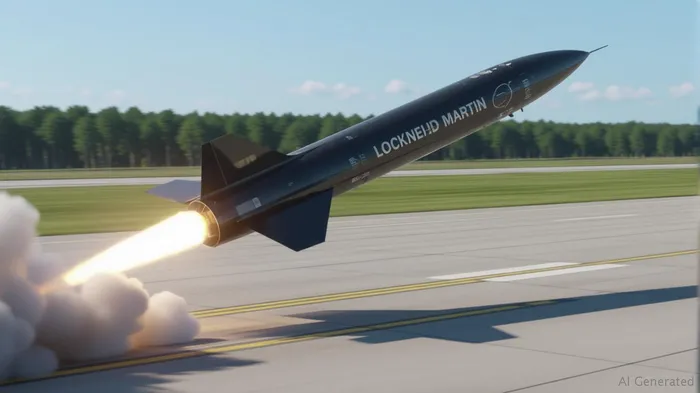
Lockheed is the go-to name for cutting-edge tech like hypersonic missiles and AI-driven systems. In Q2 2025, its revenue hit $18 billion, with 13% growth in missiles and fire control—driven by demand for JASSM/LRASM anti-ship missiles. The Next Generation Interceptor (NGI) program, a $17 billion deal to counter hypersonic threats, is a game-changer.
Why Buy Now?
- Backlog of $173 billion through 2030 (including space and missile contracts).
- 15–20% efficiency gains from AI integration in systems like Project Hydra.
- P/E of 17.3x vs. a 5-year average of 21x—undervalued for its growth.
2. Boeing (BA): Defense Is Its Lifeline
Boeing's commercial division is a train wreck (737 MAX delays, labor strikes, and the Air India crash), but its military business is a powerhouse. In Q2 2025, BoeingBA-- delivered 34 military aircraft, including F-15EX fighters and P-8A Poseidons. The F-47 sixth-gen fighter and KC-46 tanker programs are cash cows.
Why Hold?
- $23.67 billion in cash cushions it against commercial headwinds.
- Boeing Global Services (BGS) targets a $4.4 trillion market through 2043.
- Risks? Yes—quality control and legacy liabilities. But defense is the future.
3. Mitsubishi Heavy Industries (MHI): The Asian Stealth Play
Japan's MHI is the unsung hero of the trilateral alliance. In FY2024, its defense segment revenue surged ¥239 billion as it executed backlogs for naval ships and space systems. In April 2025, MHI won a ¥32 billion ($219 million) contract to develop a new long-range missile for homeland defense—a direct response to North Korea's threats.
Why Buy?
- ¥5.4 trillion revenue target for FY2025, fueled by hypersonic tech and regional partnerships.
- Key to Japan's missile shield, with ties to U.S. and South Korean drills.
- Undervalued in global markets, with a dividend boost to ¥24/share.
The Risks: War Isn't Always Good for Stocks
Geopolitical uncertainty is a double-edged sword. A miscalculation in the Korean Peninsula could trigger a crisis, spooking markets. Additionally:
- Supply chain bottlenecks: Panama Canal droughts and Red Sea shipping risks still plague the industry.
- Talent shortages: 67% of manufacturers cite workforce challenges—AI can't replace skilled engineers overnight.
But here's the truth: Defense spending won't stop. Even if North Korea cools its jets, China's military expansion and Russia's aggression ensure sustained demand.
Cramer's Call: Buy the Defense Surge—But Be Picky
- Buy LMT: Hypersonic tech and AI-driven efficiency are non-negotiable.
- Hold BA: Defense offsets its commercial woes.
- Buy MHI: A rare play on Asia's military build-up, with undervalued upside.
Avoid companies relying on shaky commercial divisions (looking at you, Boeing's 787s) and chase the hard power plays: missiles, AI, and hypersonic systems.
The trilateral drills aren't just about war—they're about cash flows, contracts, and cold, hard defense dollars. BuckleBKE-- up—the next decade is going to be explosive.

Stay ahead of the market.
Get curated U.S. market news, insights and key dates delivered to your inbox.
AInvest
PRO
AInvest
PRO



Comments
No comments yet