
WAR Disrupts Global Energy Markets and Escalates Conflict in the Gulf
 Aime Summary
The United States and Israel have launched coordinated military operations against Iran, including strikes in Tehran, under the names "Operation Epic Fury" and "Lion's Roar," respectively according to reports.
These actions aim to dismantle Iran's missile and nuclear capabilities, prevent it from acquiring a nuclear weapon, and counter Iran-backed armed groups in the region as research indicates.
The strikes have resulted in the deaths of several senior Iranian officials and triggered a leadership crisis in Iran, with retaliatory attacks launched against Israel and U.S. military bases according to analysis.
The conflict has significantly disrupted global oil and gas supply chains, particularly through the Strait of Hormuz, causing sharp price increases and heightened inflationary pressures according to reports.
Approximately one-fifth of the world's oil and LNG supply has been affected, with Asian and European markets facing acute impacts according to data.
The U.S., now the largest oil and LNG exporter, may benefit from filling the supply gap left by halted production and shipping, though production limitations and long-term contracts pose challenges according to analysis.
Rising fuel prices in the U.S. pose political risks ahead of the November midterm elections, with analysts expecting prolonged volatility even if the conflict ends soon according to reports.
Iran's strategy is centered on endurance and increasing the cost of the conflict for its adversaries, using low-cost drone and missile attacks to deplete expensive interceptors and damage regional economies 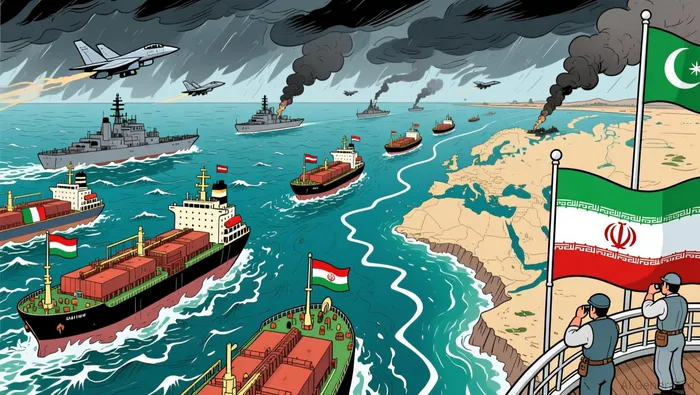 .
.
The country is leveraging disruptions to the Strait of Hormuz and global energy infrastructure to raise inflation and international pressure for de-escalation according to reports.
Analysts suggest that Iran aims to stretch the conflict to test the resolve of the U.S. and Israel, potentially leading to a pyrrhic survival for the regime according to analysis.
NORAD intercepted two Russian Tu-142 reconnaissance aircraft in the Alaskan and Canadian Air Defense Identification Zones as part of routine monitoring and defense protocols according to reports.
The aircraft remained in international airspace, and such activity is described as regular and non-threatening according to reports.
These operations are part of ongoing defense measures due to heightened tensions and increased military activity in the Arctic according to analysis.
What Is the U.S. Strategy in the Gulf Conflict?
The U.S. strategy in the Gulf involves neutralizing perceived threats from Iran's nuclear and missile programs by conducting military strikes and coordinating with Israel according to reports.
These actions are justified as necessary to prevent Iran from acquiring nuclear weapons and to protect regional stability according to analysis.
The U.S. has also offered naval escorts and insurance support for shipping through the Strait of Hormuz, though analysts expect these measures to take weeks to have a measurable impact .
President Trump emphasized the goal of defending the American people by eliminating imminent threats from the Iranian regime according to analysis.
What Are the Implications for Global Energy Markets?
The conflict has caused a major disruption to global energy markets, with the suspension of nearly 20% of global crude and natural gas supply, leading to a 24% surge in oil prices to over $90 a barrel according to data.
Countries in Asia, which source 60% of their crude from the region, are particularly affected according to reports.
The U.S. faces rising fuel prices at home, posing a political risk ahead of the November midterm elections according to analysis.
The crisis has also created a shift in global energy trade patterns, with increased demand for Russian crude in India according to reports.
Analysts suggest that it could take weeks or months for the market to return to pre-conflict conditions, depending on the extent of the damage to energy infrastructure and the safety of shipping through the Strait of Hormuz according to data.
What Is Iran's Approach to the Conflict?
Iran's strategy is centered on deterrence and endurance, aiming to survive by increasing the costs of the war for the U.S. and Israel according to reports.
The country is using cost-inefficient attacks and leveraging regional energy leverage to raise the economic and political costs for its adversaries according to analysis.
By damaging oil and gas infrastructure and disrupting shipping through the Strait of Hormuz, Iran seeks to increase global energy prices and international pressure for de-escalation according to analysis.
The strategy also involves exhausting the number of missile interceptors held by adversaries, particularly through the use of low-cost drone and missile attacks according to reports.
Analysts suggest that Iran aims to stretch the conflict to test the resolve of its more powerful adversaries, potentially leading to a pyrrhic survival for the regime according to analysis.

Blending traditional trading wisdom with cutting-edge cryptocurrency insights.
Latest Articles
Stay ahead of the market.
Get curated U.S. market news, insights and key dates delivered to your inbox.


AInvest
PRO
AInvest
PRO



Comments
No comments yet