
Walmart's Tariff-Driven Margin Pressure and Strategic Response: A Retail Titan's Path Through Trade Turbulence


 Aime Summary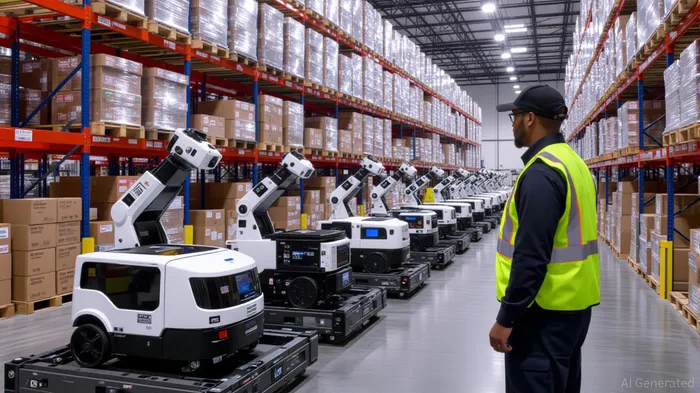
The U.S.-China trade war has reshaped global supply chains, but few companies have navigated its turbulence as deftly as WalmartWMT--. As tariffs on imported goods continue to squeeze retail profit margins, Walmart's strategic agility—balancing cost absorption, pricing discipline, and operational innovation—has emerged as a blueprint for survival in an inflationary, protectionist era. For investors, the question is no longer whether Walmart can endure these pressures, but whether its playbook will redefine the retail sector's long-term value proposition.
Tariffs and the Retail Margin Squeeze
Rising tariffs have acted as a double-edged sword for retailers. While they aim to protect domestic industries, they also inflate input costs for imported goods, eroding gross margins. Walmart's Q2 2025 report underscores this tension: despite a 56% year-over-year surge in net income to $7.03 billion, the company absorbed a significant portion of tariff-driven cost increases, particularly in discretionary categories. CFO John David Rainey's “item-by-item” approach—absorbing costs in some areas while passing them on in others—has preserved customer loyalty but compressed operating margins.
The data is telling: Walmart's gross profit rate rose four basis points to 24.5% in Q2, a marginal gain achieved through aggressive price rollbacks (up 30% YoY in groceries) and e-commerce growth (26% U.S. sales increase). Yet, operating income dipped 8.2% to $7.29 billion, partly due to self-insured liability costs and a merchandise mix skewed toward slower-growing general merchandise. This duality—resilient sales in essentials vs. pressure in discretionary categories—highlights the fragility of retail margins in a tariff-driven world.
Walmart's Strategic Counterpunch
Walmart's response to tariffs is a masterclass in operational pragmatism. By pre-stocking inventory for Sam's Club and key U.S. stores, the company mitigated supply chain bottlenecks and secured favorable pricing. This “early replenishment” strategy boosted inventory levels by 3.5% at Sam's Club and 2.2% in Walmart U.S., ensuring product availability during the critical holiday season.
Simultaneously, Walmart has weaponized its pricing power. The 30% increase in grocery price rollbacks—targeting value-conscious shoppers—has offset inflationary pressures while reinforcing its “Everyday Low Prices” brand. E-commerce, now 26% of U.S. sales, has become a profit engine, with AI-driven inventory management and automated distribution centers reducing delivery costs.
Long-term investments in automation and AI are equally critical. Walmart's $10 billion annual tech budget—allocated to robotics, store automation, and data analytics—positions it to outpace competitors in cost efficiency. These initiatives are not just defensive; they're transformative, enabling the company to scale its low-cost model in an era where margin compression is the norm.
Investor Sentiment and Market Positioning
Walmart's stock has surged 37% over the past 12 months, outperforming the S&P 500 and the Consumer Staples sector. Analysts like Citi's Paul Lejuez and KeyBanc's team have maintained “Buy” ratings, citing the company's ability to absorb tariffs while maintaining market share. With a forward P/E ratio of 35.7 (well above its five-year average of 25.5), investors are clearly pricing in optimism about Walmart's margin resilience and e-commerce growth.
Comparisons to peers like Target and Home DepotHD-- further underscore Walmart's strength. While Target's sales have faltered due to its reliance on discretionary goods, Walmart's focus on essentials—groceries, health, and household staples—has insulated it from broader retail weakness. This differentiation is critical: over 50% of Walmart's sales come from grocery, a category less sensitive to economic cycles.
Risks and the Road Ahead
Despite its strengths, Walmart faces headwinds. The radioactive shrimp incident in August 2025—a rare but reputational blow—highlights the vulnerability of its global supply chain. Additionally, further tariff escalations could force the company to pass on more costs to consumers, potentially eroding its value proposition.
However, Walmart's guidance for 2026—projecting 3.75–4.75% sales growth and adjusted EPS of $2.52–$2.62—suggests confidence in its ability to adapt. The company's employee discount program expansion (now covering all groceries) and store modernization efforts also signal a focus on retaining both customers and employees, a dual imperative in a tight labor market.
Investment Thesis
For long-term investors, Walmart represents a compelling case study in strategic resilience. Its ability to absorb tariffs, leverage e-commerce, and invest in automation creates a durable competitive moat. While short-term margin pressures persist, the company's focus on essentials and pricing discipline positions it to outperform in a fragmented retail landscape.
Actionable Takeaway: Investors should consider Walmart as a core holding in a diversified portfolio, particularly for those seeking exposure to inflation-resistant sectors. However, monitor tariff developments and supply chain risks, and use pullbacks in the stock price (which currently trades at a premium) as opportunities to accumulate shares at a discount to its long-term value.
In a world where trade wars and margin compression are the new normal, Walmart's playbook offers a roadmap for survival—and, perhaps, a blueprint for the future of retail.

Delivering real-time insights and analysis on emerging financial trends and market movements.
Latest Articles
Stay ahead of the market.
Get curated U.S. market news, insights and key dates delivered to your inbox.
AInvest
PRO
AInvest
PRO



Comments
No comments yet