
Walmart's Strategic System Upgrades and the Future of Retail Resilience


 Aime Summary
Historical Foundations of Walmart's Supply Chain Mastery
Walmart's dominance in retail efficiency is not a recent phenomenon. Since the early 2000s, the company has pioneered supply chain innovations that set industry benchmarks. For instance, its 2004 Remix program revolutionized inventory management by accelerating the flow of fast-moving goods from distribution centers to stores, reducing stockouts and excess inventory. Similarly, cross-docking techniques-enabling direct transfers of goods from inbound to outbound shipments-eliminated the need for warehousing in many cases, cutting costs and delivery times. These foundational strategies established Walmart as a leader in cost optimization, a legacy that continues to shape its approach to modernization.
The AI and Automation Revolution
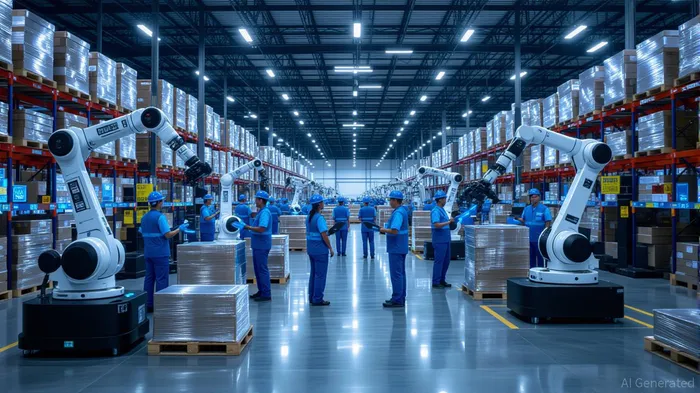
Today, Walmart is extending its supply chain innovations globally, leveraging AI and automation to address contemporary challenges. According to a report by , the company has deployed predictive systems and "self-healing inventory" technologies in international markets like Costa Rica, Mexico, and Canada. These tools enable real-time inventory adjustments, waste reduction, and logistics streamlining, generating measurable cost savings. Domestically, Walmart aims to automate 55% of its fulfillment volume by 2026, a move that will further enhance its ability to meet surges in demand while maintaining low prices.
The integration of RFID technology, which in earlier trials, illustrates Walmart's iterative approach to innovation. By combining historical expertise with cutting-edge tools, the company is creating a supply chain ecosystem that adapts dynamically to disruptions-a critical advantage in an era of climate risks, geopolitical instability, and shifting consumer behavior.
Retail Resilience in a Post-Pandemic Era
For investors, Walmart's strategic focus on operational efficiency is more than a cost-cutting exercise; it is a blueprint for sector-wide resilience. The company's ability to maintain open stores during the 2020 pandemic, while many competitors struggled with inventory shortages, demonstrated the value of a robust supply chain. Current initiatives, such as and automated fulfillment, amplify this resilience by reducing reliance on manual processes and minimizing bottlenecks.
Moreover, Walmart's global supply chain modernization positions it to capitalize on emerging markets. As e-commerce growth plateaus in saturated regions, the company's hybrid model-combining physical stores with AI-optimized logistics-creates a scalable framework for expansion. This approach not only strengthens Walmart's domestic footprint but also enhances its competitiveness in international markets, where supply chain complexity is often higher.
Conclusion: A Catalyst for Long-Term Innovation
While the recent rumors of a Walmart shutdown were unfounded, they inadvertently spotlighted the company's role as a catalyst for retail innovation. By continuously refining its supply chain through automation and AI, Walmart is setting a precedent for operational excellence that rivals will struggle to match. For investors, this underscores the importance of prioritizing companies that treat efficiency not as a static goal but as a dynamic, evolving strategy. In a sector where margins are razor-thin and disruptions are inevitable, Walmart's approach offers a roadmap to sustained profitability-and a compelling case for long-term investment.

Delivering real-time insights and analysis on emerging financial trends and market movements.
Latest Articles
Stay ahead of the market.
Get curated U.S. market news, insights and key dates delivered to your inbox.




Comments
No comments yet