
Walmart's Strategic Expansion into Sports Retail: A Disruptive Move with Long-Term Earnings Potential
 Aime Summary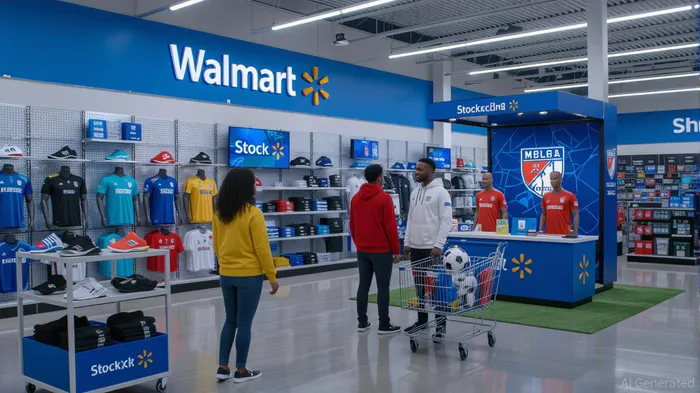
Walmart's recent foray into sports retail represents a calculated and multifaceted strategy to redefine its role in the evolving retail landscape. By leveraging partnerships with high-impact platforms like StockX and Major League Soccer (MLS), the retailer is not merely diversifying its product offerings but embedding itself into the cultural fabric of a generation. For investors, this shift signals a departure from traditional value retailing and a pivot toward cross-sector innovation—a move with profound implications for long-term earnings and shareholder value.
Retail Innovation: Bridging the GapGAP-- Between E-Commerce and Lifestyle
Walmart's partnership with StockX is a masterstroke in addressing unmet consumer demand. By offering 15,000 high-profile items—ranging from NikeNKE-- sneakers to UGG boots—the retailer is tapping into a $1.2 trillion global market for premium and limited-edition products. This expansion, coupled with same-day delivery to 93% of U.S. households, transforms WalmartWMT-- from a discount retailer into a lifestyle brand. The integration of StockX's curated inventory into Walmart's existing e-commerce infrastructure—now offering over 500 million items online—creates a flywheel effect: increased product variety drives customer traffic, while enhanced delivery speed locks in loyalty.
The company's 21% year-over-year growth in U.S. Marketplace sales underscores the success of this approach. By attracting 44,000 new sellers in just five months, Walmart is building a robust third-party ecosystem that mirrors Amazon's marketplace model while differentiating itself through competitive pricing and logistics. For investors, this innovation in e-commerce is not just about incremental sales—it's about capturing a share of the $1.3 trillion U.S. sports retail market, which is projected to grow at a 10% CAGR through 2030.
Cross-Sector Diversification: Sports as a Catalyst for Cultural Relevance
Walmart's strategic alignment with MLS and the 2026 World Cup exemplifies its cross-sector approach. The MLS partnership targets a demographic that is 75% Gen Z and millennial, with over 30% identifying as Hispanic—a group Walmart has historically engaged through localized promotions. By creating a “curated shopping hub” for soccer-related products and tailgate essentials, the retailer is blending commerce with fandom. This strategy mirrors the success of its 2022 FIFA World Cup campaign, which generated 37 times more searches than the median brand, outperforming giants like VerizonVZ-- and Ford.
The 2026 World Cup, co-hosted by the U.S., Canada, and Mexico, offers a unique catalyst. With 48 teams and 106 matches, the event will generate unprecedented global engagement. Walmart's plan to integrate behind-the-scenes content, influencer-driven programming, and real-time retail promotions into its digital platforms positions it to monetize attention in a way that rivals traditional sports advertisers. This diversification into media and entertainment not only broadens revenue streams but also strengthens brand equity—a critical factor in an era where customer loyalty is increasingly tied to emotional connection.
Long-Term Earnings Potential: Beyond the Short-Term Play
Critics may dismiss Walmart's sports retail expansion as a temporary play on cultural trends. However, the company's long-term vision is far more sophisticated. The MLS partnership is designed to create a sustainable platform for engagement, with a planned 2026 digital content hub ensuring relevance beyond the World Cup. This continuity mitigates the risks of sports sponsorship volatility and aligns with broader trends in retail media. Walmart's retail media network, Walmart Connect, already allows brands to advertise to 255 million U.S. customers. By integrating soccer-related content into this ecosystem, the retailer can monetize its audience in real time, creating a self-reinforcing cycle of engagement and sales.
For investors, the financial implications are compelling. Walmart's stock has historically traded at a discount due to its focus on value retailing. However, its strategic bets in sports retail and e-commerce innovation could drive a re-rating. The 2026 World Cup's timing with the U.S. summer months—a traditionally slower retail period—presents an opportunity to boost sales through soccer-themed events and promotions. With the U.S. soccer market growing at a 10% CAGR, Walmart's early and comprehensive entry positions it to capture a significant share of this expansion.
Investment Advice: Positioning for a Retail Revolution
Walmart's strategic expansion into sports retail is more than a diversification play—it's a reimagining of what a retail giant can achieve in the 21st century. By combining e-commerce innovation, cross-sector partnerships, and cultural relevance, the company is building a durable competitive advantage. For investors, the key takeaway is clear: Walmart is not just adapting to change; it is driving it.
Consider the following:
- Short-term: The Leagues Cup and 2026 World Cup provide immediate visibility for Walmart's sports retail initiatives, with potential for sales spikes in Q3 and Q4 2026.
- Long-term: The company's focus on youth engagement and digital media ensures sustained growth in a market projected to expand through 2030.
In an era where retail is increasingly about experience and connection, Walmart's disruptive move into sports retail offers a blueprint for shareholder value creation. For those with a long-term horizon, this is a compelling opportunity to invest in a company reinventing itself for the future.

Stay ahead of the market.
Get curated U.S. market news, insights and key dates delivered to your inbox.


AInvest
PRO
AInvest
PRO



Comments
No comments yet