
Walmart's Retail Revolution: How Anti-Theft Measures and E-Commerce Dominance Signal the Future of Grocery
The retail landscape is undergoing a seismic shift, driven by rising theft, evolving consumer expectations, and the relentless march of e-commerce. At the epicenter of this transformation stands WalmartWMT--, whose bold moves to combat theft and dominate online grocery sales offer a blueprint for retailers navigating today's challenges. By integrating physical and digital strategies while addressing loss prevention, Walmart is redefining the rules of the game—and investors would be wise to take note.
The Anti-Theft Tightrope: Balancing Security and Trust
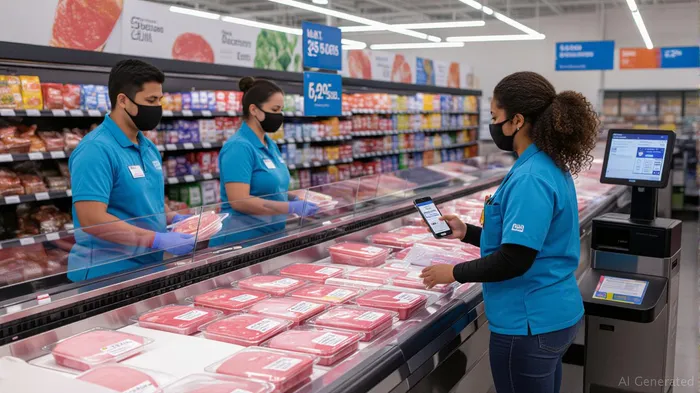
Walmart's recent anti-theft initiatives—locking meats in tamper-resistant cages, deploying AI-driven checkout systems, and embedding hidden barcodes—aim to stem losses that cost U.S. retailers $61 billion annually. These measures have sparked public outcry, with critics calling Walmart's “imprisoned” food displays a betrayal of its value-driven ethos. TikTok users and consumer advocacy groups have amplified concerns, citing a 16.5% rise in discrimination complaints linked to intrusive security practices.
Yet, Walmart's actions are strategic. Theft at self-checkouts has surged by 30% since 2020, and the company cannot afford to cede ground to competitors or erode margins further. The operational costs of these changes—new technologies, staff training, and potential declines in customer convenience—are substantial. However, Walmart's scale and infrastructure (e.g., 4,700 U.S. stores) allow it to absorb these expenses while maintaining its dominance.
The E-Commerce Edge: Walmart's 31.6% Market Share Lead
Walmart's true advantage lies in its omnichannel strategy. With 31.6% of the U.S. online grocery market—$63.79 billion in projected 2025 sales—the company outpaces AmazonAMZN-- (22.6%) and Instacart (21.6%) by prioritizing value, convenience, and integration. Its Walmart+ membership program, which offers free delivery and cash-back incentives, has driven a 21% year-over-year global e-commerce sales growth. Meanwhile, delivery costs per order have dropped nearly 40%, thanks to AI-optimized logistics and store-fulfilled orders.
The data underscores Walmart's resilience:
While Amazon's Prime ecosystem and Instacart's delivery network remain formidable, Walmart's physical-digital hybrid model—where 72.2% of its online sales flow directly through its own platform—gives it an edge in controlling pricing, inventory, and customer experience. Shoppers, particularly cost-conscious families, reward this integration: Walmart's average order value exceeds competitors' by 20%.
Competitive Dynamics: Why Walmart's Playbook Works
Amazon and Instacart face structural limitations. Amazon's grocery sales, though growing, rely heavily on one-off purchases (e.g., toiletries), whereas Walmart dominates full-basket shopping. Instacart, while the top delivery intermediary (57.7% of U.S. delivery sales), struggles as retailers like Walmart and KrogerKR-- build in-house logistics to reduce reliance on third parties.
Walmart's strategy also addresses a key consumer shift: the demand for seamless omnichannel experiences. Its 2025 delivery share rose nearly 8 percentage points year-over-year, and its pickup services remain preferred by 45.5% of shoppers. By leveraging generative AI for dynamic pricing and personalized recommendations, Walmart is not just keeping pace but setting the pace.
Investment Implications: Betting on Loss Prevention and Omnichannel Mastery
Walmart's moves signal a broader industry trend: retailers must prioritize loss prevention and omnichannel integration to thrive. Investors should favor companies that:
1. Control the end-to-end customer journey (e.g., Walmart's integrated stores and apps).
2. Invest in AI and automation to reduce costs and enhance customer experience.
3. Maintain low prices without sacrificing margins through supply chain efficiency.
Walmart's stock, currently trading at $152.30 (as of July 2025), offers a compelling entry point. Its dividend yield of 1.2% and consistent e-commerce growth (outpacing overall revenue) make it a defensive play in a volatile market. Meanwhile, Amazon's reliance on high-margin digital services and Instacart's dependency on retailer partnerships leave them exposed to margin pressures and competition.
Conclusion: The New Rules of Retail
Walmart's anti-theft measures and e-commerce dominance are more than tactical moves—they're a blueprint for the future. By balancing security with convenience, leveraging scale to absorb costs, and owning the customer experience from shelf to doorstep, Walmart is proving that the winners of the retail revolution will be those who master both physical and digital worlds. For investors, this is a signal to back retailers with similar strategies: those who innovate without losing sight of their core values.
In a sector where theft, convenience, and trust are existential battlegrounds, Walmart's resilience is a harbinger of things to come. The question isn't whether the retail revolution will succeed—it's already here. The answer is who will lead it. For now, the answer is Walmart.

Stay ahead of the market.
Get curated U.S. market news, insights and key dates delivered to your inbox.
AInvest
PRO
AInvest
PRO



Comments
No comments yet