
Walmart's Q3 Performance as a Barometer for U.S. Consumer Spending Resilience


 Aime Summary
Financial Highlights: A Mixed Picture of Growth and Pressure
Walmart's Q3 2023 financial performance revealed a nuanced story of resilience and adaptation. , , . same-store sales (excluding fuel) and . This growth, however, came amid rising costs. The company raised prices on certain items to offset tariffs on imported goods, particularly from China and Mexico, while absorbing other inflationary pressures to maintain competitive pricing.
, , . reflected disciplined cost management, though one-time charges were excluded from this metric. , signaling confidence in its ability to navigate macroeconomic headwinds.
Inflation and Consumer Behavior: A Shifting Retail Landscape
The Q3 results highlight how inflation and tariffs are reshaping consumer spending patterns. Data from QZ.com indicates that middle- and upper-income households are increasingly trading down to Walmart from higher-tier retailers like Target, prioritizing essential purchases and leveraging , store brands, and pickup/delivery services. This shift reflects broader economic strain, as consumers balance rising debt burdens with the need to stretch budgets.
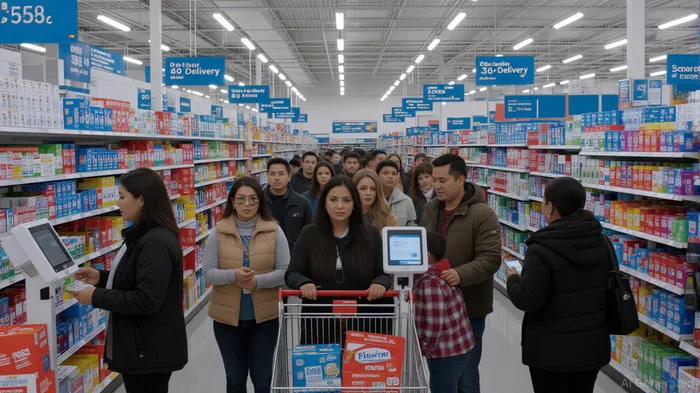
Walmart's e-commerce growth-driven by store-fulfilled deliveries, advertising, and third-party marketplace expansion-further underscores the role of convenience in mitigating inflationary impacts. , a testament to the company's ability to adapt to evolving consumer preferences.
Investment Implications: Retail as a Real-Time Inflation Indicator
Walmart's performance exemplifies how retail giants can act as real-time inflation indicators. For investors, the Q3 results suggest several key takeaways:
1. Value Retailers as Safe Havens: As consumers prioritize affordability, value-focused retailers like Walmart are likely to outperform premium competitors. This trend could accelerate if inflation persists or if economic conditions deteriorate further.
2. as a Growth Engine: The 27% e-commerce sales increase demonstrates the sector's potential to offset brick-and-mortar challenges. Investors should monitor how Walmart and peers balance with margin preservation.
3. Tariff and Cost Management Risks: While Walmart has absorbed some inflationary costs, sustained tariff hikes or supply chain disruptions could erode margins. Companies with agile sourcing strategies and will be better positioned to navigate these risks.
However, the broader economic context remains a concern. As noted by QZ.com, Walmart's success in attracting price-sensitive shoppers signals a broader decline in consumer confidence and financial health. This duality-strong retail performance amid weak economic fundamentals-poses a dilemma for investors: Should they capitalize on retail stocks' resilience or hedge against a potential slowdown?
Conclusion: Navigating the Crossroads of Resilience and Risk
Walmart's Q3 2023 results offer a microcosm of the U.S. consumer's current state: resilient in the face of adversity but increasingly constrained by inflation and debt. For investors, the company's performance underscores the importance of monitoring retail giants as real-time indicators of macroeconomic health. While Walmart's value proposition and e-commerce momentum present compelling opportunities, the underlying economic pressures necessitate a cautious, to portfolio management.
As the retail sector continues to evolve, the ability to distinguish between short-term resilience and long-term sustainability will be critical for investors seeking to capitalize on-or hedge against-the next phase of the inflationary cycle.

Delivering real-time insights and analysis on emerging financial trends and market movements.
Latest Articles
Stay ahead of the market.
Get curated U.S. market news, insights and key dates delivered to your inbox.




Comments
No comments yet