
Walmart's Q2 2026 Earnings Call: Contradictions in E-commerce Profitability, Inventory Management, AI Impact, and Tariff Strategies
 Aime Summary
Date of Call: August 21, 2025
Financials Results
- Revenue: Consolidated Q2 revenue up 5.6% in constant currency (year‑over‑year)
- EPS: Adjusted EPS $0.68, up 1.5% year‑over‑year
- Gross Margin: Consolidated gross margin +4 bps reported (+9 bps adjusted excluding $80M Sam's restructuring); Walmart U.S. margins improved while International gross profit rate declined
- Operating Margin: Adjusted operating income growth ~0.4–0.5% in constant currency; Q2 included a 560 bps headwind from an additional $450M claims accrual (self‑insured general liability/workers' comp)
Guidance:
- Raised FY sales growth guidance to 3.75%–4.75% (constant currency).
- Q3 sales growth expected 3.75%–4.75% (constant currency); potential modest FX headwind if exchange rates persist.
- Q3 operating income expected to grow 3%–6%; full‑year adjusted operating income guidance unchanged at 3.5%–5.5% (constant currency).
- Company reiterates goal to grow operating income faster than sales; midpoint implies ~4.25% sales and ~4.5% OI (6% including 150 bps callouts).
- OnePay Cash Rewards card launching before holiday (3% back at Walmart; 5% for Walmart+).
Business Commentary:
- Strong Sales Growth and E-commerce Expansion:
- Walmart Inc. reported a
5.6%increase in constant currency sales for Q2 2026, with e-commerce sales growing by25%globally. Growth was driven by increased transaction and unit sales, strong e-commerce demand, international sales growth, and share gains across segments.
Gross Margin and Inventory Management:
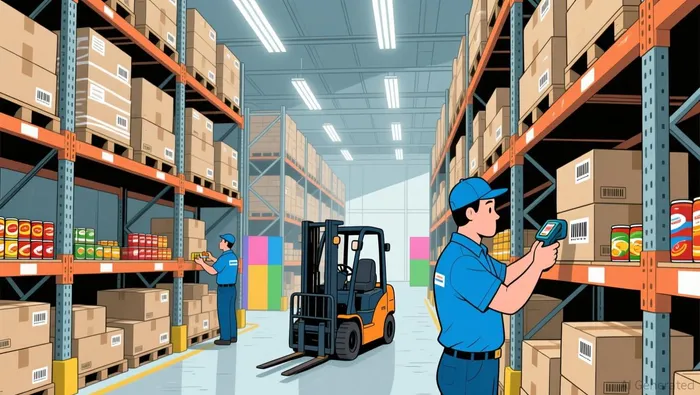
- Walmart's gross margin increased
9 basis pointson an adjusted basis, despite a560 basis pointsheadwind from unusual expense. This improvement was attributed to strong inventory management, better business mix, and higher cost of imported goods.
Advertising and Membership Income Growth:
- Advertising and membership income grew significantly, contributing
50%of Walmart's incremental profit excluding claims. Growth in advertising was led by a
46%increase globally, and membership income saw15%growth.International Market Acceleration:
- International sales grew by
10.5%in constant currency, led by strong performance in China, Mexico, and Flipkart. - Growth was driven by broad-based product category sales and strong e-commerce penetration, with China sales up
30%.

Sentiment Analysis:
Overall Tone: Positive
- Management raised sales guidance, maintained full‑year operating income guidance despite ~$0.75B incremental claims cost YTD; highlighted 25% global e‑commerce growth, advertising +46%, membership income +15%, and adjusted EPS of $0.68 (up 1.5%).
Q&A:
- Question from Simeon Ari Gutman (Morgan Stanley): How much of underlying profitability is masked by temporary factors and is anything broken in the flywheel? Is AI already accelerating top line and margins and when will it become material?
Response: AI is still early and not materially lifting sales yet; underlying profit momentum is real and driven by higher‑margin businesses (advertising, membership, marketplace) despite temporary claims-related cost pressure (~$0.75B YTD).
- Question from Christopher Michael Horvers (JPMorgan): Competitor expanding grocery delivery — how does that change your advantage and does it require faster investment that could affect margins/cash flow?
Response: Competition will improve, which is expected; Walmart will stay focused on customer needs and continue investing in convenience and experience to preserve its advantage.
- Question from Michael Lasser (UBS): This quarter tested assumptions about consistent sales and profit — how do you dispel concerns that this is a trend rather than one‑off?
Response: Management views current margin pressures as transitory, cites multi‑year track record (top line ~5–6% and profit ~10% growth over two years) and confidence in navigating tariffs while maintaining guidance.
- Question from Rupesh Dhinoj Parikh (Oppenheimer): How are you feeling about inventory health and in‑stocks entering the back half, including tariff‑impacted categories?
Response: Inventories are healthy and clean—Walmart U.S. exited Q2 with ~2% inventory growth (much in‑transit) and global inventory up ~3.8%—positioned to support unit growth in the back half.
- Question from Seth Ian Sigman (Barclays): Can you elaborate on price changes this quarter, consumer response, and the role of rollbacks (grocery rollbacks up 30%)?
Response: Merchants are selectively using rollbacks and mix management to preserve value; observed item‑level elasticity allows targeted pricing actions rather than broad pass‑through.
- Question from Corey Tarlowe (Jefferies): Update on international portfolio — priorities for Canada, India and Mexico and how they fit the long‑term growth algorithm?
Response: Focus is scaling e‑commerce/quick commerce and deploying global tech platforms: Canada launched Walmart Commerce, Mexico integrating 1P/3P, China expanded clouds, and India added MFCs/minute FCs to accelerate quick commerce.
- Question from Katharine Amanda McShane (Goldman Sachs): Comment on e‑commerce profitability globally and its contribution to operating income growth this quarter and for the year?
Response: U.S. e‑commerce profitability is improving and adding profit; International is contribution‑margin positive but loss‑making; roughly 50% of incremental profit (ex‑claims) came from advertising, membership and marketplace.
- Question from Robert Frederick Ohmes (BofA Securities): Gross margin scenarios for the back half given rollbacks and the retail accounting method — any greater clarity on competitor pricing or elasticity?
Response: Management emphasizes flexibility: they'll monitor price gaps, sell‑throughs and markdowns and make item‑level decisions to balance share and margins; no definitive margin outcome yet.
- Question from Kelly Ann Bania (BMO Capital Markets): Why were markups lower than planned—did you mitigate tariff costs or increase rollbacks, and how much price has been passed to consumers?
Response: Lower markups reflect merchant tactics—more rollbacks, tighter inventory/turn management and mix improvements—enabling value for customers while managing margins.
- Question from Oliver Chen (TD Cowen): Competitive advantages in AI and what’s easier vs harder; roadmap for attracting higher‑income customers and lifestyle positioning?
Response: Competitive edge = massive data plus physical fulfillment network; AI (Sparky and associate/supplier agents) will personalize and boost speed/productivity; higher‑income gains stem from broadened assortment, speed and digital features.
- Question from Peter Jacob Keith (Piper Sandler): Initial reaction to the 'Who Knew' ad campaign and any linkage to e‑commerce acceleration?
Response: Campaign reception is positive; it's early to measure formally, but e‑commerce acceleration (26% U.S.) coincided with the campaign and they plan further activity in H2.
- Question from Unidentified Analyst (Gordon Haskett; Eric on for Chuck): Are comps positive across income cohorts and any change to capital allocation given tariffs?
Response: Growth is broad‑based across income cohorts; capital allocation remains balanced—continuing investments (tech, AI, automation) while opportunistically repurchasing stock (>$6B YTD).
- Question from Joseph Isaac Feldman (Telsey Advisory Group): Why are you confident about the holiday season and any changes to holiday planning for Walmart and Sam's Club?
Response: Confidence stems from strong back‑to‑school sell‑through, favorable inventory positioning and positive feedback from store managers on holiday assortments and pricing—expecting a good holiday season.
Contradiction Point 1
E-commerce Profitability
This contradiction directly impacts investor expectations regarding the financial health and profitability of Walmart's e-commerce operations.
What is the contribution of global e-commerce to operating income growth? - Katharine Amanda McShane (Goldman Sachs Group, Inc.)
2026Q2: E-commerce continues to make progress globally, contributing significantly to profitability. - John Rainey(CFO)
What factors drove Walmart's e-commerce profitability? What drives further improvement in e-commerce profitability? - Paul Lejuez (CitiGroup)
2026Q1: Walmart achieved e-commerce profitability in Q1 for both the U.S. and globally. - John Rainey(CFO)
Contradiction Point 2
Inventory Management and Tariff Impact
This contradiction involves the company's approach to managing inventory levels and the impact of tariffs, which are crucial for operational efficiency and cost control.
What are your thoughts on inventory management, particularly regarding tariff-impacted categories? - Rupesh Dhinoj Parikh (Oppenheimer & Co. Inc.)
2026Q2: Inventory levels are healthy, with a focus on managing quantity and flow. - John R. Furner(CEO, Walmart U.S.)
How are you planning your inventory considering current market conditions, and can you avoid risks similar to those in 2022? - Edward Kelly (Wells Fargo)
2026Q1: We have maintained a very low inventory posture. We have more inventory on hand as a percent of sales than we have in any point in the last 10 years. - John Furner(CEO, Walmart U.S.)
Contradiction Point 3
AI Integration and Impact on Top-line Sales Growth
This contradiction involves the expected impact of AI on Walmart's top-line sales growth, which could influence investor expectations and strategic planning.
What portion of profitability is masked by temporary factors? Is AI accelerating Walmart's top-line and margin growth, and when will it become more material? - Simeon Ari Gutman (Morgan Stanley)
2026Q2: AI is not yet impacting Walmart's top-line sales growth, but there's excitement about its future potential. - C. Douglas McMillon(CEO)
How has AI impacted your business and how is it integrated into business processes, particularly in store operations and technology? - Unidentified Analyst (Gordon Haskett)
2025Q4: The model that's embedded in a lot of what we do has an AI component to it, so it's already working for us. - C. Douglas McMillon(CEO)
Contradiction Point 4
E-commerce Profitability and Margins
This contradiction involves the expected timeline and progress of e-commerce profitability, which is crucial for investor expectations and strategic decisions.
What is the global e-commerce profitability and its contribution to operating income growth? - Katharine Amanda McShane(Goldman Sachs Group, Inc.)
2026Q2: E-commerce continues to make progress globally, contributing significantly to profitability. - John David Rainey(CFO)
What changes were made to the 4Q operating income guide and how do they affect U.S. e-commerce profitability? - Christopher Michael Horvers(JPMorgan Chase & Co)
2025Q3: U.S. e-commerce is headed towards profitability, with improvements in order density and automation. - John David Rainey(CFO)
Contradiction Point 5
Impact of Tariffs on Costs and Strategy
This contradiction relates to the company's ability to manage tariff-related costs effectively, which impacts its strategic planning and financial performance.
How do you address concerns about recent gross margin results? Is this a one-off or a trend? - Michael Lasser (UBS Investment Bank)
2026Q2: Tariffs are challenging, but Walmart's long-term strategy remains unchanged. - John Rainey(CFO)
Can current tariffs threaten Walmart's margins? - Michael Lasser (UBS)
2026Q1: Tariffs are challenging, but Walmart's long-term strategy remains unchanged. Current tariff levels are still too high, but Walmart is positioned to manage costs effectively and navigate this environment. - John Rainey(CFO)

Discover what executives don't want to reveal in conference calls
Latest Articles
Stay ahead of the market.
Get curated U.S. market news, insights and key dates delivered to your inbox.
AInvest
PRO
AInvest
PRO



Comments
No comments yet