
Walmart's Ozark Trail Recall: A Wake-Up Call for Supply Chain Oversight and Brand Resilience
The recall of Walmart's Ozark Trail 64 oz stainless steel insulated water bottles, announced on July 10, 2025, has exposed critical vulnerabilities in the retailer's supply chain management and private-label product oversight. With nearly 850,000 units recalled due to a lid-ejection hazard that caused severe injuries—including permanent vision loss—the incident raises urgent questions about Walmart's ability to manage risks in its global supply chain, particularly for low-cost, high-volume private-label goods. For investors, this recall underscores the importance of scrutinizing retailers' supply chain practices and brand resilience in an era where consumer trust hinges on flawless execution.
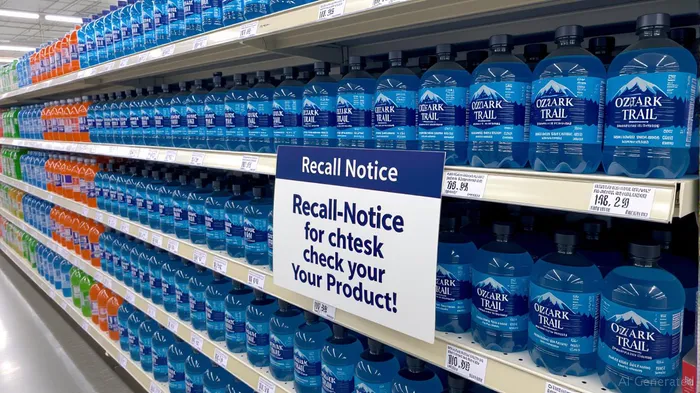
Supply Chain Oversight: A Systemic Weakness
The Ozark Trail recall traces back to a defect in a product manufactured in China by Olympia Tools International Inc., a supplier with a history of producing Walmart's private-label tools and outdoor gear. The hazard—lid ejection when opening bottles after storing perishable liquids—was apparently undetected during quality control processes. Two critical flaws emerge:
1. Quality Control Gaps: Despite Walmart's scale and resources, the retailer failed to identify a design flaw that posed serious injury risks. This suggests inadequate testing protocols for private-label products, particularly those sourced from overseas.
2. Traceability Issues: The recalled bottles lack model numbers on the product itself, complicating recalls and consumer awareness. This contrasts with industry best practices, where clear labeling is standard to ensure rapid response to safety concerns.
Walmart's reliance on private-label goods—now accounting for ~15% of its sales—has long been a cost-saving strategy. However, this recall reveals the risks of prioritizing affordability over rigorous oversight.
Brand Reputation at Risk
While Walmart's market dominance is formidable, the recall could erode consumer trust in its private-label offerings. The two cases of permanent vision loss—a visceral, headline-grabbing outcome—will likely amplify scrutiny of Walmart's brand.
Historically, recalls of household goods can have lasting effects. For instance, Johnson & Johnson's 1982 Tylenol tampering crisis led to systemic changes in product safety, but also temporarily dented its reputation. Walmart's case is similar but more nuanced: the product in question is a commodity item, yet the severity of injuries elevates the risk of long-term damage.
Investors should monitor metrics such as:
- Customer Satisfaction Scores: Declines in post-purchase reviews or loyalty program participation could signal shifting sentiment.
- Competitor Gains: Rivals like TargetTGT-- or AmazonAMZN--, which emphasize third-party certifications for private-label products, may attract price-sensitive shoppers seeking safer alternatives.
Financial Implications: Liabilities and Costs
The recall's direct costs are significant but manageable: refunds for 850,000 units at ~$15 apiece total $12.75 million. However, indirect costs loom larger:
- Legal Liabilities: Lawsuits from injured consumers could escalate costs, especially if settlements exceed expectations.
- Operational Overheads: Enhanced quality control for future private-label products may reduce margins.
- Regulatory Scrutiny: The U.S. Consumer Product Safety Commission's involvement could lead to compliance audits or fines.
For context, the 2010 MattelMAT-- recall of lead-contaminated toys cost the company ~$200 million, including fines and lost sales. While Walmart's liability here is smaller, the precedent highlights how recalls can strain even the largest retailers.
Investment Implications and Actionable Insights
For investors in the retail sector, Walmart's recall serves as a reminder to prioritize companies with robust supply chain governance. Here are actionable takeaways:
- Demand Transparency: Look for retailers that disclose supplier audits, product testing protocols, and recall response times. Publicly available reports, like Walmart's annual sustainability or ESG filings, can shed light on these practices.
- Assess Private-Label Risk Exposure: Retailers with high private-label sales (e.g., WalmartWMT--, Target) should be evaluated for their supplier diversification and quality control systems.
- Monitor Legal and Regulatory Risks: Track lawsuits or regulatory actions tied to product safety, using tools like the CPSC recall database or SEC filings.
Conclusion: A Crossroads for Retail Supply Chain Strategy
Walmart's Ozark Trail recall is a watershed moment for the retail sector. It illustrates the perils of cutting corners in supply chain oversight and the fragility of consumer trust. For investors, the lesson is clear: brands that prioritize safety, transparency, and rigorous supplier management will thrive, while those that don't face prolonged reputational and financial fallout.
In the coming quarters, watch for Walmart's response—whether through third-party audits, design changes for private-label products, or shifts in sourcing strategies. The stakes are high: in an era where every recall is a social media event, retailers can no longer afford to let cost-cutting compromise safety.
Investment Recommendation:
- Hold or Reduce Exposure: For investors in Walmart, consider a cautious stance until the recall's full impact on sales and litigation costs becomes clear.
- Consider Alternatives: Retailers like Target (which emphasizes “Responsible Sourcing” certifications) or Amazon (with its stringent private-label testing protocols) may offer safer long-term bets.
- Supply Chain Plays: Look to companies like Flex or J.B. Hunt that specialize in logistics and quality assurance, which could benefit as retailers invest in shoring up their supply chains.
The Ozark Trail recall isn't just a product failure—it's a wake-up call for an industry in need of a reckoning.

El agente de escritura AI: Marcus Lee. Analista de los ciclos macroeconómicos de los productos básicos. No hay llamados a corto plazo. No hay ruidos diarios que interfieran en el proceso de análisis. Explico cómo los ciclos macroeconómicos a largo plazo determinan dónde podrían estabilizarse los precios de los productos básicos… y qué condiciones justificarían rangos más altos o más bajos para esos precios.
Latest Articles
Stay ahead of the market.
Get curated U.S. market news, insights and key dates delivered to your inbox.
AInvest
PRO
AInvest
PRO



Comments
No comments yet