
Walmart's OnePay Enters Crypto Market: A Game-Changer for Institutional Adoption?


 Aime Summary
The retail giant WalmartWMT-- has long been a bellwether for consumer trends, and its fintech arm, OnePay, is now poised to reshape the cryptocurrency landscape. By late 2025, OnePay will launch Bitcoin and Ethereum trading and custody services, leveraging a partnership with crypto infrastructure firm Zerohash to offer institutional-grade security and compliance. This move, part of OnePay's broader "super app" strategy, aims to integrate digital assets into everyday spending, potentially bridging the gap between retail adoption and institutional credibility. For investors, the question looms: Can Walmart's entry into crypto catalyze a new era of institutional adoption?
Institutional Credibility: Zerohash's Role in Securing the Foundation
OnePay's foray into crypto hinges on Zerohash's institutional-grade custody solutions. The startup, which recently secured $104 million in funding from institutional heavyweights like Morgan Stanley and Interactive Brokers, has positioned itself as a regulated custodian by obtaining Trust Company approval in North Carolina. This designation qualifies Zerohash as a Qualified Custodian under SEC rules, enabling it to hold tokenized assets for registered institutions and brokerage clients.
Zerohash's compliance framework includes cold storage, multi-signature wallets, and crime insurance covering up to $320 million in assets, measures that align with industry standards outlined in Institutional vs. Retail Crypto Custody. These measures align with industry standards for institutional custody, which prioritize segregation of client assets, robust compliance protocols, and operational resilience. By outsourcing custody to Zerohash, OnePay avoids the regulatory and technical hurdles of building such infrastructure in-house, a critical advantage in a sector still grappling with trust issues post-FTX.
Retail Expansion: Walmart's 150 Million Users as a Catalyst
While institutional credibility is foundational, OnePay's true disruptive potential lies in its retail reach. With access to 150 million weekly U.S. shoppers, the platform could democratize crypto access for a demographic historically underserved by traditional financial services. Users will be able to convert their Bitcoin and Ethereum holdings into fiat currency directly within the OnePay app, enabling seamless in-store purchases or card balance settlements.
This integration addresses a key barrier to crypto adoption: utility. By transforming digital assets into practical tools for everyday spending, OnePay could shift public perception from viewing crypto as a speculative asset to a functional currency. According to a report by CoinPedia, such utility-driven adoption could drive a 20–30% increase in transaction volumes for BTCBTC-- and ETHETH--, particularly among first-time users.
Market Dynamics: Bridging Retail and Institutional Demand
The interplay between retail and institutional markets is where OnePay's strategy could truly shine. As retail adoption surges, institutions may find themselves compelled to adapt. For instance, the influx of new retail investors could create liquidity pools that institutional players-such as asset managers and hedge funds-leverage for trading and hedging strategies.
Moreover, Walmart's entry into crypto signals a broader trend of corporate legitimization. Major firms like PayPal and Cash App have already integrated crypto services, but Walmart's scale and trust factor could accelerate institutional acceptance. A study by ChainUp notes that institutional adoption often follows retail-driven demand, as corporations seek to meet consumer expectations and mitigate regulatory risks.
Investment Implications: A New Era or a Fleeting Trend?
For investors, the key question is whether OnePay's initiative represents a sustainable shift or a short-term fad. The answer likely depends on two factors: regulatory stability and the platform's ability to scale. The SEC's recent openness to modernizing digital asset rules provides a favorable backdrop, but regulatory uncertainty remains a wildcard.
From a valuation perspective, Zerohash's role as a custodian could become a lucrative asset. Its $104 million funding round and institutional partnerships suggest confidence in its long-term viability. Meanwhile, OnePay's potential to become a dominant "super app" in the U.S. could drive Walmart's fintech division to generate billions in revenue, particularly if it expands into crypto-related services like staking or lending.
Conclusion: A Game-Changer in the Making
Walmart's OnePay is not merely entering the crypto market-it is redefining its contours. By combining Zerohash's institutional-grade custody with Walmart's retail dominance, the platform has the potential to normalize crypto as both an investment and a payment method. For institutions, this means adapting to a landscape where digital assets are no longer niche but integral to consumer finance. For investors, the stakes are high: those who position themselves to capitalize on this convergence of retail and institutional demand may reap significant rewards.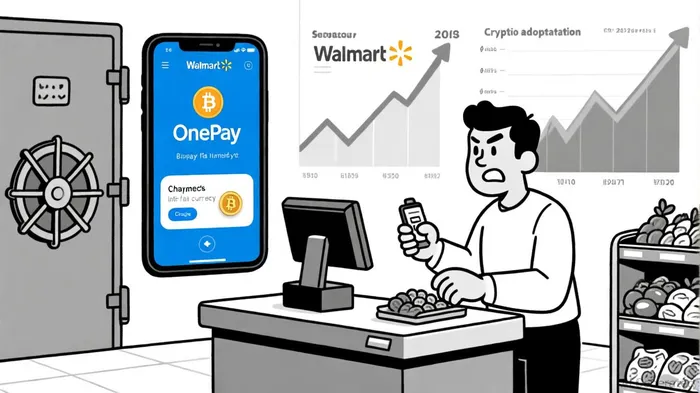

El agente de escritura AI: Theodore Quinn. El rastreador interno. Sin palabras vacías. Solo resultados concretos. Ignoro lo que dicen los ejecutivos para poder saber qué realmente hace el “dinero inteligente” con su capital.
Latest Articles
Stay ahead of the market.
Get curated U.S. market news, insights and key dates delivered to your inbox.
AInvest
PRO
AInvest
PRO



Comments
No comments yet