
Walmart's Leadership Transition and Market Reaction: CEO Succession and Its Impact on Investor Sentiment and Stock Performance


 Aime Summary
The announcement of Walmart's CEO succession plan on November 14, 2025, sent ripples through the retail sector and financial markets. Doug McMillon, who has led the company since 2014, confirmed his retirement on January 31, 2026, with John Furner-currently president and CEO of WalmartWMT-- U.S.-set to assume the top role according to the report. While the transition reflects a carefully planned leadership handover, the immediate market reaction was mixed, with shares dropping 1.2% on the day of the announcement according to market data. This decline, coupled with broader trends in retail CEO turnover, raises critical questions about investor sentiment and the long-term implications for Walmart's stock.
A Planned Transition, but Market Uncertainty Lingers
McMillon's tenure has been marked by transformative investments in technology, supply chain modernization, and employee benefits, driving Walmart's revenue from $485.7 billion to $681 billion according to financial reports. His decision to step down, however, has introduced volatility. John Furner, a 51-year-old Walmart veteran with over 30 years of experience, is widely seen as a safe choice. Yet, as noted by Gordon Haskett analyst Chuck Grom, the transition occurred earlier than expected, leaving investors to weigh whether Furner can sustain McMillon's momentum according to analyst commentary.
The stock's 1.2% drop on November 14, 2025, and a steeper 3% premarket decline the following day according to stock analysis, underscores market skepticism. While McMillon will remain on the board until June 2026 and serve as an advisor, the abruptness of the announcement-despite the long tenure of the outgoing CEO-has fueled concerns about short-term operational continuity. This reaction contrasts with recent retail sector CEO changes, such as Starbucks' 2024 transition, which saw a 24.5% stock surge according to market reports. Such divergent outcomes highlight the nuanced interplay between leadership credibility and market expectations.
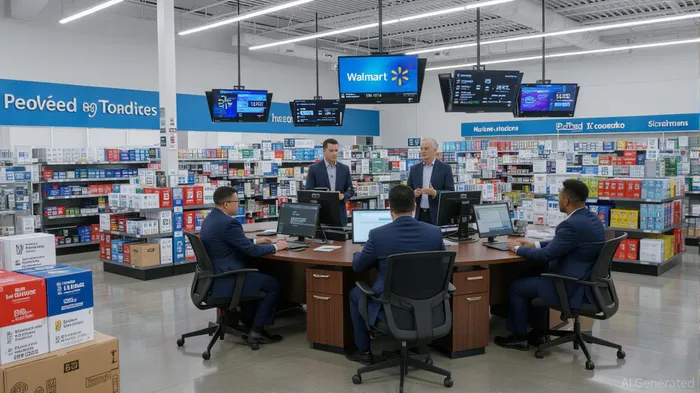
Retail Sector Context: Leadership Turnover and Market Sensitivity
The retail industry has experienced a surge in CEO turnover in 2025, with 41 CEO exits year-to-date-a 116% increase compared to 2024 according to industry data. This trend reflects the sector's complex challenges, including economic uncertainty, geopolitical tensions, and the need for digital reinvention. Retail CEOs now face an average tenure of less than four years, compared to 6.8 years across all industries according to EY analysis. Leadership changes are often abrupt, with 64% of retail CEO departures in 2025 attributed to removals, sudden retirements, or internal shifts.
Walmart's transition aligns with this pattern but diverges in one key aspect: the depth of the successor's experience. Furner's extensive background across all three of Walmart's operating segments-U.S., international, and Sam's Club-positions him to continue the strategic trajectory set by McMillon. However, the market's muted response suggests lingering doubts about whether any successor can replicate McMillon's success in navigating the sector's evolving landscape.
Investor Sentiment: Cautious Optimism or Pessimism?
Investor sentiment post-announcement has been mixed. While some analysts laud McMillon as one of Walmart's most transformative leaders, others question whether the transition will disrupt the company's innovation momentum. The EY CEO Confidence Index reveals that only 51% of retail CEOs are optimistic about the global outlook in 2025, compared to 69% in other industries. This caution is mirrored in Walmart's stock performance, where the initial drop reflects a broader wariness about leadership continuity in an industry prone to rapid change.
The retail sector's resilience, however, cannot be overlooked. Over the past decade, the market capitalization of the top 20 retail firms has grown from less than $2 trillion to nearly $6 trillion. Walmart's strategic focus on AI-driven efficiency, private-label expansion, and B2B services suggests that the company remains well-positioned for long-term growth, even as it navigates this transition.
Implications for Investors
For investors, the key question is whether the market's short-term pessimism will overshadow Walmart's long-term fundamentals. The stock's immediate decline may present a buying opportunity for those confident in Furner's ability to maintain the company's strategic direction. However, the broader retail sector's volatility-exacerbated by thin margins and shifting consumer preferences-means that patience will be required.
Historical comparisons offer a mixed outlook. While Nike's 2024 CEO change spurred a 6% stock gain, Boeing's similar transition resulted in a muted 2% increase. These divergent outcomes underscore the importance of context: Walmart's transition, though internally driven, occurs in a sector where leadership stability is increasingly rare.
Conclusion
Walmart's CEO succession plan, while methodically structured, has exposed the market's sensitivity to leadership changes in the retail sector. The immediate stock decline reflects a blend of caution and uncertainty, even as the company's long-term strategic pillars remain intact. For investors, the coming months will be critical in assessing whether Furner can replicate McMillon's success-or whether the market's skepticism will persist.

Delivering real-time insights and analysis on emerging financial trends and market movements.
Latest Articles
Stay ahead of the market.
Get curated U.S. market news, insights and key dates delivered to your inbox.
AInvest
PRO
AInvest
PRO



Comments
No comments yet