
Walmart's Leadership Transition and Its Implications for Retail Stock Valuation


 Aime Summary
Strategic Continuity in Mature Consumer Staples Firms
Succession planning in mature consumer staples firms is a delicate balance of preserving institutional knowledge and adapting to evolving market demands. Walmart's choice of , a 30-year veteran with deep experience across its U.S., international, and Sam's Club segments, underscores a commitment to continuity. Furner's appointment follows a pattern seen in companies like P&G, where internal leadership development has long been prioritized. For instance, P&G's rotational programs and global exposure ensured a smooth transition from A.G. Lafley to , despite temporary setbacks that required Lafley's return. Similarly, Microsoft's shift from Bill Gates to highlighted the importance of aligning a successor's expertise with future strategic goals-Nadella's cloud computing background revitalized the company's innovation pipeline.
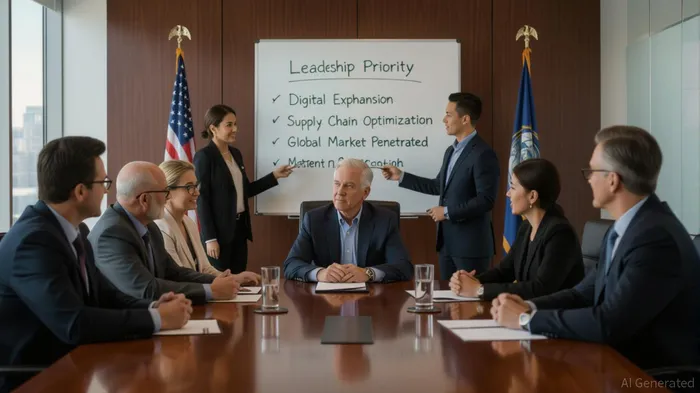
Walmart's approach mirrors these best practices. Doug McMillon will remain on the board until June 2026 and serve as an advisor through fiscal 2027, ensuring a gradual handover. This extended transition period is designed to mitigate risks associated with abrupt leadership changes, a lesson learned from past corporate missteps. Analysts have praised the move, noting that Furner's familiarity with Walmart's digital and supply chain initiatives positions him to sustain the company's transformation.
Market Reactions and Stock Valuation Impacts
The stock market's initial reaction to Walmart's leadership announcement was mixed. in the immediate aftermath, reflecting investor caution, though analysts emphasized that the transition posed no material disruption to Walmart's long-term strategy. This contrasts with broader trends in the consumer staples sector, where CEO transitions often trigger volatility. For example, in 2025, consumer staples firms like Costco and Procter & Gamble faced earnings pressures amid macroeconomic uncertainties, underperforming the S&P 500 during periods of high market volatility. However, defensive sectors like consumer staples historically outperform during economic downturns, a dynamic that could stabilize Walmart's valuation in the coming years.
Comparative data reveals that Walmart's valuation metrics remain resilient. As of November 2025, , deemed "Fair" relative to its five-year average. Walmart's forward P/E, while not explicitly cited, is likely in line with this benchmark, given its strong revenue growth and dividend yields. In contrast, high-growth tech firms like Microsoft and Apple have seen their valuations soar, driven by innovation-driven narratives. This divergence highlights the distinct valuation logic of consumer staples: stability over explosive growth.
Lessons for Investors
For investors, Walmart's leadership transition offers a case study in how mature firms can navigate executive changes without sacrificing strategic momentum. The key takeaway is that effective succession planning-rooted in internal development and extended transition periods-can mitigate valuation risks. This is particularly relevant in the consumer staples sector, where brand loyalty and operational efficiency are paramount.
However, challenges remain. The sector faces headwinds from shifting consumer behavior, such as the impact of on food and beverage consumption, and rising input costs. Walmart's ability to adapt its supply chain and digital offerings under Furner will be critical. Investors should monitor metrics like same-store sales growth, e-commerce penetration, and margin stability as indicators of strategic continuity.
Conclusion
Walmart's leadership transition, while a routine corporate event, carries significant implications for retail stock valuation. By emulating the succession strategies of industry leaders like Microsoft and P&G, the company has positioned itself to maintain operational and strategic coherence. For investors, the focus should remain on how well the new leadership executes on existing priorities while addressing emerging challenges. In a sector where stability is a virtue, Walmart's approach offers a blueprint for sustainable growth.

Delivering real-time insights and analysis on emerging financial trends and market movements.
Latest Articles
Stay ahead of the market.
Get curated U.S. market news, insights and key dates delivered to your inbox.
AInvest
PRO
AInvest
PRO



Comments
No comments yet