
Walmart's Leadership Transition and Its Implications for Retail Investment


 Aime Summary
Strategic Continuity: Building on McMillon's Foundations
Doug McMillon's tenure as CEO (2014–2025) was marked by a relentless focus on e-commerce and supply chain modernization. Under his leadership, Walmart transformed its U.S. operations into a digital powerhouse, . households. This strategy not only reduced last-mile delivery costs but also after the fourth order. Additionally, McMillon prioritized automation, with half of Walmart's fulfillment centers now operating with reduced labor costs. These initiatives laid the groundwork for a profitable e-commerce segment, . .
John Furner, who has led Walmart U.S. since 2019, inherits a robust framework. His stewardship of the U.S. segment. Furner's recent partnership with AI startup Cropin to optimize perishable goods sourcing in the U.S. and South America exemplifies his focus on supply chain innovation. This initiative, aimed at addressing global disruptions, aligns with McMillon's emphasis on scalability and efficiency.
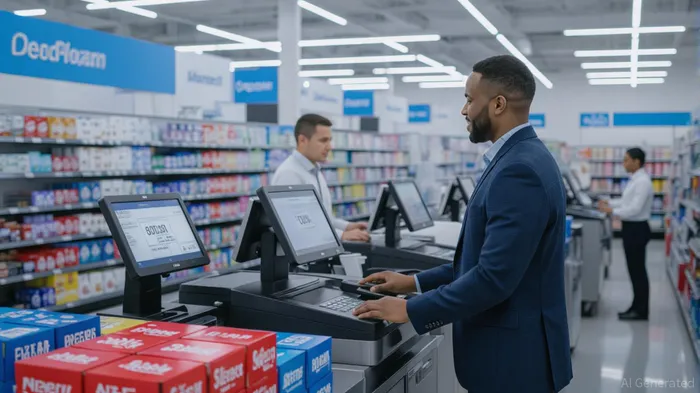
Growth Directions: E-Commerce and Market Expansion
While continuity is evident, Furner's leadership also signals new growth vectors. Under his watch, Walmart's U.S. , driven by initiatives and aggressive promotional campaigns. This momentum suggests a strategic pivot toward leveraging cutting-edge technology to enhance customer engagement-a departure from McMillon's more operational focus.
In terms of market expansion, Furner's deep roots in Walmart's U.S. operations (he began as an hourly associate in 1993) may prioritize domestic innovation over international expansion. However, the Cropin partnership hints at a broader vision, targeting South American markets for perishable goods optimization. This could signal a cautious but deliberate push into emerging markets, balancing risk with long-term growth.
Investment Implications: Stability and Innovation
For investors, the transition offers a blend of stability and innovation. McMillon's advisory role until January 2027 ensures that core strategies-such as store-as-hub logistics and fulfillment automation-will remain intact. Meanwhile, Furner's emphasis on AI and partnerships introduces new catalysts for growth. to U.S. , .
However, challenges persist. Rising labor costs and supply chain volatility remain risks, particularly as Walmart's U.S. . Furner's success in automating operations and expanding high-margin services (e.g., .
Conclusion
Walmart's leadership transition underlines a strategic balance: preserving McMillon's operational excellence while embracing Furner's innovation-driven approach. For investors, this duality presents a compelling case. The company's ability to adapt to digital trends, optimize supply chains, and expand selectively positions it as a resilient player in a fragmented retail sector. As Furner steps into his new role, the focus will shift to how effectively he can scale these initiatives while maintaining the profitability that has defined Walmart's recent performance.

Delivering real-time insights and analysis on emerging financial trends and market movements.
Latest Articles
Stay ahead of the market.
Get curated U.S. market news, insights and key dates delivered to your inbox.




Comments
No comments yet