
Walmart's Earnings Surge and the Rise of Value-Driven Consumerism


 Aime Summary
The E-Commerce Engine and Operational Efficiency
Walmart's e-commerce growth, , is a testament to its strategic alignment with consumer demand for speed and accessibility. directly addresses the modern shopper's need for immediacy. These metrics are not isolated successes; they are part of a larger operational overhaul, including . stores' freight systems, which reduces costs while enhancing service reliability.
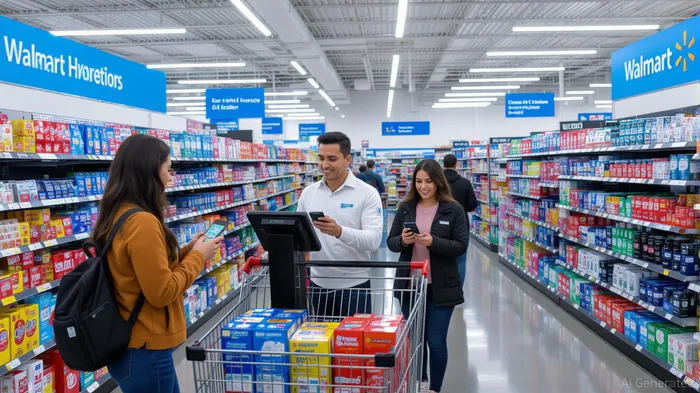
This efficiency is critical in an environment where consumers are increasingly "trade-down" in non-essential categories to fund discretionary spending according to Lipper Alpha's analysis. Walmart's private-label brands and competitive pricing have positioned it to capture this shift, . sales growth in Q3 according to Fox Business. Meanwhile, , according to corporate earnings, highlighting the appeal of value-based memberships in markets where inflation has eroded purchasing power.
Macro Trends: Value-Driven Consumerism and Retail Adaptation
The post-inflation era has redefined "value" for consumers. According to McKinsey's 2025 State of the Consumer report, shoppers now prioritize convenience, self-care, and immediate gratification, even as they remain cautious about long-term spending according to McKinsey's analysis. This duality-splurging on experiences while trimming non-essentials-has created a fragmented retail landscape. Walmart's omnichannel strategy, which integrates AI-driven inventory management and micro-fulfillment centers, directly addresses this complexity.
Moreover, the rise of Gen Z as a spending force has amplified demand for digital-first experiences. . and Chinese consumers shopped online-only retailers in the past month according to McKinsey's data, a trend Walmart has capitalized on through its tech-forward initiatives, including a Nasdaq stock listing according to Yahoo Finance. In contrast, competitors like Target have struggled, with declining sales underscoring the risks of misaligned strategies according to Fox Business.
Investment Implications: Resilience as a Competitive Edge
Walmart's financials further solidify its appeal to investors. according to corporate earnings, the company is well-positioned to reinvest in automation, expand its e-commerce footprint, and reward shareholders. Its ability to signals confidence in sustaining growth amid a still-uncertain economic climate.
For investors, Walmart's performance highlights a key insight: retail resilience is no longer about low prices alone but about harmonizing cost efficiency with consumer expectations for speed, personalization, and trust. As Deloitte notes, according to Deloitte's analysis. Walmart's integration of these tools, coupled with its global scale, creates a durable competitive moat.
Conclusion
The post-inflation era is not a return to pre-pandemic norms but a new paradigm where value-driven consumerism and technological agility define success. Walmart's Q3 results exemplify how a retailer can adapt to this reality, balancing affordability with innovation. For investors, the message is clear: companies that align with the evolving priorities of price-conscious yet convenience-seeking consumers will outperform in this environment. Walmart's earnings surge is not just a quarterly win-it's a blueprint for navigating the future of retail.

Delivering real-time insights and analysis on emerging financial trends and market movements.
Latest Articles
Stay ahead of the market.
Get curated U.S. market news, insights and key dates delivered to your inbox.




Comments
No comments yet