
Walmart's Dark Stores: A Strategic Pivot to E-Commerce Dominance
In a retail landscape increasingly dominated by Amazon's logistical prowess, WalmartWMT-- is doubling down on a bold experiment: dark stores. These warehouse-style facilities, designed exclusively for online order fulfillment, are at the heart of Walmart's bid to redefine supply chain efficiency and challenge Amazon's dominance in e-commerce. With a goal of offering three-hour delivery to 95% of U.S. households by year-end, Walmart's strategy hinges on optimizing last-mile logistics, cutting costs, and leveraging its vast physical footprint. Let's dissect the data behind this move and its implications for investors.
Dark Stores: A Supply Chain Revolution
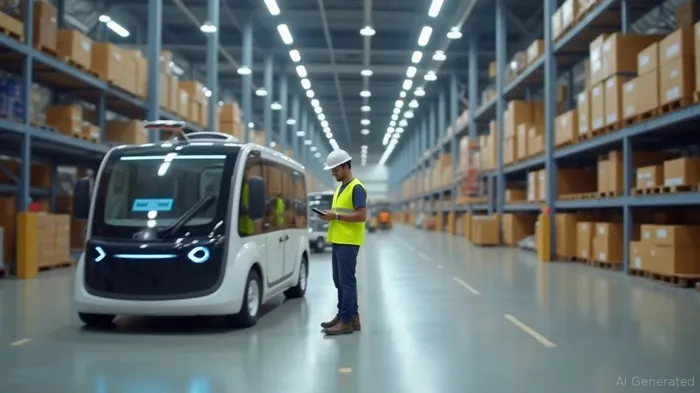
Dark stores are Walmart's answer to the last-mile delivery bottleneck. By repurposing select locations as “micro-distribution centers,” the retailer can stock high-demand items close to customers, slashing delivery times. As of June 2025, Walmart is piloting this model in Dallas and plans to expand to Bentonville, Arkansas—its headquarters—by year-end. These facilities are paired with four next-gen automated fulfillment centers (in Illinois, Texas, Indiana, and New Jersey), which have already reduced handling costs by 20% by deploying autonomous shuttles, AI-driven bin sequencing, and multi-story layouts.
The data underscores the efficiency gains: Walmart's existing 4,600 superstores act as de facto delivery hubs, reaching 93% of U.S. households with under-24-hour delivery. By December 2025, the target is 95% coverage. This densification of fulfillment points has also improved batch density—orders per delivery—by 20%, reducing last-mile costs.
E-Commerce Growth: Profitability at Scale
Walmart's e-commerce division achieved a landmark milestone in Q1 2025: its first profitable quarter in the U.S. E-commerce sales now account for 20% of total revenue, up 21% year-over-year, with U.S. revenue hitting $165.6 billion in Q1 2025. The shift from cost center to profit driver is fueled by three levers:
- Express Delivery Adoption: 30% of online shoppers now use Walmart's <3-hour “Express” delivery, boosting average basket sizes by 12% after the first order and 25% after the fourth.
- Marketplace Synergy: With 160,000 sellers on its platform, Walmart's gross merchandise volume (GMV) has grown 30% annually for four straight quarters.
- High-Margin Ad Revenue: Walmart Connect, its retail media platform, saw ad revenue rise 31% year-over-year, offsetting fulfillment costs.
The integration of dark stores and automated centers is key here. CFO John David Rainey notes that automation now handles half of fulfillment volume, with “more than 2× the benefit” expected as adoption scales.
Cost Optimization: A Path to Margin Expansion
Walmart's focus on operational discipline is paying off. The company slashed 1,500 roles in U.S. retail and global tech divisions, streamlining costs amid rising tariff pressures. Meanwhile, automation and route optimization are reducing delivery costs, even as paid fast-delivery options (which command premiums) gain traction.
The ROI math is compelling:
- E-commerce net delivery costs have fallen as denser routes and Express fees offset fulfillment expenses.
- The <3-hour delivery surge (up 91% year-over-year) drives repeat purchases, reinforcing customer loyalty.
Investment Considerations: Is Walmart a Buy?
Walmart's dark stores strategy is a calculated bet on two fronts: speed and scale. While AmazonAMZN-- leads in pure e-commerce, Walmart's hybrid model—combining physical stores, automated warehouses, and a growing marketplace—offers a defensible edge. The stock trades at 14.5x forward earnings, below its five-year average, suggesting it's undervalued if execution continues.
Risks remain, however. Amazon's Prime ecosystem and capital flexibility could outpace Walmart's rollout, while economic headwinds may test pricing power. Still, Walmart's progress in e-commerce profitability and its 95% delivery coverage target by year-end are milestones that could reposition it as a must-own retail stock.
Conclusion: A New Era of Retail Logistics
Walmart's dark stores are more than a tactical move—they signal a seismic shift toward “speed as a service.” By marrying physical infrastructure with automation, Walmart is tackling Amazon on its home turf. For investors, this pivot offers a rare opportunity: a legacy retailer with a scalable path to margin expansion and e-commerce dominance.
Actionable Insight: Walmart's stock could be a buy for investors seeking exposure to a resilient retail model, provided they factor in execution risks. Monitor its Q3 2025 earnings for further clues on e-commerce margins and delivery coverage. The next few quarters will determine whether dark stores are a temporary bright spot or the start of a retail revolution.

Stay ahead of the market.
Get curated U.S. market news, insights and key dates delivered to your inbox.




Comments
No comments yet