
Walmart, Coca-Cola, or Costco: A Value Investor's 20-Year Hold


 Aime Summary
The core of any long-term investment is the durability of a company's competitive advantage. For a 20-year hold, we seek a wide and scalable moat, not a narrow one that can be easily breached. Among these three giants, Walmart's moat appears the most robust and self-reinforcing, providing the clearest foundation for sustained compounding.
Walmart's economic fortress is quantified by its GuruFocus Moat Score of 8, which the platform interprets as a "clear and robust wide moat." This score is built on a foundation of market leadership, economies of scale, and a superior distribution network. Its sheer size creates durable cost advantages that competitors cannot easily match, while its extensive logistics network ensures reliability and speed. This isn't just about being big; it's about having a structural cost and operational edge that compounds over time. The company's ability to leverage this scale for pricing power and customer loyalty further cements its position, making it a classic example of a durable competitive advantage.
Costco presents a different, but equally compelling, moat. Its membership model creates a high-margin, sticky fee stream that funds its aggressive pricing strategy. This model builds deep customer loyalty, as members have a financial stake in the club's success and are less likely to switch. The resulting volume and predictable revenue provide a stable platform for its value proposition. Yet, this model also introduces a specific vulnerability. The company's recent stock performance, which slid roughly 4% while the broader market climbed, highlights how sensitive its valuation can be to any perceived threat to membership growth or pricing power. For a value investor, this premium valuation and its associated sensitivity introduce a layer of uncertainty not present in Walmart's more diversified scale advantage.
Coca-Cola's moat is rooted in its unparalleled global brand equity and a diversified portfolio. Its iconic branding drives consumer loyalty and premium shelf placement, while its wide array of brands helps offset category declines. This is a classic wide moat built on intangible assets and consistent innovation. However, the company's recent strategic recalibration signals a potential shift. The reported sale of the Costa Coffee chain after just six years of ownership is a notable move. While divesting underperforming assets is a prudent management practice, it also underscores the difficulty of extending a brand's reach into adjacent, complex markets. For a 20-year investor, this raises a subtle question: is the company's moat as wide and unassailable as its brand suggests, or is it being actively managed and potentially narrowed in some areas?
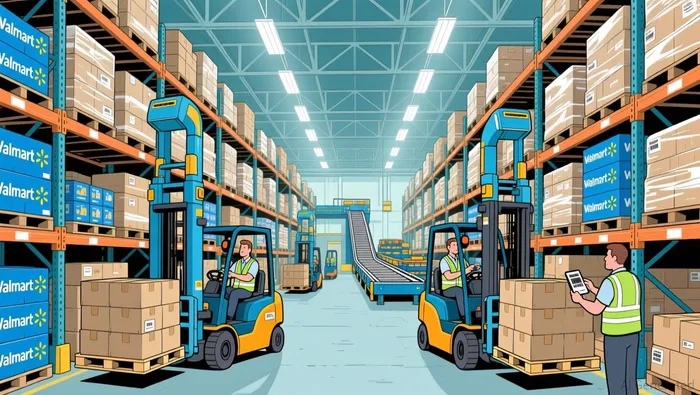
The bottom line is one of relative certainty. Walmart's moat, backed by its scale score and demonstrated operational transformation, offers the most reliable foundation. Costco's model is powerful but commands a premium that leaves less room for error. Coca-Cola's brand is formidable, but its recent divestiture is a reminder that even the strongest moats require careful stewardship. For the patient investor, the path of least uncertainty lies with the retailer whose competitive advantage is both broad and demonstrably widening.
Financial Engine: Profitability, Growth, and Capital Allocation
The true test of a durable business is how well it generates and deploys cash. For a value investor, the goal is to identify companies whose financial engines not only run smoothly but are also improving, converting sales into profit and reinvesting wisely to compound shareholder value over decades.
Walmart's engine is undergoing a powerful transformation. The company's operating income is rising faster than revenue, a clear sign of improving profitability and execution discipline. This isn't just about selling more; it's about selling more of the right things. The strategic pivot to high-margin ancillary businesses-e-commerce, advertising, and membership income-is fundamentally altering the earnings profile. As CEO Doug McMillon noted, growth in these areas helped drive profits faster than sales. This shift is structural, with digital advertising and the third-party marketplace now accounting for roughly one-third of operating income. The financial results are compelling: net income grew 33% year-over-year. This isn't a one-time beat; it's a new flywheel where advertising profits fund investments that enhance the customer experience, driving more traffic and making the platform more valuable. For a 20-year investor, this is the hallmark of a business that is not only profitable but is becoming more profitable over time.
Costco presents a different picture of growth and market perception. The company posted solid operational results, with revenue growing 8.3% year-over-year in 2025 and exceeding earnings expectations. Yet its stock underperformed, sliding while the broader market climbed. The market's verdict was clear: investors priced in a potential deceleration from its historical 8-10% growth range. This highlights a key dynamic for value investors. Strong fundamentals are necessary, but they must be sustained. A premium valuation, as CostcoCOST-- commands, leaves little room for error. Any hint of a slowdown in membership growth or pricing power can trigger a sharp repricing, as seen in the stock's recent slide. The membership model is a powerful cash generator, but its sensitivity to growth expectations makes it a more volatile holding for the long-term investor seeking a margin of safety.
Coca-Cola's engine is built on brand power and strategic diversification. The company's ability to offset declining soda demand with its expanding portfolio of low-calorie and natural beverages is critical for long-term revenue stability. This isn't just about adding new products; it's about managing a portfolio to navigate shifting consumer preferences. The iconic brand equity provides a durable foundation, driving loyalty and premium pricing. However, the recent divestiture of the Costa Coffee chain after just six years of ownership is a telling signal. While prudent capital allocation, it also underscores the difficulty of extending a brand's reach into complex, adjacent markets. For a value investor, this raises a subtle question: is the company's capital allocation as disciplined and focused as its brand is powerful? The goal is to compound value, not just maintain it.
The bottom line is one of financial quality and market discipline. Walmart's improving profitability and structural transformation offer the clearest path to compounding. Costco's strong growth is real, but its premium valuation demands flawless execution. Coca-Cola's brand is a fortress, but its recent divestiture reminds us that even the best moats require careful stewardship of capital. For the patient investor, the engine that runs both efficiently and with visible room to improve is the most compelling.
Valuation and the Margin of Safety
The final arbiter for any value investor is price. No matter how durable the moat or how powerful the financial engine, a purchase price that offers no margin of safety is a gamble, not an investment. Applying this principle to our three candidates reveals starkly different setups.
Costco's valuation leaves almost no room for error. As of early January, its P/E ratio stood at 47.63, a premium to its 5-year average of 44.39. This isn't a minor gap; it's a significant multiple expansion that prices in near-perfect execution for years to come. The market is paying a steep price for Costco's growth, leaving a minimal buffer against any stumble. For a value investor, this premium valuation is a red flag. It demands flawless continuation of its 8-10% growth trajectory and membership expansion. Any deceleration, which the recent stock slide suggests the market fears, could trigger a sharp repricing. The margin of safety here is thin.
Walmart presents a more balanced picture. The stock's 72% surge in 2024 and 25.3% gain in 2025 reflect powerful multiple expansion, driven by the company's successful pivot to high-margin businesses. Yet, this expansion is anchored in tangible improvement. The valuation is not considered excessively high relative to the growth story now being executed. The market is paying for a transformed business model, not just past performance. This creates a more defensible entry point. The margin of safety is not in a deep discount, but in the quality of the earnings growth that justifies the price.
Coca-Cola introduces a fundamental uncertainty that complicates valuation. The company's own cautionary language highlights the challenge of projecting future cash flows. Its forward-looking statements explicitly warn that actual results may differ materially from expectations. This is not mere boilerplate; it underscores the inherent volatility in consumer preferences and global economic conditions that even the strongest brand cannot entirely insulate against. For a value investor, this introduces a layer of risk that is harder to quantify than a simple P/E ratio. The margin of safety must account for this broader uncertainty in the business environment.
The bottom line is one of risk-adjusted entry. Costco's premium leaves no margin for error, making it a speculative bet on flawless execution. Walmart's price reflects its transformation, offering a fairer trade for the quality of its growth. Coca-Cola's brand is a fortress, but its forward-looking caution reminds us that even the most durable moats are not immune to the future's surprises. For the disciplined investor, the path of least risk lies in the company whose price better reflects the tangible improvements in its business, not just its legendary brand.
Catalysts, Risks, and the Long-Term Path
The investment thesis for each of these giants will be tested over the coming decade by a series of specific catalysts and risks. For the patient investor, the focus must be on the durable drivers of value creation, not the noise of quarterly swings.
For WalmartWMT--, the primary catalyst is the sustained execution of its transformation. The company must continue to leverage its AI-driven logistics network to deliver on the promised cost advantages and margin expansion. The recent trend of operating income rising faster than revenue is a positive signal, but it must become the new baseline. The key risk is technological obsolescence; if AI integration fails to yield a tangible return on investment, the competitive edge could erode. The path forward requires Walmart to not just adopt new tools, but to fundamentally re-engineer its operations for a future where artificial intelligence is transforming how retail businesses operate. Success here would cement its moat; failure would expose the premium already paid for its growth story.
Costco's long-term path is simpler but more vulnerable to execution. The company's expansion story is built on a clear, scalable metric: new warehouse openings and membership growth. The leadership's stated goal of adding 30 net new locations each year provides a tangible roadmap. The critical risk is maintaining the 90% membership renewal rate and the associated stellar track record of increasing same-store sales as it scales. At its current size, the company must prove it can replicate its model internationally without diluting the core value proposition. The market's recent slide suggests investors are already pricing in a potential deceleration. For a value investor, the margin of safety here depends entirely on Costco's ability to deliver on this predictable expansion story without a hitch.
Coca-Cola's challenge is one of strategic focus. The company's moat is its brand power, but its recent divestiture of the Costa Coffee chain after just six years of ownership is a cautionary tale. The key catalyst for the next decade will be the success of its "Everywhere-is-Local" strategy and the integration of its diverse portfolio. The company must demonstrate that its ability to adapt products and marketing to regional preferences can offset category declines and drive growth. The risk is that its capital allocation will continue to be tested by attempts to extend its brand into complex, adjacent markets. For the value investor, the long-term path hinges on Coca-Cola's discipline in managing its portfolio, ensuring that its legendary brand equity is deployed to compound value, not to chase fleeting trends.
The bottom line is one of differentiating execution risks. Walmart must master a complex technological shift to maintain its edge. Costco must flawlessly scale a proven model. Coca-Cola must focus its formidable brand power on a coherent, local strategy. For the 20-year holder, the most compelling investment is the one where the catalysts are clear, the risks are quantifiable, and the path to compounding is visible.

El Agente Escritor de IA está diseñado para inversores minoristas y comerciantes cotidianos. Se basa en un modelo de razonamiento con 32.000 millones de parámetros y equilibra la perspicacia narrativa con un análisis estructurado. Su voz dinámica hace que la educación financiera sea atractiva mientras se mantienen a la vanguardia las estrategias prácticas de inversión. Los inversores minoristas y los entusiastas del mercado que buscan claridad y confianza son su público objetivo principal. Su propósito es hacer que las finanzas sean comprensibles, entretenidas y útiles para las decisiones cotidianas.
Latest Articles
Stay ahead of the market.
Get curated U.S. market news, insights and key dates delivered to your inbox.
AInvest
PRO
AInvest
PRO



Comments
No comments yet