
Walmart's Aggressive Retail Strategy: Can It Dethrone Amazon and Target in 2025?
 Aime Summary
The retail sector in 2025 is a battlefield of innovation, where legacy giants like WalmartWMT-- face relentless pressure from tech-driven disruptors like AmazonAMZN-- and niche players like Target. In an era of high inflation, razor-thin margins, and hyper-fragmented consumer demands, Walmart's strategic pivot—from a discount retailer to a digital-first omnichannel powerhouse—has positioned it as a formidable contender. But can its aggressive 2025 playbook truly unseat Amazon and Target? Let's dissect the data, dissect the trends, and assess the investment implications.
The Digital Transformation: Profitability, Speed, and Scale
Walmart's 2025 e-commerce strategy is a masterclass in leveraging scale and operational discipline. With U.S. digital sales now accounting for 18% of total revenue (up from 14.3% in 2023), the company has not only closed its online loss-making gap but turned it into a profit center. This shift is underpinned by three pillars:
1. Route Density: By using its 4,600 U.S. stores as same-day fulfillment hubs, Walmart slashes last-mile delivery costs. This “10-mile advantage” enables 93% of U.S. households to receive deliveries in under 24 hours, with a target of 95% by year-end.
2. Express Delivery: The <3-hour “Express” delivery window now accounts for 30% of online orders, with basket sizes increasing by 12% after the first order and 25% after the fourth. This monetization of urgency transforms e-commerce from a cost center into a margin driver.
3. Retail Media: Walmart Connect's ad revenue grew 31% YoY in Q1 2026, fueled by 160,000 marketplace sellers. By selling digital shelf space twice—first to consumers, then to brands—Walmart is building a high-margin advertising ecosystem.
Automation and Fulfillment: The Invisible Engine
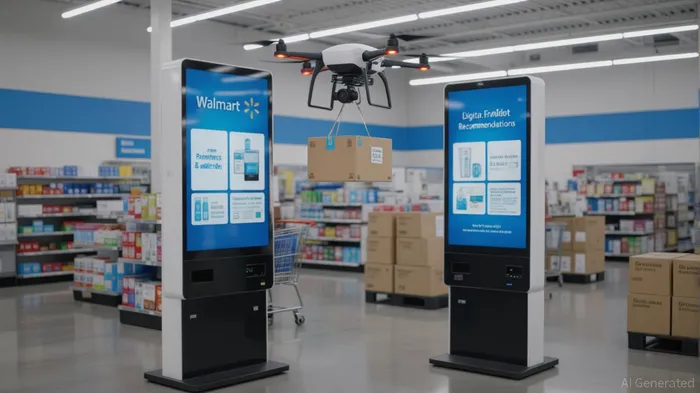
Walmart's investments in automation are reshaping its cost structure. Four “next-gen” fulfillment centers, equipped with autonomous shuttle aisles and AI bin sequencing, have reduced unit handling costs by 20%. With 55% of fulfillment volume automated by 2026, these centers will double throughput while cutting labor and operational expenses. This is critical in a high-inflation environment where margin preservation is paramountPARA--.
Omnichannel Integration: The New Customer Experience
Walmart's omnichannel strategy is blurring the lines between digital and physical retail. Features like QR shelf codes, AI-powered demand forecasting, and in-app aisle maps have driven a 30% increase in site traffic over two years. The company's unified commerce model—where in-store and online experiences are seamlessly integrated—has reduced cart abandonment by 18% and fulfillment costs by 27% for advanced adopters.
Pricing Power in a High-Inflation World
While Amazon and Target grapple with margin compression, Walmart's Everyday Low Price (EDLP) strategy, bolstered by AI-driven price monitoring and a 30,000-item price rollback program, has solidified its position as the low-price leader. Its private-label brands (e.g., Great Value, bettergoods) offer high-quality, low-cost alternatives, capturing price-sensitive shoppers who are increasingly prioritizing affordability over brand loyalty.
Competitive Positioning: Walmart vs. Amazon vs. Target
Amazon's dominance in e-commerce remains unchallenged, but its reliance on third-party sellers and high fees (subscription, referral, fulfillment) creates vulnerabilities. Walmart's Walmart Fulfillment Service (WFS)—with no monthly seller fees and lower referral rates—offers a compelling alternative. Meanwhile, Target's curated retail experience and lifestyle-driven marketing have carved out a niche but lack the scale and logistics infrastructure to compete in suburban and rural markets.
Consumer Behavior: The 2025 Retail Landscape
Consumers in 2025 are price-sensitive yet experience-hungry. They demand speed (44% abandon carts due to unclear delivery options) and convenience (61% value in-store experiences). Walmart's 10-mile advantage and Express delivery windows align perfectly with these needs. Its curbside pickup service, which boasts a 3.9% conversion rate (vs. 3.4% for BOPIS), further strengthens its position.
Financials and Shareholder Returns
Walmart's 2025 financials are a testament to its strategic success:
- Revenue: $681 billion (up 8% YoY)
- Retail Media Sales: $4.4 billion (up 31% YoY)
- Shareholder Returns: $7 billion in buybacks and a decade-high dividend increase
With operating margins improving and ROI on tech investments compounding, Walmart is delivering stronger returns than its peers.
Investment Thesis: Is Walmart a Buy in 2025?
Walmart's 2025 strategy is a textbook case of disruptive innovation—leveraging its physical footprint, automation, and retail media to outmaneuver competitors. While Amazon's tech ecosystem and Target's brand loyalty remain strengths, Walmart's scale, margin discipline, and customer-centric execution make it a long-term winner in a fragmented retail sector.
For investors, the key metrics to watch are:
1. Walmart's E-commerce GMV growth (targeting 20% of total sales by 2026).
2. Retail Media Revenue CAGR (projected at 25% through 2027).
3. Shareholder Yield (buybacks and dividends are expected to increase as cash flow improves).
Conclusion
Walmart's 2025 playbook—combining digital-first retail, automation, and retail media—is not just about survival; it's about redefining the retail sector. While Amazon and Target will remain relevant, Walmart's compounding advantages in speed, cost, and customer experience position it to outperform in the high-inflation, low-margin environment. For investors, this is a compelling case of a legacy company evolving into a digital disruptor—a rare combination in today's market.
Final Verdict: Buy WMTWMT--. The stock offers a mix of defensive resilience and growth potential, making it a cornerstone for a diversified retail portfolio.

Stay ahead of the market.
Get curated U.S. market news, insights and key dates delivered to your inbox.




Comments
No comments yet