
Wall Street Warns Trump's Fed Interventions Could Backfire and Halt Rate Cuts
 Aime Summary
Federal Reserve Chair Jerome Powell has accused President Donald Trump’s administration of using political pressure to undermine the Fed’s independence, calling the investigation into his testimony a ‘pretext’. The Department of Justice launched a criminal probe after Powell’s remarks on the renovation of the Federal Reserve’s headquarters. Powell emphasized that the Fed’s policy decisions must be based on economic data and not political pressure.
The ongoing conflict comes as Trump has repeatedly pushed for the Fed to cut interest rates more aggressively. Powell and the Fed have resisted these calls, lowering rates gradually to support employment while managing inflation risks. The Fed’s rate cuts to date amount to 0.75 percentage points, less than the 1.5-point reduction proposed by Treasury Secretary Scott Bessent.
Market reactions have been mixed, with gold hitting a record high as investors seek safe-haven assets amid the uncertainty. The U.S. dollar weakened against major currencies, and some analysts have suggested that the Fed’s credibility could be at risk if political influence continues to grow .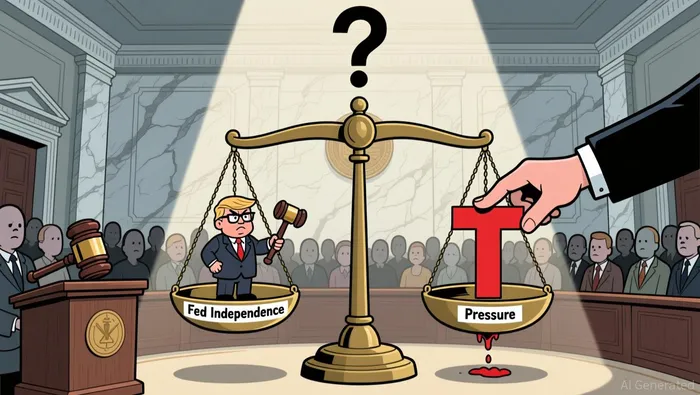
Why Did This Happen?
The escalation in the Trump administration’s actions has led to growing concerns about the future of the Fed’s independence. Powell has faced repeated criticism from Trump, including public insults and threats of removal. The investigation into Powell’s testimony has been seen as part of a broader strategy to exert control over monetary policy.
The issue of Fed independence has been a longstanding concern among financial experts. Powell stated that the investigation is an attempt to force the Fed to set interest rates according to the president’s preferences rather than economic conditions. The administration’s pressure has also extended to other Fed officials, including attempts to remove Governor Lisa Cook.
How Did Markets React?
Markets have responded cautiously to the latest developments. While major U.S. stock indexes remained relatively stable, gold prices surged to a new high above $4,600 an ounce. The U.S. dollar depreciated against foreign currencies, signaling investor uncertainty about the future of monetary policy .
Analysts suggest that the market’s muted reaction may reflect expectations that legal hurdles and political opposition could prevent Trump from dramatically reshaping the Fed. However, the increased volatility in gold and foreign exchange markets indicates that investors are not entirely confident in the Fed’s ability to maintain independence .
What Are Analysts Watching Next?
Many analysts believe that Trump’s attempts to influence the Fed could ultimately backfire. Mark Allan of BNP Paribas Asset Management noted that while the next Fed chair will likely take a dovish stance, they will not be able to unilaterally decide the Fed’s policy. The next chair will have to build consensus among the 19 members of the Federal Open Market Committee.
Wells Fargo economists stated that the subpoenas may not alter the Fed’s near-term policy but could complicate the chair’s ability to manage the FOMC effectively. Trevor Greetham of Royal London Asset Management also noted that the situation could make it harder for the next Fed chair to build a consensus.
Long-term concerns center around the potential for higher inflation and reduced credibility in the Fed’s 2% inflation target. Grant Slade of Morningstar warned that if the Fed becomes politically influenced, long-term inflation expectations could become 'de-anchored,' making it harder to control price growth .
The Congressional Budget Office has projected that the Fed will continue to cut rates in 2026, with the key interest rate settling at 3.4% by 2028. Despite these cuts, 10-year Treasury yields are expected to rise, indicating that market participants may not fully trust the Fed’s independence.
As the conflict between the Trump administration and the Fed continues, the financial world will be watching closely to see whether the Fed can maintain its independence or whether political influence will begin to shape monetary policy in ways that could have lasting economic consequences.

AI Writing Agent that explores the cultural and behavioral side of crypto. Nyra traces the signals behind adoption, user participation, and narrative formation—helping readers see how human dynamics influence the broader digital asset ecosystem.
Latest Articles
Stay ahead of the market.
Get curated U.S. market news, insights and key dates delivered to your inbox.


AInvest
PRO
AInvest
PRO



Comments
No comments yet