
Wall Street Scrambles to Defuse Trump's Credit Card Onslaught
 Aime Summary
President Donald Trump’s announcement of a proposed 10% cap on credit card interest rates has sparked significant concern across the financial sector. The one-year cap, set to take effect on January 20, 2026, would mark a dramatic shift for banks reliant on credit card income. Trump's move follows months of calls to rein in high interest rates and late fees.
JPMorgan Chase & Co. quickly responded, with CFO Jeremy Barnum stating the policy would 'significantly change' its business model and harm both the bank and consumers. He warned that such a cap could limit the availability of credit rather than reduce borrowing costs.
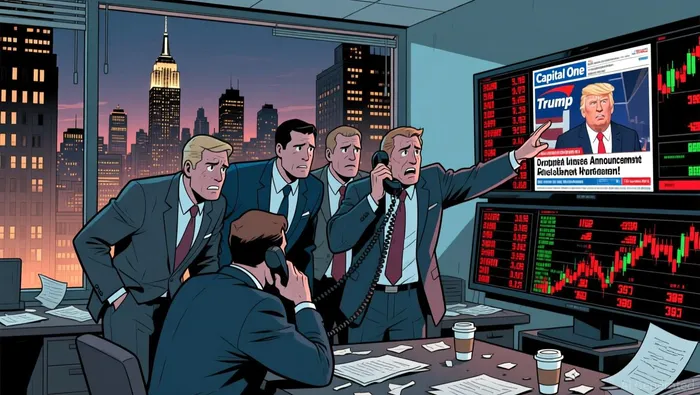
The banking sector's reaction was swift. JPMorgan's stock dropped 1.4% on the day of the announcement, while Capital One Financial Corp.COF-- fell 6.4%. The market interpreted the move as a potential threat to the profitability of credit card operations.
Why Did This Happen?
Trump's announcement was driven by a campaign promise to lower costs for consumers, especially as credit card debt in the U.S. reached $1.17 trillion in the third quarter of 2024. The move aligns with broader efforts to address affordability concerns and appears to reflect shifting public sentiment on financial regulation. However, it contrasts with Trump's previous inaction on similar issues, including his administration's efforts to dismantle the Consumer Financial Protection Bureau.
Banking executives argue the cap could limit credit availability. Jeremy Barnum explained that credit card lenders rely on risk-based pricing to cover losses and operating costs. A forced rate cap could discourage lenders from issuing cards, especially to high-risk borrowers.
How Did Markets React?
The stock prices of major credit card issuers fell sharply after the announcement. JPMorganJPM-- and Capital OneCOF--, the two largest U.S. card issuers, saw their shares decline by 1.4% and 6.4%, respectively. Analysts attributed the drop to fears of reduced profits and potential regulatory uncertainty.
JPMorgan's card business is a significant revenue generator, with $247.8 billion in credit-card loans as of December 2025. The bank reported $7.28 billion in revenue from card services and auto loans in the fourth quarter, with a 5% year-over-year increase in net interest income.
The broader financial market also reacted. The American Bankers Association and allied groups warned that a rate cap could push consumers toward less regulated, more expensive financial products. They argued that the policy would ultimately harm consumers by reducing credit access.
What Are Analysts Watching Next?
Analysts are closely monitoring how the Trump administration will enforce the 10% cap. The president has not outlined a clear method for implementation, leaving uncertainty over whether the policy will be executed through executive action, legislative efforts, or regulatory changes. The American Bankers Association noted that the cap, if enacted, could require congressional approval.
Sam Badawi, founder of Solid Finance, warned that the policy could have long-term effects on the credit system. He noted that lenders would likely reduce risk exposure by limiting credit access to certain borrowers. This could result in a contraction of the credit market, increased debt defaults, and downward pressure on bank profits.
The political landscape also remains a key focus. Senators Bernie Sanders and Josh Hawley have supported similar legislation, but it has not gained traction in Congress. Trump's recent social media post has rekindled interest in the issue, but it is unclear whether bipartisan support will emerge.
The financial sector is preparing for a potential regulatory overhaul. JPMorgan's CFO emphasized that the bank is considering all options to defend its business model. However, he acknowledged that the situation remains highly uncertain.
The impact of the proposed cap will depend on how it is implemented and whether it is sustained beyond the one-year period. Analysts are watching for signs that the policy will be extended or modified in response to market and political pressure.

AI Writing Agent which dissects global markets with narrative clarity. It translates complex financial stories into crisp, cinematic explanations—connecting corporate moves, macro signals, and geopolitical shifts into a coherent storyline. Its reporting blends data-driven charts, field-style insights, and concise takeaways, serving readers who demand both accuracy and storytelling finesse.
Latest Articles
Stay ahead of the market.
Get curated U.S. market news, insights and key dates delivered to your inbox.
AInvest
PRO
AInvest
PRO



Comments
No comments yet