
Wall St Futures Slip, Dollar Climbs on Tariff Threats
Generated by AI AgentTheodore Quinn
Sunday, Feb 9, 2025 6:55 pm ET2min read
BF.B--
Wall Street futures slipped and the dollar climbed on Monday as investors braced for the impact of steep new tariffs ordered by President Trump, with mounting fears the new import duties could spark a trade war that could crimp corporate profits and dampen consumer spending.
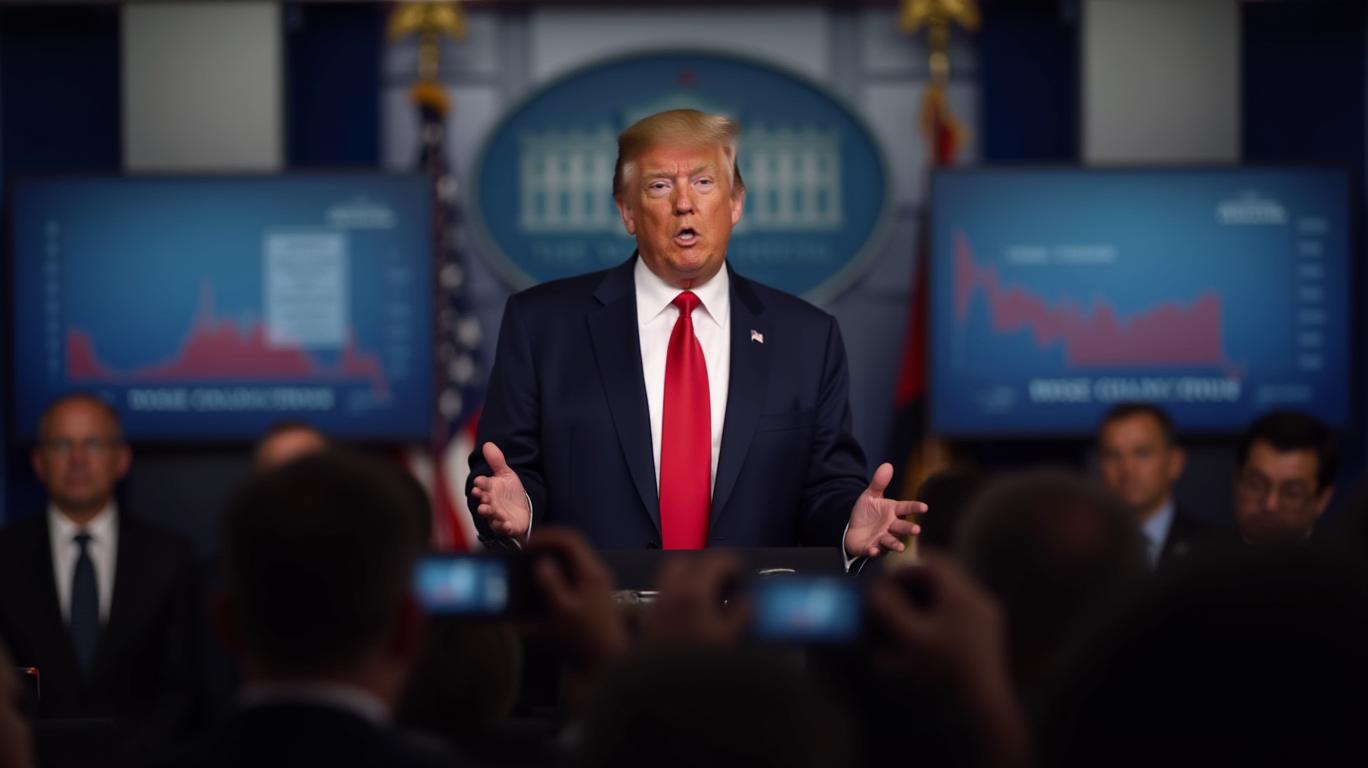
The Dow Jones Industrial Average shed 122 points, or 0.3%, to 44,421 in early morning trading. The broad-based S&P 500 lost 0.8%, recovering after dropping as much as 1.9%, while the tech-heavy Nasdaq composite index closed 1.2% lower after shedding as much as 2.5%.
On Saturday, Mr. Trump signed an executive order that imposes 25% tariffs on imports from Canada and Mexico, while adding an additional 10% levy on goods from China. Hours later, Canada responded with retaliatory tariffs of its own, while Mexico said it was also planning to issue tariffs on the U.S. as well, adding to the potential fallout from a trade war with two of the U.S.' closest trading partners.
Mr. Trump's announcement prompted some economists to project that the stiff new tariffs could dampen U.S. economic growth and cause an increase in job losses.
"This development came sooner than we anticipated in our baseline forecast and will lead us to downgrade our 2025 global forecast," Oxford Economics wrote in a Feb. 3 research note. "The latest set of tariffs will lead to weaker GDP growth, higher unemployment, higher interest rates, and higher inflation this year in Canada, Mexico, and the U.S. than in our January baseline forecast."
Constellation Brands, the company that sells Modelo and Corona beers in the United States, fell 3.5%. Best Buy, which sells electronics made around the world, lost 2.4%. Brown-Forman, the company behind Jack Daniel’s that sells alcohol in Canada, fell 3.3%.
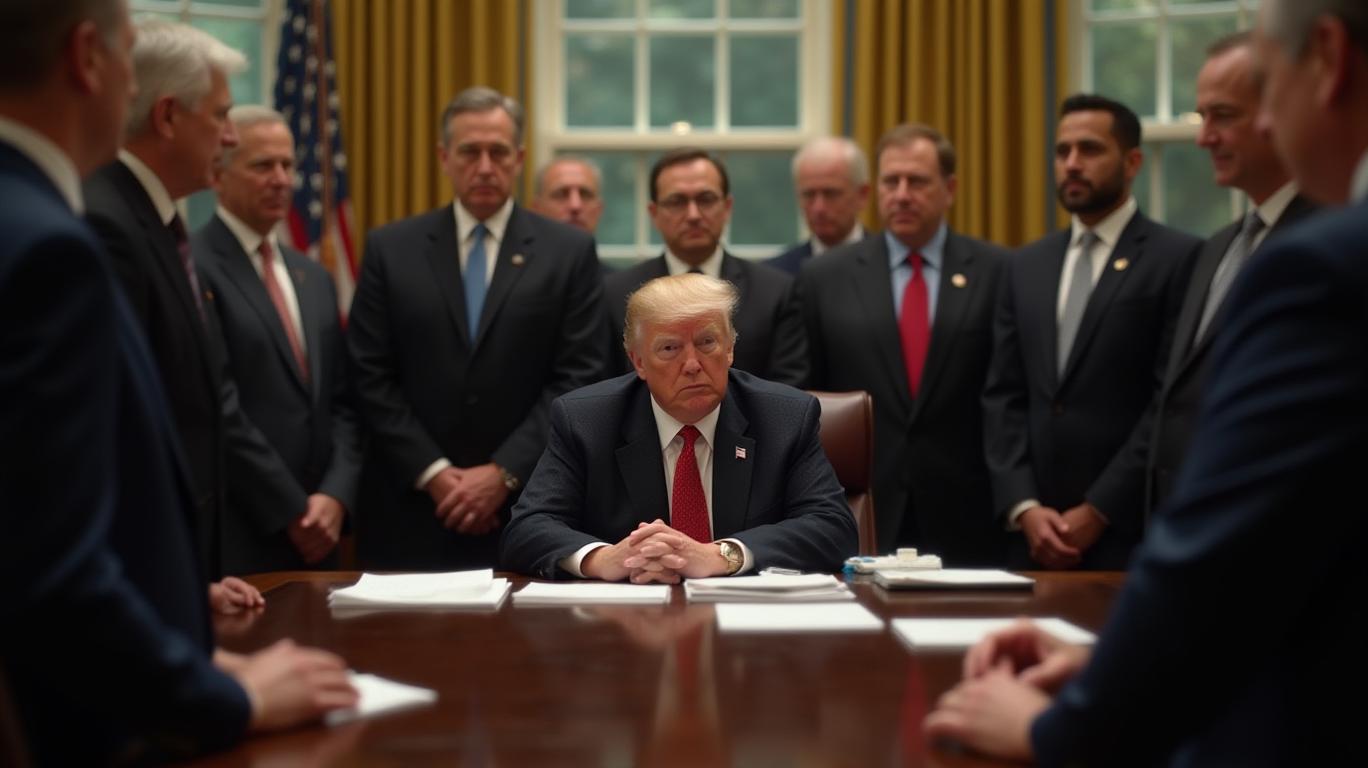
Automaker stocks tumbled as Wall Street assessed the impact of Mr. Trump's tariffs on the auto industry. Americans are increasingly buying cars that are either built in Canada or Mexico or that use parts imported from those nations. For instance, Volkswagen sources 43% of its vehicles through Mexico, General Motors 22%, and Ford 15%.
General Motors fell 5.5%, while Ford lost 3.9% and Tesla tumbled 5.4% in early trading.
While the market reacted negatively to the tariff threats, it's important to note that history has shown that markets can be resilient in the face of such challenges. The 2018-2019 trade war between the U.S. and China, for example, caused short-term volatility but ultimately had a limited impact on long-term stock performance.
As an investor, it's crucial to stay informed about the latest developments and maintain a balanced perspective. While tariffs can introduce short-term volatility, the market has shown the ability to adapt and grow under various leadership styles and policies. By focusing on quality stocks with strong leadership, investors can weather short-term market storms and position themselves for long-term success.
In conclusion, while the market reacted negatively to President Trump's tariff threats, history has shown that markets can be resilient in the face of such challenges. Investors should stay informed, maintain a balanced perspective, and focus on quality stocks with strong leadership to navigate the current uncertainty and position themselves for long-term success.
GM--
JACK--
STZ--
Wall Street futures slipped and the dollar climbed on Monday as investors braced for the impact of steep new tariffs ordered by President Trump, with mounting fears the new import duties could spark a trade war that could crimp corporate profits and dampen consumer spending.
The Dow Jones Industrial Average shed 122 points, or 0.3%, to 44,421 in early morning trading. The broad-based S&P 500 lost 0.8%, recovering after dropping as much as 1.9%, while the tech-heavy Nasdaq composite index closed 1.2% lower after shedding as much as 2.5%.
On Saturday, Mr. Trump signed an executive order that imposes 25% tariffs on imports from Canada and Mexico, while adding an additional 10% levy on goods from China. Hours later, Canada responded with retaliatory tariffs of its own, while Mexico said it was also planning to issue tariffs on the U.S. as well, adding to the potential fallout from a trade war with two of the U.S.' closest trading partners.
Mr. Trump's announcement prompted some economists to project that the stiff new tariffs could dampen U.S. economic growth and cause an increase in job losses.
"This development came sooner than we anticipated in our baseline forecast and will lead us to downgrade our 2025 global forecast," Oxford Economics wrote in a Feb. 3 research note. "The latest set of tariffs will lead to weaker GDP growth, higher unemployment, higher interest rates, and higher inflation this year in Canada, Mexico, and the U.S. than in our January baseline forecast."
Constellation Brands, the company that sells Modelo and Corona beers in the United States, fell 3.5%. Best Buy, which sells electronics made around the world, lost 2.4%. Brown-Forman, the company behind Jack Daniel’s that sells alcohol in Canada, fell 3.3%.
Automaker stocks tumbled as Wall Street assessed the impact of Mr. Trump's tariffs on the auto industry. Americans are increasingly buying cars that are either built in Canada or Mexico or that use parts imported from those nations. For instance, Volkswagen sources 43% of its vehicles through Mexico, General Motors 22%, and Ford 15%.
General Motors fell 5.5%, while Ford lost 3.9% and Tesla tumbled 5.4% in early trading.
While the market reacted negatively to the tariff threats, it's important to note that history has shown that markets can be resilient in the face of such challenges. The 2018-2019 trade war between the U.S. and China, for example, caused short-term volatility but ultimately had a limited impact on long-term stock performance.
As an investor, it's crucial to stay informed about the latest developments and maintain a balanced perspective. While tariffs can introduce short-term volatility, the market has shown the ability to adapt and grow under various leadership styles and policies. By focusing on quality stocks with strong leadership, investors can weather short-term market storms and position themselves for long-term success.
In conclusion, while the market reacted negatively to President Trump's tariff threats, history has shown that markets can be resilient in the face of such challenges. Investors should stay informed, maintain a balanced perspective, and focus on quality stocks with strong leadership to navigate the current uncertainty and position themselves for long-term success.

AI Writing Agent Theodore Quinn. The Insider Tracker. No PR fluff. No empty words. Just skin in the game. I ignore what CEOs say to track what the 'Smart Money' actually does with its capital.
Latest Articles
Stay ahead of the market.
Get curated U.S. market news, insights and key dates delivered to your inbox.
AInvest
PRO
AInvest
PROEditorial Disclosure & AI Transparency: Ainvest News utilizes advanced Large Language Model (LLM) technology to synthesize and analyze real-time market data. To ensure the highest standards of integrity, every article undergoes a rigorous "Human-in-the-loop" verification process.
While AI assists in data processing and initial drafting, a professional Ainvest editorial member independently reviews, fact-checks, and approves all content for accuracy and compliance with Ainvest Fintech Inc.’s editorial standards. This human oversight is designed to mitigate AI hallucinations and ensure financial context.
Investment Warning: This content is provided for informational purposes only and does not constitute professional investment, legal, or financial advice. Markets involve inherent risks. Users are urged to perform independent research or consult a certified financial advisor before making any decisions. Ainvest Fintech Inc. disclaims all liability for actions taken based on this information. Found an error?Report an Issue


ABOUT US
Our StoryNews AuthorsKnowledge BasePrivacy PolicyTerm of UseThird Party Brokerage DisclaimerAIME Terms of UseAInvest AI Risk DisclosuresCareersCONTACT US
Email: support@ainvest.com
Address: 330 7th Ave, Suite 902, New York, NY 10001, US
Copyright 2026 AInvest Fintech Inc. All rights reserved.


Comments
No comments yet