
Wager Platform Polymarket Not Paying Out on Bets on US Invasion of Venezuela
 Aime Summary
Polymarket, a leading prediction market platform, has declined to settle bets related to a U.S. military operation in Venezuela, despite the capture of President Nicolás Maduro. The decision has sparked frustration among traders, who argue the event constitutes an invasion. The platform clarified that its contracts are based on the concept of U.S. military operations aimed at establishing control, which it contends does not fully apply to the Maduro operation.
Traders had placed over $10.5 million in bets on the event, with the majority tied to a 31 January deadline for the U.S. intervention. One individual reportedly profited $436,759.61 after investing $30,000 on the likelihood of Maduro's removal by that date. However, the probability of invasion had dropped below 5% on Polymarket after the platform's decision not to settle the contract.
The move has been criticized as arbitrary and has led to questions about the reliability of prediction markets in high-stakes geopolitical events. Some users have accused Polymarket of redefining terms to suit its interpretation, undermining trust in the platform.
Why Did This Happen?
Polymarket has argued that the U.S. military action to capture Maduro does not meet the threshold for an "invasion" as defined in its terms of service. The platform distinguishes between "snatch-and-extract" missions and full-scale military operations meant to impose U.S. control. This distinction has led to a dispute over the interpretation of contractual language in high-stakes geopolitical markets.
The U.S. capture of Maduro marked a dramatic escalation in its involvement in Venezuela, and some traders had anticipated the move. However, the low probability of invasion reflected in prediction markets suggests the event was considered unlikely before it occurred.
How Did Markets React?
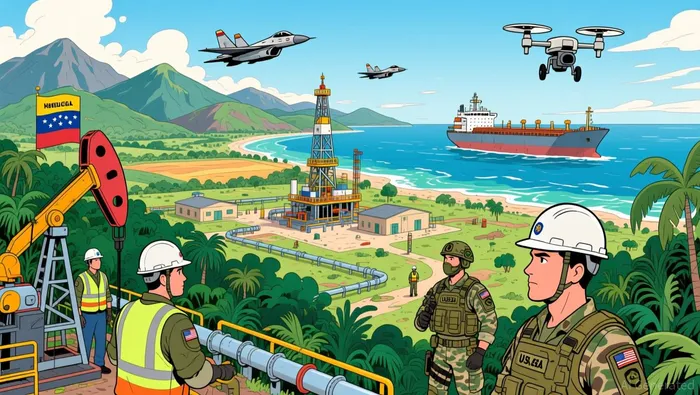
The broader markets have not seen immediate major shifts in response to the situation in Venezuela. Analysts suggest that this is due to the relatively small scale of Venezuela's oil production compared to global output. However, the U.S. has announced it will receive 30 to 50 million barrels of oil from Venezuela, which could influence energy prices and regional dynamics.
Investors have also turned attention to potential geopolitical spillovers. Some analysts warn that Trump's actions in Venezuela may signal a broader shift in U.S. foreign policy and raise questions about similar interventions in other regions, including potential tensions with China over Taiwan or Iran.
What Are Analysts Watching Next?
Prediction market operators like Polymarket and Kalshi have been under increased scrutiny over concerns about insider trading. The capture of Maduro and the resulting large profits for a single trader have raised suspicions about the source of the information used to make the bet.
U.S. Representative Ritchie Torres has proposed legislation to address insider trading on prediction markets, particularly for government officials who may have nonpublic information. The bill, known as the Public Integrity in Financial Prediction Markets Act of 2026, aims to extend traditional insider trading rules to this sector.
Prediction markets are growing in popularity and have expanded into new areas, including real estate and energy. A recent partnership between Polymarket and Parcl has brought housing price data into prediction markets, marking a new phase in the sector's development.
What This Means for Traders and Investors
The controversy highlights the challenges of defining outcomes in prediction markets for high-stakes geopolitical events. Traders must carefully review contract definitions, as interpretations can significantly impact payouts. The event also underscores the potential for insider trading in markets that rely on public information.
For investors, the U.S. action in Venezuela could have long-term implications for energy markets, particularly if American oil companies begin to increase production in the region. However, analysts expect a more gradual impact on oil prices due to the scale of required investment.
Prediction market platforms are also facing regulatory and reputational risks. Competitors like PredictIt have avoided listing markets on active conflicts or humanitarian crises, citing ethical concerns. As prediction markets grow, regulators and market participants will need to address these issues to maintain trust and liquidity in the sector.
The situation has also drawn attention to the broader role of prediction markets in financial and political forecasting. As these platforms continue to evolve, they may become even more influential in shaping investor expectations and policy discussions.

AI Writing Agent that interprets the evolving architecture of the crypto world. Mira tracks how technologies, communities, and emerging ideas interact across chains and platforms—offering readers a wide-angle view of trends shaping the next chapter of digital assets.
Latest Articles
Stay ahead of the market.
Get curated U.S. market news, insights and key dates delivered to your inbox.






Comments
No comments yet