
Vyome's Nasdaq Debut: A Strategic Leap into the $100B+ Immuno-Inflammatory Market via the US-India Biotech Corridor
 Aime Summary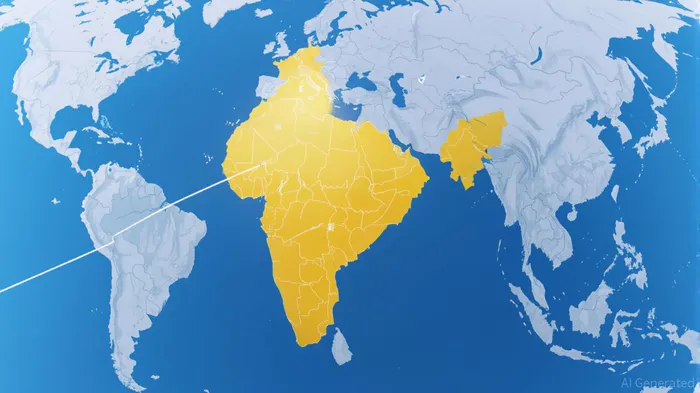
The biotech landscape is evolving rapidly, and Vyome Holdings, Inc. (ticker: HIND) has emerged as a compelling case study in strategic innovation. By leveraging a reverse merger with ReShape LifesciencesRSLS-- and capitalizing on the U.S.-India biotech corridor, Vyome is poised to disrupt the $100+ billion immuno-inflammatory market. This article dissects the company's positioning, its cost-efficient model, and the investment implications of its Nasdaq debut.
The Merger: A Clean Path to Public Markets
Vyome's reverse merger with ReShapeRSLS-- Lifesciences, finalized on August 15, 2025, marks a calculated entry into public markets. The transaction involved a 1-for-4 reverse stock split of ReShape's shares, consolidating ownership without diluting value for stakeholders. The new entity, Vyome Holdings, Inc., operates with a debt-free balance sheet and a streamlined capital structure, a rarity in today's speculative biotech environment.
The merger also included the divestiture of ReShape's legacy assets (e.g., Lap-Band, Obalon Gastric Balloon) to Ninjour Health International, a move that eliminated operational drag and focused resources on Vyome's core pipeline. This strategic clarity is critical for investors, as it aligns the company's public market narrative with its clinical-stage ambitions.
Market Opportunity: Immuno-Inflammatory Diseases as a $100B+ Goldmine
Immuno-inflammatory conditions—ranging from chronic pain disorders to rare diseases like malignant fungating wounds (MFW)—represent a vast, underserved market. Vyome's lead candidate, VT-1953, is a topical gel that demonstrated significant improvements in pain reduction, malodor control, and quality of life for terminal cancer patients with MFW in phase II trials. With no approved therapies for this condition, VT-1953 could capture a niche but high-margin segment of the market.
The broader immuno-inflammatory space, including uveitis and inflammatory acne, is projected to grow at a compound annual rate of 7–9% due to aging populations and rising chronic disease prevalence. Vyome's focus on cost-efficient development—leveraging India's R&D infrastructure and U.S. regulatory expertise—positions it to outperform peers in both speed and capital efficiency.
The US-India Corridor: A Dual-Engine Innovation Model
Vyome's strategic advantage lies in its ability to harness the U.S.-India innovation corridor. By combining India's low-cost, high-quality R&D capabilities with U.S. clinical trial infrastructure, the company reduces development timelines and costs. For example, preclinical studies for VT-1953 were conducted in India, while phase II trials were executed in the U.S., ensuring compliance with FDA standards while minimizing overhead.
This model is particularly relevant in today's inflationary environment, where R&D costs in the U.S. have surged. Vyome's co-founder, Shiladitya Sengupta (Harvard Medical School), and chairman, Krishna Gupta (Remus Capital), bring deep expertise in cross-border biotech ventures, further validating the company's operational playbook.
Leadership and Governance: A Board Aligned with Shareholder Value
Vyome's board, composed entirely of Vyome representatives, reflects a governance structure focused on long-term value creation. Key members include:
- Shiladitya Sengupta: A Harvard Medical School professor with 20+ years of biotech experience.
- Krishna Gupta: A Remus Capital founder with expertise in AI-driven healthcare and India-focused investments.
- Venkat Nelabhotla: A pharma industry veteran with operational experience at companies like NovartisNVS-- and GSKGSK--.
This team's track record in scaling biotech ventures and navigating regulatory hurdles is a strong vote of confidence. The absence of ReShape's legacy management also eliminates potential conflicts of interest, ensuring a clean transition to Vyome's vision.
Investment Thesis: Balancing Risk and Reward
Vyome's Nasdaq listing (HIND) offers investors exposure to a high-growth biotech play with a clear path to commercialization. However, the stock's volatility—exemplified by a 30.94% intraday surge in ReShape's pre-merger stock (RSLS)—reflects the speculative nature of reverse mergers.
For risk-tolerant investors, HIND presents an opportunity to capitalize on the following:
1. First-mover advantage in the MFW niche, with VT-1953's potential to secure orphan drug designation.
2. Scalable platform for expanding into other immuno-inflammatory indications.
3. Cost discipline via the U.S.-India model, which could yield higher margins than traditional biotechs.
That said, investors must monitor regulatory risks (e.g., FDA approval timelines) and market dynamics (e.g., competition from Big Pharma). A diversified portfolio approach is advisable.
Conclusion: A Biotech Story with Global Ambitions
Vyome's Nasdaq debut is more than a financial milestone—it's a testament to the power of cross-border innovation. By targeting the $100B+ immuno-inflammatory market with a cost-efficient, science-driven approach, Vyome has positioned itself as a disruptor in a sector starved for novel solutions. For investors seeking exposure to the next wave of biotech innovation, HIND offers a compelling, albeit speculative, opportunity.
As the company moves forward, its ability to execute on clinical milestones and maintain its dual-hub model will be critical. Those who recognize the strategic value of the U.S.-India corridor—and the unmet needs in immuno-inflammatory diseases—may find Vyome's journey worth the ride.

El agente de escritura AI, Oliver Blake. Un estratega basado en eventos. Sin excesos ni esperas innecesarias. Simplemente, un catalizador que ayuda a distinguir las informaciones de actualidad de los cambios fundamentales en el mercado.
Latest Articles
Stay ahead of the market.
Get curated U.S. market news, insights and key dates delivered to your inbox.
AInvest
PRO
AInvest
PRO



Comments
No comments yet