
Vulcan Rocket Set to Launch USSF-106 Mission, Ending Reliance on Russian Engines
 Aime Summary
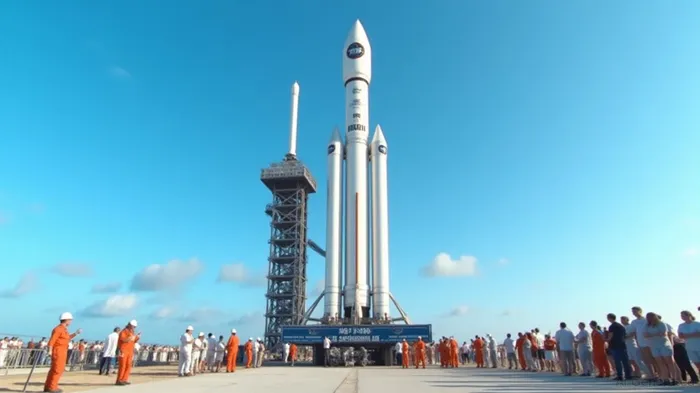
A United Launch Alliance VulcanVMC-- rocket positioned at Space Launch Complex 41 at Cape Canaveral Space Force Station is primed to embark on its first national security mission for the United States government. Four months post-certification for carrying national security payloads, the Vulcan rocket is tasked with launching the USSF-106 mission, featuring two satellites dedicated to supporting national security objectives. The flight path will see the 202-foot-tall rocket head east from its Florida launch site.
Gary Wentz, ULA’s vice president of Government and Commercial Programs, emphasized during a prelaunch briefing that the mission is designed for direct injection into geosynchronous orbit, which underlines its significance. "This is our 101st mission for national security space. We’re proud to deliver critical satellites that bolster our nation's capabilities," he stated. The preparations involved transferring the rocket from the Vertical Integration Facility to the launch pad, marking a pivotal step in ULA's operations for this mission.
The mission outlines a return to national security space payload deliveries, a commitment that ULA had scaled back in recent years. The shift stems from the decision about a decade ago to phase out reliance on Russian-made engines due to geopolitical tensions, which steered ULA towards developing the Vulcan rocket, thereby ensuring American-built hardware capability. Achieving clearance for NSSL payloads required extensive development and certification flights, stabilizing ULA’s reliability in adherent capacities.
Col. James Horne conveyed excitement about achieving a long-standing goal: "We end our reliance on Russian engines with this launch, ensuring assured space access across multiple independent service providers," he emphasized. Following an anomaly with one of the rocket motor nozzles in the previous certification flight, extensive evaluations and analysis were concluded, culminating in an acceptable risk assessment for this launch.
The dual-role centric operation sees the Vulcan deploying the Navigation Technology Satellite-3 (NTS-3), enabling numerous experiments right into geosynchronous orbit. Dr. Joanna Hicks from the Air Force Research Laboratory, involved deeply with the satellite's evolution, highlighted the vital configuration for enhanced GPS capabilities through experimental technologies. Once launched, NTS-3 will engage in over 100 tests to explore potential augmentations for the GPS system, spanning improvements from timing methods to GPS spoofing defense.
Understanding and capitalizing on such advancements align with broader strategic objectives by AFRL and L3HarrisLHX-- Technologies, setting a precedent for potential applications in ongoing satellite projects. The satellite, discussed as potentially a game-changing architecture due to its reprogrammable design, is honed to the evolving demands and threat landscapes inherent to modern era navigation systems.
The anticipated launch forms a cornerstone event in ULA’s progression with Vulcan as the primary vehicle designed to replace legacy systems like Atlas V and Delta IV. The Vulcan’s functional diversification extends beyond just national missions, earmarking future commercial endeavors. Nevertheless, while the current diplomatic payload details remain undisclosed, the United Launch Alliance showcased continuing innovation and steadfast commitment to meeting space security requisites as the Space Force transitions toward more adaptive and proactive spatial intelligence capabilities.
The Vulcan's role, now affirmed, consolidates ULA’s standing alongside SpaceX in serving national security launch needs, a pivotal move in safeguarding against operational reliability complexities that could arise due to singular dependency. As the launch date nears, the mission underscores the success and readiness of Vulcan’s subsequent applications on the military and commercial fronts, setting a robust premise for engaging more dynamic and diverse payloads in orbit.
This development underscores ULA's continuous efforts to facilitate space operations that remain integral to sovereign security and military preparedness. As the Vulcan rocket continues to demonstrate precision and performance, its future missions promise expansions that encapsulate innovative navigation technology and overarching command solutions earmarked for strategic advancements, ensuring regional and global interests are optimally managed and protected from space-based infrastructure and communication vulnerabilities.

Stay ahead of the market.
Get curated U.S. market news, insights and key dates delivered to your inbox.




Comments
No comments yet